AI SEO for E-commerce: Scaling Product Descriptions Fast

Running an online store means managing hundreds or even thousands of product pages. Each page needs clear copy, useful details, and search visibility. That becomes difficult when product catalogues grow fast.

Many e-commerce brands still use short product text from suppliers. Some repeat the same lines across pages. Others publish product pages with little information. These issues hurt rankings and reduce conversions.

This is where AI SEO helps.

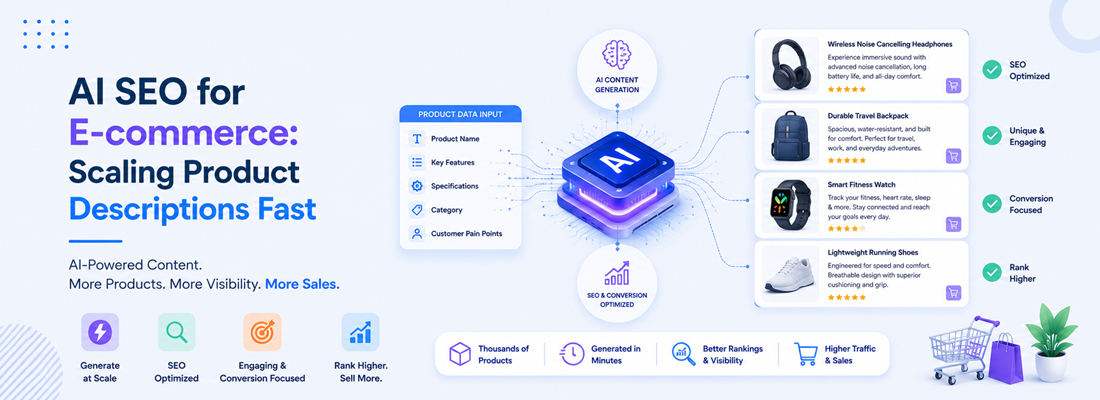
Modern content systems now support faster content production for e-commerce stores. Businesses can create stronger product pages at scale without sacrificing quality. The goal is not to flood a website with content. The goal is to create useful, searchable, and customer-focused product descriptions.

Brands that invest in AI SEO Services can improve search visibility, increase organic traffic, and reduce manual work across large catalogues.

In this guide, you will learn:

  • Why e-commerce product descriptions matter
  • Common SEO problems online stores face
  • How AI SEO supports faster scaling
  • Best practices for product description creation, E-commerce, and AI SEO tips for long-term growth

Why Product Descriptions Matter for E-commerce SEO?

Product descriptions do more than explain a product. They help search engines understand page relevance and help shoppers make buying decisions.

Strong descriptions can:

  • Improve keyword visibility
  • Increase organic traffic
  • Reduce bounce rates
  • Build buyer confidence
  • Support conversions

Weak descriptions create problems.

Many e-commerce sites:

  • Copy supplier text
  • Use duplicate content
  • Write very short descriptions
  • Ignore search intent
  • Miss important keywords

Search engines prefer pages that provide useful and original information. If hundreds of websites use the same supplier copy, rankings become harder to win.

This is why e-commerce SEO AI strategies now focus heavily on scalable and unique product content.

Common E-commerce SEO Challenges

Managing Large Product Catalogues

Large stores may contain:

  • Thousands of SKUs
  • Seasonal collections
  • Product variations
  • Frequent inventory changes

Writing a unique copy for every page takes time. Many teams cannot keep up.

As a result:

  • Pages stay unpublished
  • Descriptions remain incomplete
  • Duplicate content spreads across the site

This creates major SEO gaps.

Also Read: AI Content vs Human Intuition: Maintaining EEAT in 2026

Maintaining Content Quality

Scaling content often reduces quality. Some pages become:

  • Keyword stuffed
  • Repetitive
  • Hard to read
  • Too technical

Poor content damages user trust and search performance. Good e-commerce content needs:

  • Clear structure
  • Useful information
  • Natural keyword placement
  • Buyer-focused language

Matching Search Intent

Search intent matters more than keyword repetition. A shopper searching for:

  • “lightweight running shoes”
  • “waterproof travel backpack”
  • “organic cotton baby clothes”

expects specific information.

Product descriptions should answer these needs directly.

This is one reason why AI SEO Services have become important for e-commerce businesses. They help brands create intent-focused product content faster.

How AI SEO Helps E-commerce Stores Scale Faster?

Faster Content Production

One of the biggest advantages of AI SEO is speed.

Instead of writing every description from scratch, ecommerce teams can quickly create structured product content. This supports:

  • Faster product launches
  • Better category coverage
  • Improved site freshness

Large stores often struggle to update old pages. Faster workflows make regular optimisation possible.

Better Keyword Coverage

Search visibility depends on keyword relevance.

Strong product pages include:

  • Primary search terms
  • Product features
  • Use-case phrases
  • Buyer intent keywords

A good AI product description generator SEO process helps brands include these naturally within content.

This improves the chance of ranking for:

  • Product searches
  • Long-tail searches
  • Question-based searches

Also Read: Top 7 AI Tools for Predictive SEO and Trend Analysis

Consistent Brand Voice

Consistency matters across e-commerce websites. Customers notice when:

  • Tone changes between pages
  • Product details feel incomplete
  • Formatting looks inconsistent

Structured content systems help maintain:

  • Consistent messaging
  • Uniform formatting
  • Clear product hierarchy

This improves both usability and trust.

Supporting Large SEO Campaigns

Scaling ecommerce SEO manually becomes difficult as stores grow. Nowadays, modern e-commerce SEO AI workflows support:

  • Bulk optimization
  • Product page refreshes
  • Seasonal updates
  • Metadata generation
  • FAQ creation

This allows teams to focus more on strategy and less on repetitive writing tasks.

Key Elements of SEO-Friendly Product Descriptions

Write for Buyers First

Search visibility matters, but shoppers come first. Good product descriptions answer:

  • What is the product?
  • Who is it for?
  • What problem does it solve?
  • Why should someone choose it?

Avoid generic statements.

Instead of:
“High-quality backpack for everyday use”

Use:
“Lightweight backpack with padded straps and laptop storage for daily commuting.”

Specific details improve both readability and SEO.

Use Natural Keywords

Keyword placement should feel natural, as it should appear smoothly within the content. Try to avoid forcing keywords into every paragraph. Search engines now focus more on meaning and relevance than exact repetition.

Structure Content Clearly

Clear formatting improves readability.

Use:

  • Short paragraphs
  • Bullet points
  • Subheadings
  • Feature sections
  • FAQs

This helps users scan pages.

It also supports search engine understanding.

Add Product-Specific Information

Avoid vague content.

Include:

  • Materials
  • Dimensions
  • Features
  • Use cases
  • Care instructions
  • Compatibility details

The more specific the content, the more useful the page becomes.

This supports stronger rankings over time.

E-commerce AI SEO Tips for Product Description Scaling

Create Content Templates

Templates improve efficiency and consistency. A strong template may include:

  1. Product overview
  2. Main features
  3. Benefits
  4. Use cases
  5. Specifications
  6. FAQs

Templates help teams scale content without losing structure.

Also Read: How Search Generative Experience (SGE) Impacts AI SEO Services

Focus on Category Intent

Different product categories require different messaging.

For example:

  • Fashion products focus on style and fit
  • Electronics focus on specifications
  • Home products focus on functionality

Understanding category intent improves engagement and relevance. This is one of the most effective e-commerce AI SEO tips for large stores.

Refresh Old Product Pages

Older pages often lose traffic over time. But refreshing descriptions can:

  • Improve rankings
  • Increase relevance
  • Capture new search trends

Updates may include:

  • New keywords
  • Better formatting
  • Expanded product details
  • Customer questions

SEO is not a one-time task.

optimize Metadata

Titles and meta descriptions still matter. As good metadata:

  • Improves click-through rates
  • Clarifies page purpose
  • Supports keyword targeting

Every product page should have:

  • Unique title tags
  • Clear meta descriptions
  • Relevant URLs

Use FAQs on Product Pages

FAQ sections improve content depth. They also support:

  • Long-tail keyword targeting
  • Conversational search queries
  • User engagement

Example questions:

  • Is this product waterproof?
  • What size should I choose?
  • Does this work with other devices?

FAQ content creates stronger topical relevance.

The Role of AI SEO Services in E-commerce Growth

Many e-commerce brands now use external support to manage content scaling. Professional AI SEO Services often help businesses:

  • Audit product content
  • Improve keyword targeting
  • Build scalable workflows
  • optimise technical SEO
  • Refresh outdated pages

This becomes valuable for stores with:

  • Large inventories
  • Small internal teams
  • Fast product turnover

Strong SEO systems help businesses stay competitive as search behaviour changes.

Common Mistakes to Avoid

Publishing Thin Content

Short descriptions rarely perform well. Also, pages with only one or two sentences often struggle to rank. Each product page should provide useful information.

Ignoring User Experience

SEO and usability work together. So, poor formatting, slow pages, or cluttered layouts reduce conversions. That’s why creating good content should feel easy to read.

Overusing Keywords

Keyword stuffing affects readability. So, try to use keywords naturally within sentences. Also, focus on relevance instead of repetition.

Forgetting Mobile Users

Most e-commerce traffic now comes from mobile devices.

Product pages should:

  • Load quickly
  • Display clearly on small screens
  • Use short paragraphs
  • Keep navigation simple

Mobile usability affects both rankings and conversions.

Measuring E-commerce SEO Success

Tracking performance helps identify what works. Important metrics include:

  • Organic traffic
  • Product page rankings
  • Conversion rates
  • Bounce rates
  • Time on page
  • Indexed pages

Content scaling should support business goals, not just publishing volume. A strong e-commerce SEO AI strategy balances:

  • Speed
  • Quality
  • Search intent
  • User experience

The Future of e-commerce Product Content

Search behaviour continues to change. Shoppers now expect:

  • Detailed product information
  • Fast answers
  • Helpful comparisons
  • Clear buying guidance

Search engines reward websites that provide useful experiences. This means e-commerce brands must move beyond basic product copy.  The future of AI SEO will focus more on:

  • Intent-driven content
  • Deeper product expertise
  • Better information structure
  • Scalable optimisation systems

Businesses that improve product content now will build stronger long-term visibility.

Final Thoughts

Overall, scaling ecommerce content has always been difficult. Large product catalogues require speed, consistency, and strong optimisation. Traditional workflows often fail to keep up with modern commerce demands. This is why AI SEO has become important for growing online stores. A strong content strategy helps brands:

  • Publish faster
  • Improve keyword visibility
  • Maintain content quality
  • Support buyer intent
  • Increase organic traffic

The most successful ecommerce websites treat product description AI as valuable search assets rather than basic filler text.

With the right structure and planning, businesses can scale product content efficiently while still delivering useful information to customers. As e-commerce competition grows, strong product pages will remain one of the biggest drivers of search visibility and conversions.
Using AI for Hyper-Local SEO Across Multiple Locations

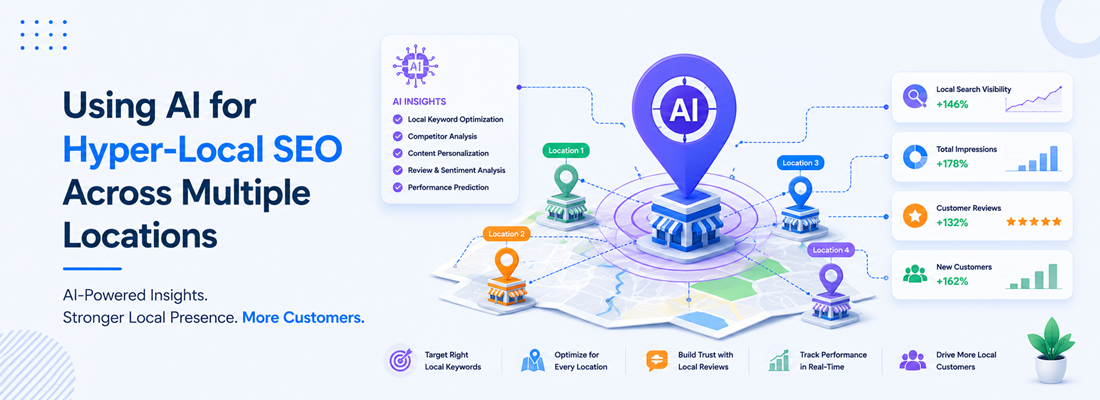
Managing a business in one city comes with challenges. Expanding across multiple cities creates even greater complexity. Each location has different customers, search habits, competitors, and buying behaviour. A strategy that works well in London may not deliver the same results in Manchester. Likewise, a campaign that succeeds in New York may not attract the same attention in Chicago.

This is where smart search optimisation becomes important. Brands with many branches now focus on hyper-local visibility instead of broad national rankings. Customers search for businesses close to them. They want quick answers, accurate details, and nearby options. If your business does not appear in local searches, you lose customers before they even visit your website.

That is why many companies now invest in AI SEO Services India to manage local campaigns across several locations without losing consistency or quality.

In this guide, you will learn:

  • What hyper-local SEO means
  • Why it matters for multi-location businesses
  • How modern automation improves local visibility
  • The biggest challenges brands face
  • Practical methods to improve rankings
  • Real examples of local growth strategies

What is Hyper-Local SEO?

Hyper-local SEO focuses on improving visibility in a very specific area. Instead of targeting an entire country, region, or large city, it focuses on neighbourhoods, streets, districts, or nearby communities.

For example:

  • “Pizza shop near Central Park”
  • “Best dentist in Camden”
  • “Gym near Marina District”

Search engines now understand location intent better than ever. They show nearby businesses based on distance, relevance, reviews, and local authority.

Hyper-local SEO helps businesses appear in:

  • Map results
  • Local search listings
  • “Near me” searches
  • Voice searches
  • Mobile searches

This approach matters because most customers make quick decisions. They search, compare options, and choose a business within minutes.

Why Does Hyper-Local SEO Matter for Multi-Location Brands

A single-location business only needs to manage one local presence, whereas multi-location brands must maintain visibility across many areas at the same time.

That creates several problems:

  • Different local competitors
  • Different customer behaviour
  • Different search demand
  • Duplicate content issues
  • Inconsistent business information

Without a proper strategy, local pages start competing against each other. Search engines struggle to understand which page belongs to which area. This is why multi-location SEO requires structure, planning, and consistent optimisation.

Businesses with several branches must build trust in each location separately. A customer in Bristol does not care about your Leeds office. They want accurate details for the nearest branch.

That means every location needs:

  • Unique local content
  • Correct contact information
  • Local reviews
  • Area-specific pages
  • Relevant keywords
  • Strong local signals

Also Read: AI Content vs Human Intuition: Maintaining EEAT in 2026

How Has Local Search Behaviour Changed in Recent Years?

Search behaviour has changed.

People no longer type broad searches such as:

  • “Best clothing store”

Now they search with local intent:

  • “Best clothing store in Soho”
  • “Affordable clothing shop near me”

Search engines respond by giving local results first. This shift has pushed businesses to improve local targeting across every branch.

Traditional SEO methods take time when managing many locations, manual updates become difficult, content creation feels repetitive and tracking performance becomes messy.

This is where AI SEO helps businesses scale local campaigns more efficiently. Many brands now combine automation with local SEO AI strategies to improve local search visibility faster.

How Does AI Support Hyper-Local SEO Across Multiple Locations?

Modern optimisation methods help businesses process large amounts of local data faster. This allows brands to improve local visibility across many locations without losing consistency.

Many growing brands now rely on AI SEO Services India to handle large-scale local optimisation across different cities while maintaining consistency.

Let’s explore the role of AI in local SEO, including:

Faster Local Content Creation

Each branch needs unique content.

Many businesses struggle because they copy the same text across all location pages. Search engines view this as weak content. But smart content systems help to create:

  • Area-specific landing pages
  • Local service descriptions
  • Neighbourhood-based FAQs
  • Location-focused blog topics

This improves relevance for local searches.

Also Read: Top 7 AI Tools for Predictive SEO and Trend Analysis

Better Keyword Research

Local searches vary by area. Customers in one city may use different phrases than customers in another. For example:

  • “Takeaway”
  • “Take-out”
  • “Food delivery”

Search systems can identify patterns across regions and help businesses target the right terms. This improves your AI local SEO strategy without relying on guesswork.

Review and Reputation Monitoring

Reviews strongly influence local rankings, so brands with many branches often receive hundreds of reviews every week. Managing them manually takes time. Modern systems help businesses:

  • Track customer sentiment
  • Identify common complaints
  • Monitor rating trends
  • Improve response times

Strong reviews improve trust and increase local visibility.

Improved Local Listings Management

One of the biggest local SEO problems is inconsistent business information. Even small differences create confusion:

  • Wrong phone numbers
  • Old addresses
  • Different opening hours

Search engines rely on consistency, and businesses using local SEO AI systems can track local listings and catch inaccuracies quickly.

Better Search Intent Analysis

Search engines now focus heavily on intent.

Someone searching for:

  • “Emergency plumber near me”

has immediate buying intent.

Someone searching:

  • “How to fix a leaking tap.”

may still be researching.

Understanding this difference helps businesses create better local pages for each stage of the customer journey.

What Challenges Do Businesses Face With Multi-Location SEO?

Managing one website across many locations sounds simple. In reality, it becomes complex very quickly. Below are the biggest issues businesses face. Let’s explore

Duplicate Content Problems

Many companies copy the same page for every branch and only change the city name, which leads to creating thin content. Search engines prefer pages with unique local value.

Each location page should include:

  • Local landmarks
  • Nearby areas served
  • Customer reviews
  • Branch-specific services
  • Local events or community references

Managing Hundreds of Pages

Large businesses may operate across dozens or hundreds of cities. So, updating pages manually becomes difficult. Simple changes, such as holiday opening hours, can turn into major tasks. Without structure, errors appear across the site.

Inconsistent Branding

Different branches sometimes create different messages, promotions, or descriptions.

This creates confusion for both users and search engines. Your business should feel consistent while still appearing locally relevant.

Local Competition

Every branch competes against local businesses. A national brand may dominate one city but struggle in another where local competitors have stronger community trust. This means businesses need localised strategies instead of one national campaign.

Review Management

Negative reviews can hurt local rankings. Multi-location businesses must monitor customer feedback closely. Because a few poor reviews at one branch can damage trust quickly.

How Can Businesses Build an Effective AI Local SEO Strategy?

A strong strategy combines local relevance with scalable optimisation. Here are the key areas to focus on.

Create Unique Location Pages

Every branch needs its own dedicated page.

Include:

  • Address
  • Phone number
  • Directions
  • Local services
  • Team details
  • Nearby landmarks
  • Customer testimonials

Avoid copying the same content across pages.

Use Local Keywords Naturally

Add city and area keywords where relevant.

Examples include:

  • “Dental clinic in Birmingham”
  • “Home repairs in Brooklyn”

Use keywords naturally within headings and body content.

Your pages should read like normal conversations.

Optimise for Mobile Searches

Most local searches happen on mobile devices.

Your website should:

  • Load quickly
  • Display properly on smaller screens
  • Make phone numbers clickable
  • Provide clear directions

Slow mobile pages lose customers fast.

Focus on Reviews

Encourage customers to leave honest reviews.

Positive reviews improve:

  • Trust
  • Click-through rates
  • Local rankings

Respond to reviews regularly. Customers notice active businesses.

Build Local Authority

Search engines trust businesses connected to their communities.

You can improve the local authority by:

  • Supporting local events
  • Partnering with nearby businesses
  • Creating local content
  • Earning local mentions

This strengthens your local presence over time.

What Are the Best Hyperlocal SEO India Tips for Growing Brands?

Businesses in India face unique local search conditions because of language diversity, regional buying behaviour, and mobile-first usage. Below are practical hyperlocal SEO India tips for brands expanding across multiple cities.

Focus on Regional Search Behaviour

Search habits change from city to city. Customers in Mumbai search differently from customers in Chennai or Jaipur. So, businesses need to research local phrases and customer habits carefully.

Optimise for Mobile Speed

Mobile traffic dominates local searches in India. Fast-loading pages improve both rankings and conversions. Try to compress images and reduce unnecessary scripts.

Use Location-Specific Content

Avoid generic city pages.

Mention:

  • Local areas
  • Community references
  • Local festivals
  • Regional services

This improves engagement and relevance.

Strengthen Local Trust Signals

Indian consumers rely heavily on reviews and recommendations. You need to encourage satisfied customers to leave detailed reviews with location references.

Businesses using AI SEO Services India often improve review management, local consistency, and regional targeting more efficiently across multiple locations.

How Did Real Businesses Improve Visibility With Hyper-Local SEO Strategies?

Case Example: Restaurant Chain Expansion

A restaurant brand opened branches across several cities. At first, every location page used the same content template which led to poor rankings.

The company then created unique pages for each branch using local references, nearby attractions, and city-specific menus.

They also improved review management and updated local listings regularly.

Within months:

  • Local traffic increased
  • Map visibility improved
  • Customer engagement grew
  • Mobile conversions rose

This shows how strong local relevance improves visibility.

Case Example: Home Services Business

A home services company struggled to rank across multiple regions. Because their website had duplicate pages with very little local content.

But they rebuilt their structure by creating:

  • Area-focused service pages
  • Neighbourhood-based FAQs
  • Local customer stories

They also improved page speed and mobile usability. The result was stronger visibility across several local searches.

Also Read: Why Businesses are Outsourcing to AI SEO Services in India

Why Does Multi-Location SEO Require Long-Term Planning?

Many companies treat local SEO as a one-time project. That approach rarely works. Because search behaviour changes constantly and competitors improve their strategies. Also, customer expectations evolve.

Long-term success depends on combining strong local relevance with scalable AI SEO practices. Strong multi-location SEO requires continuous optimisation, including:

  • Regular content updates
  • Ongoing review management
  • Performance tracking
  • Local content improvements
  • Technical maintenance

Consistency builds long-term authority.

Final Thoughts

Overall, Hyper-local search has changed how businesses attract customers. People no longer search broadly but they search nearby. They want fast answers, trusted businesses, and relevant local options.

For multi-location brands, this creates both challenges and opportunities. So, managing many branches requires structure, consistency, and local relevance at scale.

A strong AI local SEO strategy helps businesses improve visibility, manage local content, monitor reviews, and strengthen local authority across different regions. Success comes from balancing scalability with authenticity.

Businesses that invest in local relevance today will build stronger visibility, better customer trust, and higher conversions in the years ahead. Whether you manage five branches or five hundred, local visibility now plays a direct role in business growth.

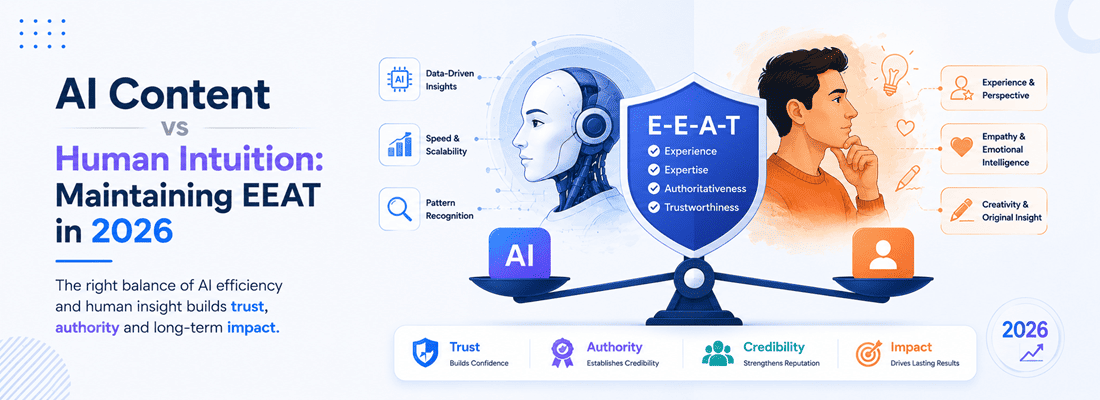
AI Content vs Human Intuition: Maintaining EEAT in 2026

Digital marketing has changed at a fast pace over the last few years. Brands across the USA now publish more articles, landing pages, product guides, and website copy than ever before. At the same time, search engines have become stricter about quality, trust, and user value.

This shift has created a major debate around AI content vs human writing. Businesses want faster production, but they also want strong rankings, loyal readers, and trust from search engines.

Search engines now reward websites that show real experience, expert knowledge, authority, and trust. This is where EEAT matters most.

Many brands are now investing in AI SEO Services and broader AI SEO strategies to improve rankings and content workflows. Still, relying only on automation creates risks that can damage trust and visibility over time.

The Rise of Content at Scale

Content production used to take weeks. Now, brands can create large volumes of articles in a short time. This has changed how businesses approach search marketing.

Many companies now publish:

  • Blog posts
  • Product descriptions
  • Service pages
  • Buying guides
  • FAQ sections
  • Local landing pages

The pressure to stay visible in search results has pushed brands to produce more content than ever.

This growth has also increased interest in AI SEO Services because businesses want:

  • Faster publishing
  • Lower content costs
  • Better keyword coverage
  • Larger website authority

The rise of AI SEO has made content creation more accessible for small and large businesses alike. But there is one major problem. We need to understand that more content does not always mean better content.

Because search engines now look beyond keywords and volume. Instead, they focus on usefulness, relevance, and trust. That is why websites with shallow or repetitive pages often struggle to rank.

What EEAT Means in 2026

EEAT stands for:

  • Experience
  • Expertise
  • Authoritativeness
  • Trustworthiness

These signals help search engines understand whether content deserves visibility.

Experience

Experience means the writer has real involvement with the topic.

For example:

  • A traveller sharing a hotel review
  • A fitness coach discussing training plans
  • A business owner explaining customer growth

Real experience creates depth that generic writing often lacks.

Expertise

Expertise shows strong knowledge in a subject area.

Search engines now favor content written by people who understand the topic well.

This matters more in industries such as:

  • Health
  • Finance
  • Legal services
  • Technology
  • Business consulting

Strong expertise improves user trust and increases engagement.

Authoritativeness

Authority develops over time.

It comes from:

  • Consistent quality
  • Industry recognition
  • Strong backlinks
  • Mentions across trusted websites
  • Positive brand reputation

Websites that build authority usually perform better in competitive search results.

Trustworthiness

Trust is now one of the biggest ranking factors.

Search engines want websites that:

  • Provide accurate information
  • Protect user data
  • Avoid misleading claims
  • Show transparency

Trust affects both rankings and conversions.

Without trust, even well-written pages struggle to perform.

Also Read: Top 7 AI Tools for Predictive SEO and Trend Analysis

Why EEAT SEO Matters More Than Ever

The internet is now flooded with repetitive content. Many articles say the same thing with slightly different wording.

This has made EEAT SEO one of the most important strategies for long-term visibility. Search engines now reward websites that:

  • Solve real problems
  • Offer original insights
  • Show first-hand knowledge
  • Provide reliable information

This change has shifted the focus from quantity to quality.

Businesses that ignore EEAT SEO may see:

  • Falling rankings
  • Lower engagement
  • Reduced trust
  • Weak conversion rates

In 2026, search visibility depends on credibility as much as optimization.

The Risks of Fully Automated Content

Many businesses believe automation alone can solve their content needs. While speed helps, there are serious risks when content lacks human review and insight.

Generic Information

One common problem is repetition.

Many pages cover:

  • The same advice
  • The same examples
  • The same structure

This creates content that feels flat and forgettable.

Users leave quickly when they do not find anything useful or unique.

Lack of Real Experience

Search engines now value first-hand insight.

A page without:

  • Personal examples
  • Real case studies
  • Industry understanding

Often feels weak, which is one of the biggest issues in the AI content vs human debate.

Human intuition adds:

  • Perspective
  • Emotion
  • Context
  • Practical advice

These qualities improve trust and readability.

Also Read: Why Businesses are Outsourcing to AI SEO Services in India

Factual Errors

Automated systems can sometimes:

  • Misinterpret information
  • Present outdated details
  • Oversimplify complex topics

In industries where accuracy matters, this creates major risks.

Because incorrect information damages both trust and authority.

Weak Brand Voice

Brands need consistency. Without careful editing, content may lose:

  • Personality
  • Tone
  • Brand identity

Readers connect with brands that sound natural and relatable.

That human connection still matters in 2026.

AI Content vs Human Intuition

The discussion around AI content vs human writing often becomes extreme. Some people believe automation will replace writers completely.

While others believe human-only content is the only safe approach. The truth sits somewhere in the middle.

Where Automation Helps

Modern content systems help businesses:

  • Organize topics
  • Structure outlines
  • Identify search trends
  • Improve workflow speed
  • Scale content planning

This support can improve efficiency. Many brands now combine AI SEO processes with human strategy to manage large websites.

Where Human Intuition Wins

Human writers still bring qualities that machines cannot fully replicate.

These include:

  • Storytelling
  • Emotional understanding
  • Real-world experience
  • Industry judgment
  • Audience awareness

Human intuition helps content feel authentic, which is especially important for:

  • Opinion pieces
  • Buying advice
  • Industry analysis
  • Customer education
  • Brand storytelling

Search engines increasingly reward these qualities because users value them.

AI vs Human Content SEO: What Search Engines Prefer

The future of AI vs human content SEO is not about choosing one side. Search engines care about results.

They ask:

  • Is the page useful?
  • Does it solve the user’s problem?
  • Does it show expertise?
  • Can people trust it?

Content that meets these standards performs well. Also, content that feels thin or misleading struggles.

This means businesses should focus less on how content is produced and more on:

  • Accuracy
  • Clarity
  • Originality
  • User value

That is the real future of AI and human content SEO.

The Best Balance Strategy for 2026

The strongest content strategies now combine efficiency with human expertise. This balanced approach protects EEAT while improving scalability.

Start With Human Strategy

Every content plan should begin with people.

Brands need to define:

  • Audience needs
  • Search intent
  • Business goals
  • Brand messaging

Without clear direction, content loses focus. This is where human strategy creates purpose.

Use Systems for Structure

Content systems can support:

  • Topic clustering
  • Content planning
  • Keyword mapping
  • Draft organisation

This saves time during production. Many businesses using AI SEO Services now focus on workflow improvement rather than full automation.

Add Human Insight

This is the most important step. Writers should include:

  • Personal observations
  • Expert commentary
  • Customer experiences
  • Practical lessons
  • Industry trends

These details improve trust and make content stand out.

Edit Carefully

Editing is still important because good editing improves:

  • Accuracy
  • Readability
  • Flow
  • Consistency

It also removes repetitive language and improves clarity.

Best Practices for Maintaining EEAT in 2026

Create Content for People First

Do not write only for rankings.

Focus on:

  • Helping readers
  • Solving problems
  • Answering questions clearly

User satisfaction improves long-term performance.

Use Real Examples

Examples increase credibility. Readers trust content that includes:

  • Case studies
  • Real situations
  • Practical outcomes

Experience is now a core part of EEAT SEO.

Keep Information Updated

Outdated content loses trust. So, review pages regularly to:

  • Refresh statistics
  • Update advice
  • Remove broken links
  • Improve relevance

Fresh content supports stronger rankings.

Build Author Profiles

Show who wrote the content. Author pages should include:

  • Experience
  • Qualifications
  • Industry background

This helps search engines understand expertise.

Strengthen Website Trust

Trust signals matter more than ever. Useful trust elements include:

  • Secure websites
  • Clear contact information
  • Transparent policies
  • Customer reviews
  • Accurate claims

Trust supports both rankings and conversions.

Focus on Search Intent

Every page should match user intent.

Ask:

  • What problem is the user trying to solve?
  • What information do they expect?
  • What action do they want to take?

Content that aligns with intent performs better.

Avoid Thin Content

Do not publish pages with little value. Low-quality pages weaken overall authority.

Instead, create:

  • Detailed guides
  • Helpful resources
  • Strong topic coverage

Quality matters more than volume.

EEAT Guidelines 2026: What Businesses Should Expect

The evolving EEAT guidelines 2026 point towards one clear direction: trust-driven search. Search engines are becoming better at identifying:

  • Genuine expertise
  • Helpful information
  • Authentic experience
  • Reliable websites

Businesses should expect:

  • Stronger quality checks
  • Greater focus on credibility
  • More emphasis on the author’s reputation
  • Better evaluation of user satisfaction

This means websites must invest in:

  • Skilled writers
  • Expert reviews
  • User-focused content
  • Consistent quality standards

The future of EEAT guidelines 2026 is centered on trust and authenticity.

Why Human-Led Content Still Matters

Technology can improve speed, but it cannot fully replace human understanding.

People connect with:

  • Stories
  • Emotions
  • Experiences
  • Honest opinions

Readers remember content that feels real because human-led content also helps brands:

  • Build loyalty
  • Increase engagement
  • Improve conversions
  • Develop authority

This is why many successful businesses now combine AI SEO Services with strong editorial oversight.

The Future of AI SEO

The future of AI SEO will likely focus on collaboration between systems and human expertise.

Businesses that succeed will:

  • Use automation wisely
  • Protect brand quality
  • Prioritize user trust
  • Maintain strong editorial standards

Search engines will continue rewarding websites that provide genuine value. That means shortcuts will become less effective over time. Sustainable growth will come from:

  • Strong strategy
  • Useful content
  • Clear expertise
  • Consistent trust

Conclusion

Overall, the debate around AI content vs human writing will continue in 2026 and beyond, but the answer now looks much clearer. Search engines do not favor content just because brands create it fast or at a large scale; they value content that truly guides and supports people.

That is why EEAT matters more than ever. Businesses should use modern systems to speed up work while keeping human expertise at the heart of their content strategy. The best approach blends smart workflows, human judgment, real experience, clear authority, and genuine trust. This balance helps brands create content that ranks well, builds credibility, and keeps readers interested.

The future of AI vs human content SEO does not depend on choosing one over the other. Instead, it depends on blending efficiency with authenticity to better support real people in the USA and the global market.

Top 7 AI Tools for Predictive SEO and Trend Analysis

Predictive SEO helps businesses identify future search trends before they become highly competitive. It uses search data, keyword patterns, and user behaviour to forecast what people may search for next. Many brands now use AI SEO strategies and services to plan content early, improve rankings, and stay ahead of competitors.

Search habits change fast. A keyword that works today may lose value in a few weeks. A topic with low traffic today may become popular next month. This shift has changed the way businesses plan their search strategy.

Businesses also rely on AI-supported SEO Services to understand market trends, search intent, and future keyword demand. These services help marketers make better decisions with less guesswork.

In this guide, you will learn:

  • What predictive SEO means
  • How it works
  • The best AI SEO tools 2026
  • Features that matter most
  • Practical use cases
  • Benefits for businesses and marketers

What Is Predictive SEO?

Predictive SEO is a method that uses search data, user behaviour, and trend patterns to forecast future search demand.

While traditional SEO focuses on current rankings and past performance. Predictive SEO looks ahead. It helps marketers spot rising topics before they become highly competitive.

For example:

  • A travel company may notice growing searches for eco-tourism
  • An online store may predict demand for seasonal products
  • A technology blog may identify new industry topics early

This approach gives websites more time to create content and build authority.

Many businesses now combine predictive strategies with AI-supported SEO Services to improve long-term traffic growth.

Also Read: Why Businesses are Outsourcing to AI SEO Services in India

How Predictive SEO Works?

Predictive SEO analyzes patterns from different data sources and then identifies possible future trends. These systems examine:

  • Search history
  • Keyword growth
  • User intent
  • Seasonal patterns
  • Competitor movement
  • Content engagement

The goal is simple: to find opportunities before competitors do.

Search Pattern Analysis

Search engines collect a volume of user data every day. Predictive systems analyze this data to identify changes in search interest.

For instance:

  • A sudden rise in searches for electric vehicles
  • Growing interest in remote work tools
  • Seasonal demand during holidays

This helps businesses prepare content early.

Keyword Forecasting

Keyword forecasting estimates future search volume. Instead of targeting crowded keywords, businesses can focus on rising search terms with lower competition.

This improves:

  • Organic traffic
  • Ranking opportunities
  • Content planning

Many predictive SEO tools now provide keyword growth forecasts for months ahead.

Trend Detection

Trend analysis helps marketers discover topics before they peak. This process supports:

  • Blog planning
  • Product launches
  • Video content
  • Social campaigns

Strong AI trend analysis gives businesses a clear view of audience interest.

Competitor Monitoring

Predictive SEO also studies competitor activity.

It tracks:

  • Ranking changes
  • New content topics
  • Keyword expansion
  • Traffic movement

This insight helps businesses react faster.

Best AI Tools for Predictive SEO and Trend Analysis

Best AI Tools for Predictive SEO and Trend Analysis

Smart SEO platforms now serve as essential business tools that help companies analyze search patterns, predict upcoming trends, and develop better content strategies. Marketers can use these systems to track their keyword performance, study their competition, and identify upcoming market opportunities. The following list of Predictive SEO software shows the most popular platforms people use for predictive SEO and trend analysis.

1. SEMrush AI Tools

SEMrush offers a wide range of features for keyword research, competitor tracking, and trend forecasting. It helps businesses identify changes in search demand and discover new ranking opportunities.

Key Features

  • Keyword trend forecasting
  • Competitor traffic analysis
  • Search visibility tracking
  • Content planning insights
  • Site performance monitoring

Best For

  • Digital marketing agencies
  • Medium and large businesses
  • Competitive market analysis

Why does it help Predictive SEO?

The platform analyzes search trends and competitor data to highlight future keyword opportunities. Businesses can use these insights to create content before competition increases.

2. Ahrefs AI Features

Ahrefs is known for backlink analysis and keyword research. Its advanced search data also supports predictive SEO planning.

Key Features

  • Keyword difficulty analysis
  • Search trend tracking
  • Competitor keyword monitoring
  • Content gap analysis
  • Traffic forecasting

Best For

  • SEO professionals
  • Content marketers
  • Link-building campaigns

Why does it help Predictive SEO?

The platform helps marketers discover rising search topics and understand competitor growth patterns. This improves long-term content planning.

3. Surfer SEO

Surfer SEO focuses on content optimization and search intent analysis. It studies high-ranking pages and provides recommendations for better content structure.

Key Features

  • Content optimization suggestions
  • Keyword clustering
  • Search intent analysis
  • SERP comparison
  • Content scoring

Best For

  • Bloggers
  • Content teams
  • SEO writers

Why does it help Predictive SEO?

Surfer SEO helps marketers create content that matches changing search behaviour. It supports better ranking potential through data-driven content planning.

4. Jasper AI for SEO Content

Jasper supports content creation and topic development for SEO campaigns. It helps businesses create content faster while maintaining topic relevance.

Key Features

  • Blog content generation
  • Topic suggestions
  • Content structure support
  • Keyword-focused writing
  • Content planning assistance

Best For

  • Content creators
  • Small businesses
  • Marketing teams

Why does it help Predictive SEO?

The platform helps marketers respond quickly to emerging trends and publish content around growing search topics.

5. Scalenut

Scalenut combines keyword research, content planning, and optimization tools in one platform. It supports long-form content strategies and topic analysis.

Key Features

  • Keyword clustering
  • Topic research
  • Content optimization
  • Search trend analysis
  • Content planning workflows

Best For

  • SEO agencies
  • Content marketers
  • Growing businesses

Why does it help Predictive SEO?

Scalenut helps businesses identify future content opportunities and organise content around search demand trends.

6. SE Ranking

SE Ranking provides keyword tracking, competitor analysis, and website monitoring tools. It supports businesses looking for a simple SEO management platform.

Key Features

  • Rank tracking
  • Keyword forecasting
  • Competitor monitoring
  • Website audit tools
  • Traffic analysis

Best For

  • Small businesses
  • Freelancers
  • Local SEO campaigns

Why does it help Predictive SEO?

The platform helps businesses monitor search movement and prepare for ranking changes before they affect traffic.

7. Clearscope

Clearscope focuses on content quality and topical relevance. It analyzes search results and recommends content improvements based on user intent.

Key Features

  • Content grading
  • Topic relevance analysis
  • Keyword recommendations
  • Readability support
  • Search intent optimization

Best For

  • Content publishers
  • Enterprise websites
  • Editorial teams

Why does it help Predictive SEO?

Clearscope helps businesses create highly relevant content that aligns with changing search intent and topic demand.

Also Read: How Search Generative Experience (SGE) Impacts AI SEO Services

Key Features to Look for in AI Predictive SEO Tools

Not every platform offers the same value. Businesses should focus on features that improve forecasting accuracy and content planning.

Trend Forecasting

Good systems identify growing search topics before they become competitive.

This allows businesses to:

  • Publish content early
  • Build authority faster
  • Gain stable rankings

Strong AI trend analysis depends on accurate forecasting.

Keyword Prediction

Keyword prediction helps marketers target phrases with future growth potential.

This improves:

  • Organic reach
  • Search visibility
  • Content performance

Many predictive SEO tools now include keyword forecasting dashboards.

Competitor Tracking

Competitor monitoring is important for predictive SEO.

Useful systems track:

  • New ranking keywords
  • Content updates
  • Search visibility growth
  • Traffic changes

This insight helps businesses respond quickly.

Search Intent Analysis

Understanding user intent is essential for modern SEO.

Predictive systems examine:

  • Informational searches
  • Transactional searches
  • Navigational searches
  • Commercial intent

This improves content relevance.

Traffic Forecasting

Traffic forecasting estimates future organic growth.

Businesses use this data to:

  • Plan budgets
  • Set targets
  • Prioritise content
  • Measure ROI

Reporting and Visualisation

Clear reporting makes SEO planning easier.

Useful reports include:

  • Trend graphs
  • Keyword movement
  • Traffic predictions
  • Competitor comparisons

Simple dashboards improve decision-making.

Comparison Table

FeatureKeyword ForecastingTrend MonitoringCompetitor TrackingContent PlanningTechnical Forecasting
Future keyword analysisYesLimitedNoModerateNo
Trend detectionModerateStrongModerateModerateNo
Competitor insightsLimitedNoStrongModerateNo
Content suggestionsModerateModerateLimitedStrongNo
Technical SEO supportNoNoNoLimitedStrong
Traffic forecastingModerateModerateStrongModerateModerate

What are the Use Cases of Predictive SEO Tools

Predictive SEO supports many industries and business models.

E-commerce Websites

Online stores use predictive data to identify:

  • Seasonal demand
  • Product trends
  • Shopping behaviour changes

This helps them prepare landing pages before peak demand begins.

Content Marketing

Publishers and bloggers use predictive insights to discover future topics.

This improves:

  • Traffic growth
  • Reader engagement
  • Search visibility

Many content teams rely on AI SEO strategies for long-term planning.

Local Businesses

Local companies use predictive analysis to track regional search behaviour.

This helps them:

  • Optimise local keywords
  • Prepare seasonal campaigns
  • Improve local visibility

Digital Marketing Agencies

Agencies use predictive tools to support client campaigns.

They monitor:

  • Market trends
  • Competitor movement
  • Search opportunities

This improves campaign planning and reporting.

News and Media Platforms

News websites need fast trend detection.

Predictive systems help them:

  • Spot breaking topics
  • Publish content early
  • Increase traffic during trend spikes

Benefits of Using AI for Predictive SEO

Predictive SEO offers several advantages for businesses.

Better Content Planning

Businesses can create content before search competition increases.

This improves ranking opportunities.

Faster Decision-Making

Forecasting tools reduce manual research.

Teams can react to search changes more quickly.

Improved Traffic Growth

Targeting future trends often leads to stronger long-term traffic.

Many businesses using AI SEO Services focus on sustainable growth rather than short-term ranking gains.

Competitive Advantage

Predictive analysis helps brands stay ahead of competitors.

Early content creation often leads to:

  • Better rankings
  • More backlinks
  • Higher authority

Stronger User Experience

Trend forecasting supports better content relevance.

Users find:

  • More useful information
  • Updated content
  • Faster answers

This improves engagement signals.

Better Resource Management

Businesses can focus on high-potential topics instead of wasting effort on low-value keywords.

This improves marketing efficiency.

Challenges of Predictive SEO

While predictive SEO offers many benefits, it also has limitations.

Data Accuracy Issues

Forecasting depends on data quality.

Poor data can lead to weak predictions.

Sudden Search Changes

Search behaviour can change quickly due to:

  • News events
  • Technology updates
  • Consumer trends

Predictions may not always remain accurate.

High Competition

Once a trend becomes visible, many websites target it quickly.

Businesses still need strong content to rank well.

Need for Human Input

Predictive systems support decision-making, but human judgment remains important.

Marketers still need to:

  • Understand audience needs
  • Create useful content
  • Build trust

The Future of Predictive SEO

Predictive SEO will continue to grow as search behaviour evolves.

Businesses now focus on:

  • User intent
  • Personalised search
  • Real-time search trends
  • Voice search behaviour

Future SEO strategies will rely more on forecasting and trend analysis.

Many experts believe the best AI SEO tools 2026 will focus heavily on:

  • Search prediction
  • Content automation
  • Audience behaviour analysis
  • Real-time SEO recommendations

This shift will change how businesses plan digital marketing strategies.

Conclusion

Overall, Search engines continue to evolve, and businesses must adapt to changing search behaviour. Predictive SEO helps marketers prepare for future trends instead of reacting after rankings drop.

Modern AI SEO strategies focus on:

  • Forecasting keyword demand
  • Detecting rising topics
  • Understanding audience behaviour
  • Improving long-term visibility

Businesses also use AI SEO Services to improve planning, reduce research time, and build stronger content strategies.

The increasing need for SEO predictive systems demonstrates that digital marketing now depends heavily on its forecasting methods.

Organizations that identify upcoming search patterns at the beginning stage will receive higher search position results, and their website visitors will increase more effectively. The changing search patterns require predictive SEO to become an essential element that will drive successful SEO strategies in the future.

Why Businesses are Outsourcing to AI SEO Services in India

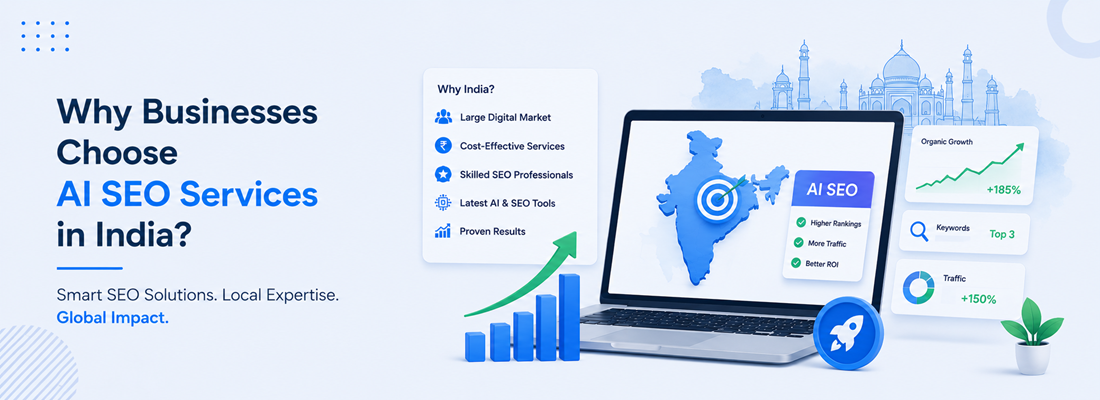
Businesses are outsourcing to reduce costs, access skilled talent, and stay competitive in an AI-driven search landscape. India offers a strong combination of affordability, technical expertise, and scalability, making it a preferred global outsourcing destination.

As traditional SEO gives way to smarter, data-driven strategies, many companies are turning to AI SEO Services in India to remain competitive. India has rapidly emerged as a global hub for digital marketing and AI-powered optimization, offering a unique blend of affordability, technical expertise, and scalability.

From startups to large enterprises, organizations are choosing to outsource SEO to India not only to reduce costs but also to access specialized talent and advanced tools. This shift reflects a broader trend where efficiency, innovation, and measurable results are becoming the core drivers behind modern SEO strategies.

What Market Trends Are Driving SEO Outsourcing to India?

AI-driven search, increasing content demand, and the need for technical SEO expertise are the key trends driving businesses to outsource SEO from India.

AI Transformation in the SEO Landscape

The global SEO landscape faces a complete transformation because AI-powered search systems now operate generative search functions.

Search engines have evolved from simple page indexing to analyzing user goals while creating responses and determining which information holds the most context.

Today, businesses need more advanced strategies as search evolves with AI.  To stay ahead, several organizations have started to seek SEO outsourcing services from India to access professional skills that match their requirements for new technology adoption.

Growing Demand for Scalable and Technical SEO

Modern SEO operations need businesses to create extensive content while building solid technical foundations. Businesses need to create high-quality content that serves their goals while they handle their website performance, structured data, and analytics systems.

India as a Preferred SEO Outsourcing Destination

The established outsourcing system of India, together with its advanced digital marketing abilities, has made the country a top outsourcing center.

Businesses achieve their business goals through fast work completion, continuous customer service, and access to staff members who have developed their skills through professional experience.

Indian businesses keep their SEO outsourcing operations because they want to maintain their operational efficiency while getting access to experienced industry professionals.

How Does Cost Advantage Make India Attractive for AI SEO?

India is attractive for AI SEO because it offers high-quality services at significantly lower costs compared to Western markets.

Cost of AI SEO in India

One of the biggest reasons companies choose to outsource SEO to India is cost efficiency.

Compared to Western markets:

  • SEO services in India can cost 40–70% less
  • Flexible pricing models (monthly retainers, project-based)
  • Lower operational overheads without compromising quality

Value Advantage of India SEO Services

  • Lower labor costs
  • High competition among agencies
  • Skilled workforce at scale

This makes AI SEO Services in India highly attractive for businesses looking to maximize ROI.

Why is India Leading in AI SEO Expertise?

India is leading in AI SEO due to its strong technical capabilities, skilled workforce, and adoption of advanced AI-driven tools.

Capabilities of AI SEO Agencies in India

India is no longer viewed merely as a cost-saving destination, but it has evolved into a strong center of technical and strategic capability. A leading AI SEO agency in India combines deep domain knowledge with advanced tools to deliver measurable results.

These agencies use AI-based keyword and intent analysis to achieve precise user behavior comprehension. The system operates through automated tools that handle content production, perform technical SEO optimization, and enhance system performance.

Businesses can optimize their strategic approaches through data analytics,s which tracks performance metrics for ongoing improvement. Multiple agencies build their service portfolio by adding machine learning optimization skills,s which help them adapt to evolving search engine ranking systems.

Role of AI in Modern SEO Services

AI has brought major improvements to the strategic development and operational management of SEO systems. The system provides predictive keyword research, which enables businesses to find essential opportunities before their competitors discover them.

The optimization process now targets AI-generated answers, which results in better search visibility for current search systems. Automated technical audits quickly identify and fix performance issues, while user intent modeling ensures content aligns closely with search behaviour.

Businesses can now shift from their current methods to AI search SEO through these combined capabilities, which focus on achieving visibility in intelligent AI-powered search systems instead of traditional ranking systems.

What Are the Benefits of Outsourcing SEO from India?

Outsourcing SEO to India provides cost savings, skilled talent, scalability, faster execution, and access to advanced AI capabilities.

  • Cost Efficiency

    The main benefit of this option comes from its cost-effective nature. Western businesses get their SEO work done by Indian companies, which provide superior service at prices that Western companies cannot match to increase their profit margins.

  • Access to Skilled Talent

    India has a vast pool of experienced SEO professionals, developers, and data analysts. The system allows organizations to access specialized abilities that combine technical SEO knowledge with content strategy expertise and analytics capabilities.

  • Scalability

    The SEO operations of businesses can develop at their own pace because they do not require staff members who need training or payment. The system provides flexible solutions that benefit businesses that want to expand their operations.

  • Faster Turnaround

    The business achieves continuous work through time zone advantages, which enable it to deliver projects at faster rates. The system enables organizations to keep their projects active throughout all stages of development.

  • Advanced AI Capabilities

    Indian agencies operating in India use AI-based strategies that help businesses maintain their position in the present-day AI-based search market.

What Do Real Case Studies Show About SEO Outsourcing in India?

Case studies show that outsourcing SEO to India improves traffic, reduces costs, and enhances performance in AI-driven search.

Case Study 1: SaaS Company Scaling Organic Traffic

  • Challenge: Low visibility in a competitive market
  • Solution: Partnered with an AI SEO agency in India
  • Result:
    • 120% increase in organic traffic
    • Improved rankings for high-intent keywords

Case Study 2: E-commerce Brand Reducing SEO Costs

  • Challenge: High SEO costs with local agencies
  • Solution: Decided to outsource SEO to India
  • Result:
    • 50% cost reduction
    • Better ROI on SEO campaigns

Case Study 3: Global Brand Adopting AI SEO

  • Challenge: Keeping up with AI-driven search changes
  • Solution: Leveraged AI SEO Services in India
  • Result:
    • Improved content performance in AI search results
    • Enhanced user engagement

How to Choose the Right AI SEO Agency in India?

Choose an agency with proven AI SEO expertise, transparent processes, and a strong track record.

What Should You Look For?

1. Proven Experience in AI SEO

Ensure the agency understands AI-driven search trends.

2. Transparent Processes

Clear reporting and communication are essential.

3. Customised Strategies

Avoid one-size-fits-all solutions.

4. Technical Expertise

Strong capabilities in technical SEO and automation.

5. Client Portfolio and Reviews

Look for real case studies and testimonials.

Why Choose India for SEO in 2026 and Beyond?

India maintains its position as a worldwide SEO outsourcing leader because search technology has developed into an AI-based system.

Rapid Adoption of AI Technologies

The fast pace of AI tools and technology adoption serves as a primary factor that drives this expansion.

Indian agencies operate through automation, data analytics, and machine learning,g which they use to enhance their SEO operations for better results with data-based approaches.

Continuous Upskilling of Professionals

The digital workforce in India needs to learn new skills because search algorithms continue to change while the industry experiences ongoing transformation.

Businesses now have access to contemporary SEO solutions that will support their success in the future.

Competitive Pricing Models

India provides adaptable pricing options that deliver excellent value for quality products. The system enables businesses to expand their SEO operations while they continue receiving steady returns from their investments.

Strong Global Client Base

Indian agencies have established themselves as dependable and successful organizations because they handle various business sectors and work with customers from around the world.

The search system has reached a new level of intelligence,ce so businesses need partners who can adapt quickly, while India provides scalable SEO solutions that include innovative solutions.

Conclusion

Overall, outsourcing to AI SEO Services in India is no longer just about saving costs, but it’s about gaining a competitive edge.

From advanced AI capabilities to scalable solutions, India offers everything businesses need to succeed in modern search environments.

How Search Generative Experience (SGE) Impacts AI SEO Services

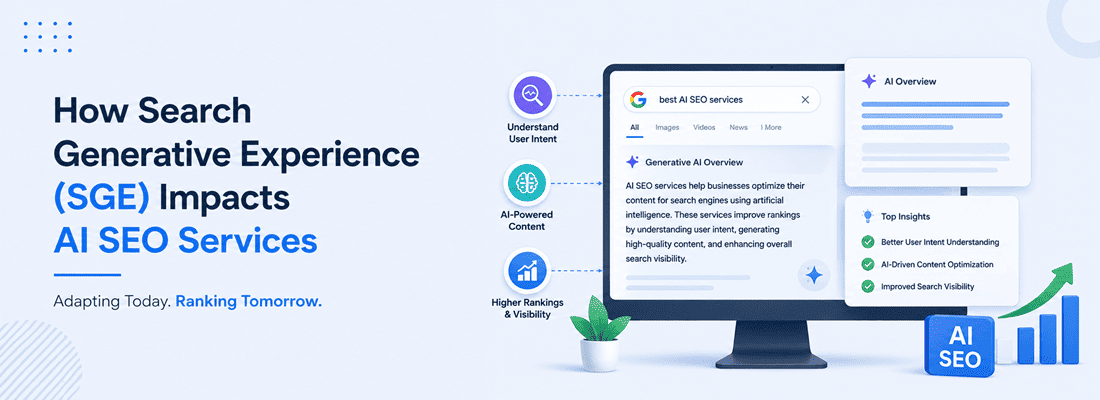
Search Generative Experience (SGE) changes how results appear by showing direct answers instead of only links, which is reshaping how AI SEO Services work.

Search has changed. It is no longer just a list of links, but it now gives direct answers at the top of the page. This shift is shaping how AI-oriented SEO Services across the USA work today.

With the rise of Google SGE, search results look more like conversations. Users ask questions, and the search engine replies with clear summaries. This means fewer clicks and more instant answers.

For brands, this brings a new challenge. It is no longer enough to rank on page one. Please appear inside the answer itself. This is where AI SEO plays a key role.

Let’s explore how this change works and what it means for your strategy.

What is Google SGE, and how does it work

Google-based SGE creates quick answers by collecting and combining useful information from multiple web pages.

Google SGE stands for Search Generative Experience. It uses advanced systems to create answers based on many sources.

Instead of showing only links, it builds a summary at the top of the page. This summary pulls key points from different websites. This summary highlights key points from various websites, including many businesses operating in the USA.

How it works

  • A user types a question
  • The system scans many pages
  • It selects useful information
  • It creates a short answer

This answer often appears before traditional results.

This is why generative search feels different. It acts more like a guide than a directory.

How Does SGE Change the Way Search Results Are Generated?

SGE changes search by selecting the best information for answers instead of simply ranking web pages.

The biggest shift lies in how content is selected and presented. Search is no longer only about ranking pages. It is now about choosing the best pieces of information to build a clear answer for the user.

From Ranking to Selection

In the past, search focused on ranking pages based on signals like links and keywords. With Google SGE, the focus has moved from ranking to selection. A page no longer needs to hold the top position to be featured. Even lower-ranked pages can appear in summaries if they provide clear and useful information. This clearly shows how SGE affects SEO, where content quality now matters more than position.

Less Need to Click

Users often get the answer they need directly on the results page. They do not always need to visit a website. This leads to fewer clicks, especially for simple queries. As a result, websites must offer deeper value to attract users beyond what is shown in the summary.

More Focus on Clarity

Clarity plays a key role in this new system. Content must be easy to read and quick to understand. The system prefers simple language, direct answers, and well-structured content. This marks a strong shift in AI search SEO, where content must be designed for both users and answer generation.

How is Optimization Changing in AI Search SEO?

Optimization now focuses on answering user questions clearly and structuring content so it can be easily selected for summaries.

Optimization is no longer about keywords alone. It is now about how well your content answers real questions. With the rise of AI-based search SEO, content must be clear, useful, and easy to extract.

1. Content Must Answer Fast

Users expect quick and direct answers. They do not want to scroll through long introductions. Your content should get straight to the point and provide value from the start. This is essential for strong AI SEO Services.

To do this well, focus on:

  • Starting with a clear response
  • Avoiding long openings
  • Highlighting key points early

2. Structure Matters More Than Ever

A clear structure helps systems understand and use your content. It also improves readability for users. Well-organized content has a better chance of being selected in generative search.

Make sure your content includes:

  • Headings and subheadings
  • Short paragraphs
  • Bullet points where needed

3. Authority Still Plays a Role

Trust remains important. Reliable and consistent sources are more likely to appear in summaries. Building authority takes time, but it supports long-term success in AI SEO.

To build trust, you should:

  • Stay consistent within your niche
  • Provide accurate and helpful information
  • Keep your content updated

These factors are likely to influence the SGE ranking factors 2026.

4. Intent Matters More Than Keywords

Search now focuses on what users want, not just what they type. Understanding intent is key in modern AI search SEO. Your content should match the user’s goal and provide complete answers.

To align with intent, focus on:

  • Understanding common user questions
  • Covering related topics
  • Giving clear and complete answers

This shift shows how optimization is evolving in a more user-focused direction.

What Are the Best AI Search Optimization Tips for Google SGE?

The best optimization tips focus on clear writing, strong structure, relevant answers, and maintaining updated content. To succeed, you need a clear plan.

Here are some simple and effective AI search optimization tips that can help you adapt to changing search behavior and improve your visibility in SGE.

1. Write as You Speak

Use simple language and keep sentences short so your content feels natural and easy to follow.

This approach improves readability and helps systems understand your content better, which is essential for strong performance in AI-based search SEO.

2. Answer Common Questions

Think about what users want to know and build content around those questions. Create sections that solve specific problems, provide direct answers, and explore different angles, which improves your chances of being selected in SGE summaries.

3. Use Clear Formatting

Good formatting helps both readers and systems process your content with ease. Use headings, short paragraphs, and lists where needed so key points stand out clearly, which strengthens your overall structure and supports better outcomes in AI SEO.

4. Focus on Depth, Not Length

Content reaches its highest performance levels when writers create concise materials that contain purposeful information that readers find valuable.

Writers need to create content that achieves the correct depth for generative search results, while they should avoid repeating information and focus on delivering specific subjects.

5. Keep Content Fresh

Your website needs to receive ongoing updates because this process will maintain its content accuracy and relevance, which directly affects its visibility.

Your pages need to maintain their value through the addition of new insights, the refinement of existing content, and the elimination of obsolete material, which will increase their chances of appearing in search results.

6. Build Topical Strength

Create multiple content pieces that focus on related subjects to deliver detailed information about your specific industry segment.

The process builds your authority through consistent actions, which build trust that leads to business success with AI SEO Services for lasting expansion.

What Does the Future of AI SEO Look Like with Generative Search?

The future of AI-powered SEO will focus on trust, conversational content, and deeper value as search shifts towards direct answers.

The future is already taking shape as search moves towards answers rather than links. This shift is changing how users interact with content and how businesses approach visibility in a world driven by generative search.

1. More Zero-Click Searches

Users will rely more on summaries shown directly on the results page, which reduces the need to click through for basic information.

This means fewer visits from simple queries, while deeper and more detailed content gains greater value.

2. Greater Focus on Trust

Only reliable and consistent sources are likely to be selected for summaries. This growing emphasis on trust will play a key role in shaping SGE ranking factors in 2026, where credibility and accuracy become essential for long-term visibility.

3. Rise of Conversational Search

Users are starting to ask longer and more detailed questions in a natural way. Content must adapt to this shift by matching conversational patterns, making it easier for systems to extract relevant answers and deliver meaningful responses.

4. Shift in Traffic Patterns

Traffic will not disappear, but it will change in nature. Websites may see fewer visits from simple queries, while more detailed searches bring higher-intent users who are looking for deeper insights and more valuable information.

5. Stronger Role of AI in SEO Services

Businesses will need expert support to adjust to these changes effectively. AI SEO Services will focus more on content structure, topic depth, and answer-based writing, which will define how brands succeed in the evolving space of AI-oriented SEO.

Conclusion

Overall, Search is no longer just about ranking. It is about being part of the answer. Google SGE has changed how results are created. It has also changed how users interact with search.

To succeed, you must adapt your approach. Focus on clarity, structure, and user intent. Use smart AI-powered SEO optimization tips to stay ahead.

The real question is how fast you can adapt. With the right strategy, AI SEO Services can help you stay visible in this new search landscape.

How Long Does Outsourced SEO Take to Show Results?

SEO needs time to develop, yet brands believe they will achieve success through their outsourced work. The situation creates distress because companies fail to fulfill their expectations. The website maintains its current position, while users experience minimal growth, which leads to building uncertainty.

Businesses want one answer for their SEO needs: the required time to achieve results. People find SEO to be a straightforward process, yet they struggle to understand its workings.

The blog provides information about the expected outsourced SEO results timeline, together with its influencing elements and methods to measure advancement correctly.

What Is Outsourced SEO?

Outsourced SEO means businesses need to hire external agencies, freelancers, or specific teams to manage their search engine optimization work. You should hire external specialists who possess all the necessary skills, established working methods, and industry knowledge instead of creating your own internal team.

Companies outsource SEO for a few solid reasons:

  • It’s faster to start than hiring internally
  • You get access to a full team — writers, strategists, and technical experts
  • It often costs less than a full-time hire
  • You stay focused on running your business

SEO outsourcing in India has become a popular route for US companies, especially. Indian SEO agencies offer quality work at a lower price point, and many of them specialize in serving US markets.

The Realistic Outsourced SEO Results Timeline

Understanding the outsourced SEO results timeline helps you set clear expectations and stay focused on steady, long-term growth.

Month 1–2: Foundation Work

The complete phase needs to be set up. The agency conducts an audit of your website, which includes fixing technical problems, conducting keyword research, and developing a content strategy. The ranking changes will not yet occur, which is a normal situation.

Month 3–4: Early Signals

The system starts to identify some low-competition keywords that will begin to show movement. Google starts to recognize the new content changes and the website structure improvements. The website traffic will experience a minor increase.

Month 5–6: Visible Progress

The work achievements begin to deliver benefits. The target keywords see improvements in their ranking positions. The volume of organic traffic increases. The backlinks that were created during previous months start to gain their first value.

Month 6–12: Meaningful Results

A successful SEO strategy should now produce measurable outcomes, which include increased traffic, leads, and improved keyword rankings. The time needed to rank competitive keywords extends beyond the first potential results.

Also Read: Case Study: How Outsourcing SEO to India Increased Traffic by X%

Does Outsourcing SEO Make Results Faster?

Outsourcing gets you to the starting line faster. An agency already has the team, tools, and processes in place. There’s no onboarding a new hire, no learning curve, no waiting six months to build internal capacity.

The use of outsourcing does not provide businesses with immediate access to Google services. Search engines reward consistency and quality over time. The experienced agency cannot create that production capacity within a single night.

Outsourcing eliminates operational delays that would occur during project execution. Your SEO occurs without interruptions because professionals who work in this field handle it on a daily basis. The gap between starting and seeing results decreases because of that consistent pattern.

Key Factors That Influence Timeline for SEO Outsourcing Results

Every site is different. These factors directly shape how fast you’ll see results when you outsource SEO to India.

1. Website’s Current State

A new site starts with zero authority, so growth takes longer. An older site with backlinks and traffic can move faster from day one.

  • New websites need time to build trust with search engines
  • Technical issues like slow speed and broken links delay progress
  • Existing authority helps rankings improve sooner

2. Industry’s Competition Level

Not all keywords are equal. Some markets are easy; others are crowded. The tougher your niche, the longer it takes to rank.

  • High competition keywords need stronger SEO efforts
  • Established brands dominate competitive search results
  • Low competition niches often see quicker gains

3. Content Volume and Quality

Content drives SEO growth, but not all content works the same. Quality content builds trust, while poor content slows results.

  • Well-researched content ranks faster and stays longer
  • Consistent publishing improves visibility over time
  • Thin or duplicate content hurts performance

4. Backlink Strategy

Backlinks act as trust signals for search engines. Strong links help pages rank higher and faster.

  • Links from trusted sites boost domain authority
  • Natural link building takes time and effort
  • Spammy links can lead to penalties and delays

5. Communication and Feedback Speed

SEO moves faster when decisions happen quickly. Delays in approvals slow down the entire process.

  • Quick feedback helps agencies execute faster
  • Slow responses create gaps in progress
  • Clear communication keeps strategy aligned

SEO Results After Outsourcing: What to Measure

The actual SEO results after outsourcing exist beyond your ranking assessment, which you should not dismiss through browser termination.

  • Rankings Movement

    This is the first visible sign of SEO progress. Track how your target keywords move week over week.

  • Organic Traffic

    Rankings serve no purpose until they create visitor traffic. Check if more users are reaching your site through search.

  • Keyword Visibility

    This shows your overall presence in search results. A growing keyword footprint signals steady SEO progress.

  • Backlink Growth

    Backlinks reflect your site’s authority and trust. Consistent link growth shows your strategy is working.

  • Conversions from Organic Traffic

    Traffic alone does not drive business growth. Measure how many visitors take action on your site.

SEO Outsourcing in India: Timeline Expectations

India has become a top choice for SEO outsourcing from the US. Skilled talent, strong English skills, and lower costs make it a smart option for growing businesses.

When you are outsourcing SEO to India, the timeline stays similar—around 4 to 9 months for solid results. What changes is the value you get for your budget.

The offshore SEO services in India handle multiple assignments simultaneously because of their proven reliability. Their work requires a higher volume of content, which they use to establish connections while they complete tasks at a quicker rate than their smaller in-house team.

What to Look for in an Indian SEO Agency

  • A portfolio of work for US-based clients
  • Transparent monthly reporting
  • Native-level English content writing (or US-based writers)
  • Experience with your industry or niche
  • No guarantees of “#1 rankings” (that’s a red flag)

Outsourcing AI SEO in India: Does It Change the Timeline?

The practice of outsourcing AI SEO in India has become a popular trend that people need to understand more deeply.

AI tools have changed how agencies work. Content gets drafted faster, keyword research is sharper, and audits that took days now take hours.

Does AI technology decrease the search engine optimization work duration? The process becomes faster during its initial stages, which include audits, strategy development, and draft creation.

The actual danger to content quality exists. Agencies that depend excessively on AI tools without human proofing produce substandard content. The most effective teams employ AI technology to enhance their strategic work instead of using it as a substitute.

Common Mistakes That Delay SEO Results

These are the most common ways businesses accidentally slow down their own SEO progress.

  • Switching agencies too early: Stopping SEO at month 3 because “nothing is happening” is the single most common mistake. Month 3 is usually when the foundation is just getting solid.
  • Not providing timely approvals: Every delay on your end is a delay in publication. Delays in publication push back results.
  • Targeting keywords that are too competitive too soon: New sites should build authority on easier wins first, then climb to harder keywords. Skipping this step wastes budget and time.
  • Ignoring technical SEO issues: If your site loads slowly or has major crawl issues, no amount of content will compensate. Technical fixes come first.
  • Expecting SEO to replace paid ads immediately: SEO and paid traffic serve different roles. SEO is a long-term investment. Treating it like a quick fix sets up unrealistic expectations from day one.

How to Set Realistic Expectations with an SEO Agency

Getting on the same page before work starts saves a lot of frustration later. Here’s how to do it right.

  • Define Success Upfront

    The start of the project needs to establish specific goals that need to be reached. The project requires numerical analysis through three key metrics, which include traffic growth, keyword rankings, and lead generation.

  • Request a Detailed Monthly Schedule

    A good agency should outline its roadmap. You should know what happens in months one, three, and six.

  • Establish a Schedule For Reporting

    Most agencies submit their reports every month. The team needs to establish specific performance indicators that they must monitor and report to stakeholders.

  • Give It at Least Six Months

    SEO requires time investment before it produces actual outcomes. A six-month commitment shows which elements of the strategy will succeed or fail.

In-House vs Outsourced SEO Timeline (Comparison)

FactorIn-House SEOOutsourced SEO
Time to get started2–4 months (hiring, onboarding)2–4 weeks
Monthly costHigher (salary + tools)Lower (agency retainer)
Expertise levelDepends on the hireImmediate access to specialists
Results timeline6–12 months4–9 months (with faster start)
ScalabilitySlowFast
CommunicationInstantRequires clear processes

Conclusion

The outsourced SEO results timeline extends from four months to twelve months. The process of outsourcing work to others increases work efficiency but does not influence how search engines function.

You stay concentrated on making progress because you understand the process, which helps you avoid the frustration. Properly track your improvements by measuring your traffic, rankings, and conversions instead of pursuing fast results.

The essential factor for your SEO work happens when you decide between outsourcing SEO to India or using a local team because you need to focus on long-term goals while assessing important performance metrics.

Real ROI of Offshore SEO Services in India

Many business owners wonder if hiring an outside team for search engine work is worth the cost. They see the monthly bills and question the benefits. This guide breaks down the real numbers behind offshore SEO partnerships. It explains what ROI is, how to measure it, and the factors that drive success. Knowing the offshore SEO ROI in India helps a company decide if this move makes financial sense.

The choice to send SEO work overseas involves more than comparing monthly fees. A smart business looks at value, not just cost. Simple formulas can reveal whether an offshore partnership brings positive results. By the end, any business owner can evaluate their SEO spending with confidence.

What Does ROI Mean in SEO Outsourcing?

Return on investment compares what a business spends against what it gains. In SEO terms, spending includes agency fees, tools, and internal management time. Gains include organic traffic value, lead generation, and direct sales from search visitors. A positive ROI means the gains outweigh the costs.

Figuring out SEO returns proves trickier than other marketing channels. Paid ads show clear cost-per-click numbers right away. SEO builds value slowly over many months. A campaign might lose money in the first three months but deliver big returns in year two. Smart businesses measure ROI across twelve-month periods.

Here are the components that feed into SEO ROI calculations:

  • Organic traffic value. Multiply monthly search visitors by what it would cost to get those clicks through paid ads. This represents direct advertising savings.
  • Lead and sales attribution. Track how many form fills, calls, or purchases come from organic search. Assign a dollar value to each converted visitor based on customer lifetime value.
  • Brand visibility lift. Ranking higher for branded terms builds trust. This intangible benefit reduces future marketing costs across all channels.
  • Time savings from delegation. Calculate the hours internal staff no longer spend on SEO tasks. Multiply those hours by their hourly wage to find hidden savings.
  • Compound growth effect. Rankings achieved this month continue paying dividends next year. Unlike paid ads, SEO value accumulates without repeated spending.

Cost vs Value: Understanding Offshore SEO Pricing

Many businesses focus only on the monthly fee when comparing SEO providers. This limited perspective overlooks the broader context. A lower price might deliver zero results, wasting every dollar spent. A higher fee that produces consistent traffic gains offers real value.

The difference between cost and value becomes clear when looking at outcomes. Cost represents what leaves the bank account. Value represents what comes back in leads, sales, and brand authority. An expensive campaign that doubles organic revenue provides excellent value. A low-cost campaign has no value if it doesn’t move any rankings.

Here is a simple breakdown of how to think about SEO pricing:

Pricing ModelWhat You Pay ForWhat You Get
Low-cost monthly retainerBasic reporting, minimal link building, generic contentSlow or no ranking movement, wasted budget
Mid-range performance packageTargeted keyword research, regular content, quality backlinksSteady traffic growth, improving lead volume
Strategic partnership modelDeep industry analysis, custom content strategy, authority buildingCompound returns, lasting market position

Choosing to outsource SEO to India shifts this value calculation further. Lower operating costs in India mean a business gets more work for the same budget. More content, more links, and more technical audits happen without raising the monthly fee. This amplifies the potential ROI significantly.

Key Factors That Influence SEO Outsourcing ROI

The financial outcomes from offshore partnerships display different patterns because their operating results produce varying financial outcomes. Organizations must track various elements which decide if their marketing initiatives will achieve success or result in failure. Business organizations need to understand these elements because they will select their suitable partners and build achievable targets.

The offshore team’s quality stands as the primary factor, which exceeds all location-based considerations. A team of skilled professionals who follow established procedures produces regular outcomes. An inexperienced team wastes time on outdated tactics that search engines punish.

Here are the critical factors that shape SEO outsourcing returns:

  • Industry experience of the offshore team. A team familiar with a specific niche moves faster. They already know which keywords convert and which content formats attract links.
  • Communication structure and reporting frequency. Weekly video calls and shared dashboards prevent misunderstandings. Clear reporting ties every activity to measurable outcomes.
  • Contract flexibility and trial periods. Short-term commitments allow testing before long-term investment. A three-month trial reveals whether the partnership fits.
  • Access to client data and systems. The offshore team needs analytics, search console, and CRM access. Denying this access cripples their ability to measure and adjust.
  • Quality of content production. Thin, generic content wastes everyone’s time. Well-researched, useful content attracts links and engages visitors naturally.
  • Link-building approach and safety. White-hat methods build lasting authority. Black-hat shortcuts invite search engine penalties that destroy ROI.

SEO outsourcing in India offers particular advantages in several of these areas. Indian professionals often hold advanced degrees and speak fluent English. Many have worked with USA clients for years, understanding Western business expectations. This experience makes communication smoother than with less-established offshore markets.

How to Calculate the ROI of Outsourcing SEO to India

Putting numbers on SEO returns requires a straightforward formula. First, add up all costs associated with the offshore partnership. Include monthly fees, tool subscriptions, and internal staff time managing the relationship. This total represents the investment.

Second, calculate the revenue generated from organic search during the same period. Track form submissions, phone calls, and e-commerce purchases from non-paid search traffic. Multiply each conversion by the average customer lifetime value. This total represents the return.

Here are the steps to calculate the ROI of outsourcing SEO to India:

  • The first step requires you to include all SEO expenses that occurred during the specified time. To get the total investment number, you need to combine agency fees with software expenses and convert internal labour hours into their corresponding dollar values. The total investment number becomes available through this calculation.
  • The second step requires you to determine the revenue generated by organic search results. The process of tracking organic traffic sales requires analytics data together with CRM data to conduct this analysis. The system calculates future lead value by using past conversion data to determine how many leads will turn into sales.
  • The third step requires you to apply the ROI formula to your data. Subtract investment from return, then divide by investment, then multiply by 100. A positive percentage means the campaign makes money. ROI = (Return – Investment)/Investment * 100
  • The process requires a twelve-month period of tracking data. SEO development occurs at a slow pace, which makes monthly ROI numbers untrustworthy. A twelve-month window shows the true picture.

A sample calculation makes the situation clearer. Suppose a business spends $5,000 monthly on an offshore SEO team. Over six months, the total investment equals $30,000. During that period, organic search drives $60,000 in direct sales. The ROI equals 100%. The business doubled its money.

Short-Term vs Long-Term SEO Returns

SEO does not deliver instant gratification. The first few months of any campaign often show minimal revenue movement. This does not mean the strategy fails. This indicates that the investment is still progressing towards a critical juncture.

Short-term returns are derived from easily accessible opportunities. Fixing technical errors, updating old content, and targeting less competitive keywords produce quick wins. These gains build confidence and fund further investment. Long-term returns require patience. Authority building, competitive link acquisition, and category dominance take twelve to eighteen months.

Here is a comparison of what to expect at different stages:

Time PeriodWhat to ExpectROI Direction
Months 1 to 3Technical fixes, content updates, and initial link buildingNegative or break-even
Months 4 to 6First ranking movements, traffic uptick, some leadsApproaching positive
Months 7 to 12Steady traffic growth, consistent leads, and brand visibilityClearly positive
Months 13 to 24Market dominance, reduced ad spend reliance, and strong authorityHighly positive

Choosing offshore SEO services in India does not change this timeline, but it changes the slope. More work gets done for the same budget, which accelerates progress. A campaign that might take eighteen months with a local agency could show strong returns in twelve months with an offshore partner.

How to Maximize ROI with SEO Outsourcing in India

The business owner must actively engage in their operations to achieve the highest possible return on investment. The success of an offshore team depends on their ability to receive information while maintaining access to operations and building trust with their counterparts. Clients who achieve the highest ROI through their actions demonstrate multiple standard behaviours, which they practice regularly.

The process of keyword research becomes more efficient when businesses offer detailed customer information. The team base their sales data-sharing process on their ability to start working with the most valuable sales data points. The production process continues to move forward because the team responds quickly to content requests. Small actions create a total effect, which helps the website achieve higher search engine rankings at a faster rate.

Here are the proven ways to boost SEO outsourcing return on investment:

  • Share internal sales and customer service data. Let the SEO team know which products sell best and what questions customers ask. This guides content creation toward topics that actually convert.
  • Approve content drafts within two business days. Delays in the approval process stall momentum. Fast turnarounds keep the publishing calendar on track.
  • Set up proper tracking before the campaign starts. Install goal tracking in analytics and connect CRM data to search traffic. Measuring results accurately from day one prevents guesswork.
  • Integrate SEO with other marketing channels. A ranking blog post can feed social media content. Email newsletters can promote newly ranking pages. Paid ads can retarget organic visitors.
  • Conduct quarterly ROI reviews. Regular check-ins catch problems early before they waste months of budget. Adjust strategy based on what the numbers show.

One often overlooked factor involves integrating SEO with other marketing channels. A blog post that ranks well can feed social media content. Email newsletters can promote newly ranking pages. Paid ads can retarget organic visitors. This cross-channel approach multiplies the value of every SEO dollar spent.

Businesses serious about maximizing returns should also calculate SEO outsourcing ROI at regular intervals. A quarterly review keeps the campaign aligned with business goals. It also catches any problems early, before they waste months of budget.

Final Thoughts

The real ROI of offshore SEO depends on choosing the right SEO partner and measuring correctly. A campaign that costs less but delivers nothing offers no value. A campaign that costs more but doubles organic revenue provides excellent returns. Every time, the math favours quality over low prices.

Businesses that commit to a twelve-month horizon see the best results. They weather the early months of investment without panicking. By month nine, the traffic gains start paying back the initial outlay. The returns frequently surpass expectations by the eighteenth month.

Offshore SEO ROI in India looks strong for companies that follow the principles outlined here. Pick a skilled team, share data freely, and measure returns properly. Avoid the trap of focusing only on monthly fees. Value, not cost, determines whether an SEO partnership succeeds or fails.