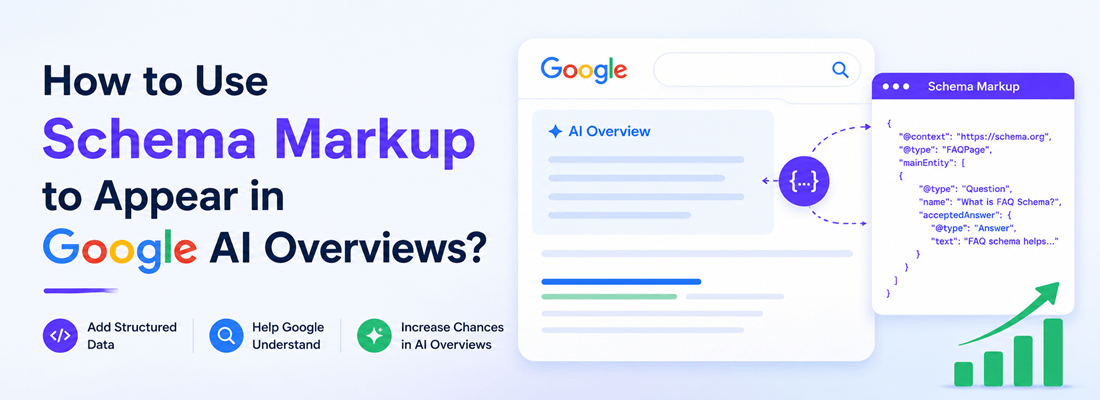
Schema markup is the language search engines understand. So, if you want your content to stand out in Google AI Overviews, then you need to speak that language clearly.
Search has changed, so ranking on page one is still important, but visibility now depends on how well search engines understand your content. Google AI Overviews pull information from trusted sources and present answers directly in search results. To become one of those sources, your content needs a clear context.
This is where schema markup for AI overviews becomes important. Structured data helps search engines understand what your content is about, who created it, and how different pieces of information connect. It creates stronger signals that improve content interpretation and increase the likelihood of being referenced in AI-generated answers.
In this guide, you will learn how to use schema markup, which schema types matter most, how to implement them correctly, and how to avoid common mistakes. Whether you are part of an SEO team, development team, or content department, this guide will help you build a stronger AI SEO strategy.
Want More Traffic and Better Rankings?
Reach more customers, improve search visibility, & build a strong online presence with a clear SEO strategy.

What Is Schema Markup and Why Does It Matter in 2026?
The webpage receives its data organization through Schema markup which functions as structured information. The system receives additional details that enable search engines to understand content through more than just visible text.
The content of a page might include recipes together with product evaluations, question-answer sections and detailed instructions for procedures. The human ability to identify these elements exists but search engines require particular indicators to understand them correctly.
The year 2026 marks a new era for schema markup SEO because machine-readability now stands as the most essential factor. Search engines rely on structured information to:
- Search engines need to understand the topics on each page, identify authors and their organisations, recognise products and services, and see connections between entities. This allows them to produce detailed search results automatically.
- Google AI Overviews generate their brief answers through information that they extract from various reference materials. The presence of structured data on pages enables Google AI overviews to generate better signals than pages that lack any structured data.
- The presence of Schema markup does not guarantee that AI Overviews will show your website content. The tool allows search engines to understand your content better which helps you build trust as a reliable information source.
Which Schema Types Are Most Useful for AI Overviews?
Different schema types serve different purposes. Some are particularly valuable because they align with the way Google AI Overviews generate answers.
| Schema Type | Use Case | AI Overview Benefit |
|---|---|---|
| FAQPage | Frequently asked questions | Helps identify direct answers |
| HowTo | Step-by-step guides | Supports procedural content |
| Article | Blog posts and editorial content | Provides content context and authorship |
| Organization | Company information | Strengthens entity recognition |
| Product | Product pages | Improves understanding of product details |
| BreadcrumbList | Site hierarchy | Clarifies page relationships |
For most websites, these schema types form the foundation of an effective AI SEO strategy.
How to Implement FAQPage Schema (With Code)?
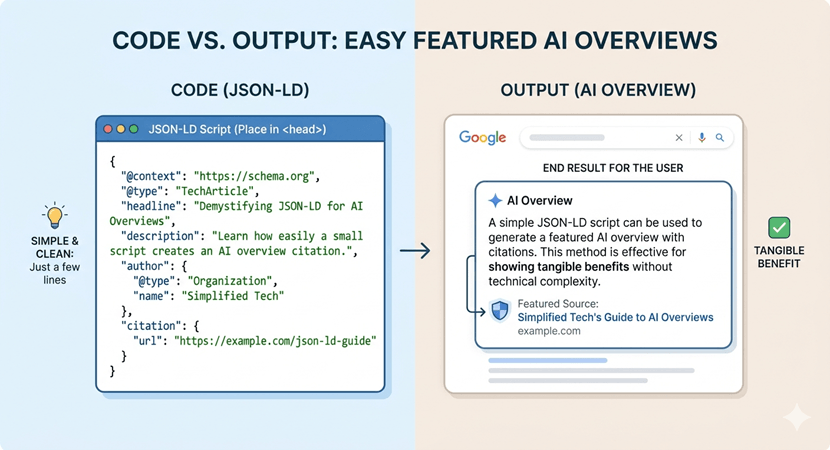
FAQ content matches the structure of many AI-generated responses. Questions and answers provide clear information that search engines can process quickly.
Below is a simple JSON-LD schema markup guide example for an FAQ section.
{
“@context”: “https://schema.org”,
“@type”: “FAQPage”,
“mainEntity”: [
{
“@type”: “Question”,
“name”: “What is schema markup?”,
“acceptedAnswer”: {
“@type”: “Answer”,
“text”: “Schema markup is structured data that helps search engines understand webpage content.”
}
},
{
“@type”: “Question”,
“name”: “Why is schema important for AI Overviews?”,
“acceptedAnswer”: {
“@type”: “Answer”,
“text”: “Schema provides context that helps search engines interpret content more accurately.”
}
}
]
}
Best Practices for FAQPage Schema
- Use real questions visible on the page
- Match answers exactly to page content
- Keep questions concise
- Avoid duplicate FAQs across multiple pages
- Update FAQs when content changes
FAQ schema remains one of the strongest forms of schema markup for AI overviews because it aligns with question-based search behaviour.
How to Implement How To Schema (With Code)?
HowTo schema works well for instructional content.
If your article explains a process, a method, or a sequence of actions, the HowTo schema helps search engines identify those steps clearly.
Example:
{
“@context”: “https://schema.org”,
“@type”: “HowTo”,
“name”: “How to Create Schema Markup”,
“step”: [
{
“@type”: “HowToStep”,
“name”: “Choose a schema type”
},
{
“@type”: “HowToStep”,
“name”: “Create JSON-LD code”
},
{
“@type”: “HowToStep”,
“name”: “Add the code to your page”
},
{
“@type”: “HowToStep”,
“name”: “Validate the markup”
}
]
}
When to Use HowTo Schema
Use it for content such as:
- Setup guides
- Tutorials
- Installation instructions
- Troubleshooting processes
- Marketing workflows
Why It Matters?
Many AI-generated responses explain how to complete a task. HowTo schema provides structured steps that can support these answers.
When planning schema markup SEO 2026, process-driven content should include HowTo markup whenever appropriate.
How to Implement Article Schema?
Article schema helps search engines understand editorial content. This schema provides important context about:
- The author
- The publication date
- The headline
- Featured images
- The publisher
A basic Article schema example looks like this:
{
“@context”: “https://schema.org”,
“@type”: “Article”,
“headline”: “How to Use Schema Markup to Appear in Google AI Overviews”,
“author”: {
“@type”: “Person”,
“name”: “John Smith”
},
“datePublished”: “2026-01-15”,
“image”: “https://example.com/image.jpg”
}
Important Properties
Headline:
The headline should match the page title.
Author
Author information supports trust and expertise signals.
Date Published
Publication dates help search engines evaluate freshness.
Image
Include a high-quality featured image.
Why Article Schema Matters?
Google needs to understand who created the content and when it was published. Article schema supports stronger content attribution and contributes to an effective structured data Google AI overview implementation.
How to Add Schema Markup in WordPress?
Many websites use WordPress, making schema implementation easier. There are three common approaches.
| Method | Ease of Use | Flexibility | Best For |
|---|---|---|---|
| SEO Plugin | Easy | Medium | Beginners |
| Advanced SEO Plugin | Easy | High | Growing websites |
| Manual JSON-LD | Advanced | Full Control | Developers |
Plugin-Based Implementation
Most SEO plugins generate common schema automatically. This approach works well for:
- Blog content
- Organisation schema
- Basic article markup
- Breadcrumbs
Manual Implementation
Developers often prefer manual JSON-LD implementation because it offers complete control. Benefits include:
- Custom schema structures
- Better accuracy
- Reduced unnecessary markup
- Easier schema auditing
When learning how to use schema markup, many businesses start with automated solutions and later move to manual optimisation.
For organisations working with an AI SEO firm, custom schema implementation often provides stronger results than default settings.
Testing and Monitoring Your Schema

The schema should never be published without validation. Even small errors can prevent search engines from reading structured data correctly.
Validate Before Publishing
Use a structured data validation tool to check:
- Syntax errors
- Missing fields
- Invalid properties
- Schema compatibility
Monitor Performance
Search engine reporting tools can help identify:
- Structured data errors
- Rich result eligibility
- Coverage issues
- Enhancement opportunities
Regular Audits
The schema should be reviewed whenever:
- Content changes
- Product details change
- Team members change
- Services change
- Business information changes
Many companies offering generative AI SEO services include structured data audits as part of ongoing optimisation programmes. As, regular monitoring helps maintain accurate and effective schema implementation.
Schema Markup Mistakes That Prevent AI Overview Inclusion
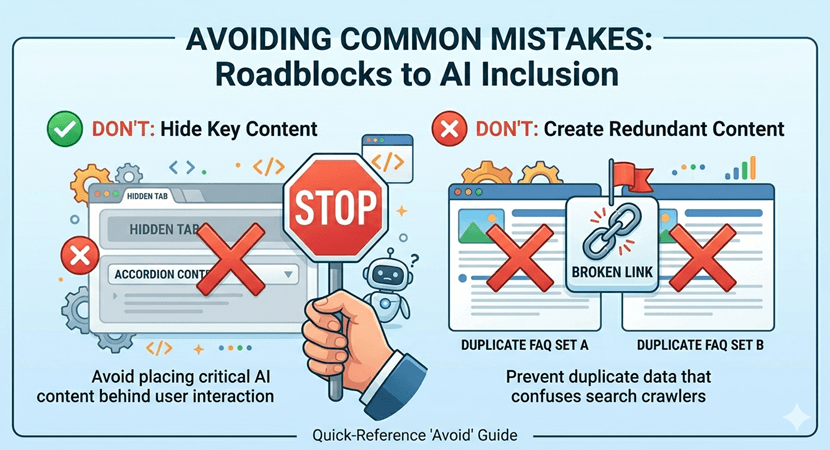
Many websites implement schema incorrectly.
These mistakes can reduce effectiveness and create confusion for search engines.
Using the Wrong Schema Type
Problem: Applying the Product schema to a blog post.
Fix: Match schema type to page purpose.
Marking Up Content That Does Not Exist
Problem: Adding FAQ schema without visible FAQs.
Fix: Ensure schema reflects actual page content.
Missing Required Properties
Problem: Omitting essential fields.
Fix: Complete all required properties and recommended fields.
Outdated Information
Problem: Old business details remain in the schema.
Fix: Update structured data whenever information changes.
Duplicate or Conflicting Markup
Problem: Multiple schema blocks describe the same content differently.
Fix: Maintain one accurate version of each schema type.
Avoiding these issues helps strengthen your schema markup for AI overviews strategy and improves content interpretation.
Businesses seeking professional support often work with providers offering AI SEO services in India and other specialised optimisation teams to maintain structured data accuracy at scale.
Conclusion
The current search optimization process depends heavily on schema markup which stands as a vital component today. The development of Google AI Overviews has led search engines to depend on organized information for content comprehension, entity recognition and trust establishment.
For businesses implementing schema markup for AI overviews, structured data helps search engines understand content more effectively by generating stronger signals for interpretation and relevance.
The search engines understand your content better because schema markup generates improved signals that they use for content interpretation. The most effective approach combines:
- Article schema
- FAQPage schema
- HowTo schema
- Organization schema
- Product schema
- Breadcrumb schema
Focus on accuracy, consistency, and regular maintenance. For businesses investing in AI SEO, structured data is no longer optional. It is one of the clearest ways to help search engines understand what your content means, not just what it says.
FREQUENTLY ASKED QUESTIONS
Website pages do not need schema markup but essential pages must contain structured data that matches their content. The main focus for website optimization should target articles together with product pages, service pages, FAQs and organisation pages.
A single page can contain multiple schema types when they accurately describe the content. An article page should contain Article schema together with FAQPage and BreadcrumbList and Organization schema for proper structure.
No. The schema markup system does not function as a direct ranking factor that influences AI Overview generation. The system allows search engines to understand content better which increases the chances of content being referenced.
Update the schema whenever the page content changes. Businesses need to conduct regular reviews at three-month intervals because these assessments determine information accuracy while stopping obsolete data from impacting their search engine results.