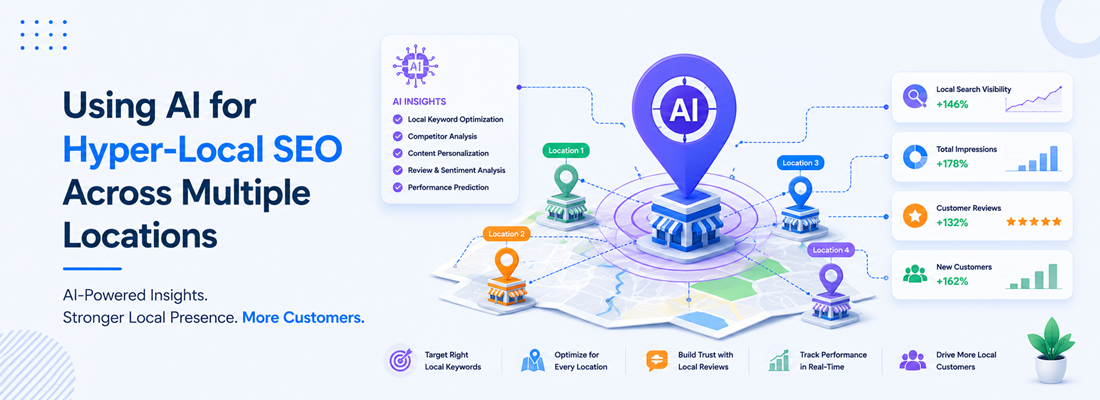
Managing a business in one city comes with challenges. Expanding across multiple cities creates even greater complexity. Each location has different customers, search habits, competitors, and buying behaviour. A strategy that works well in London may not deliver the same results in Manchester. Likewise, a campaign that succeeds in New York may not attract the same attention in Chicago.
This is where smart search optimisation becomes important. Brands with many branches now focus on hyper-local visibility instead of broad national rankings. Customers search for businesses close to them. They want quick answers, accurate details, and nearby options. If your business does not appear in local searches, you lose customers before they even visit your website.
That is why many companies now invest in AI SEO Services India to manage local campaigns across several locations without losing consistency or quality.
In this guide, you will learn:
- What hyper-local SEO means
- Why it matters for multi-location businesses
- How modern automation improves local visibility
- The biggest challenges brands face
- Practical methods to improve rankings
- Real examples of local growth strategies
Want More Traffic and Better Rankings?
Reach more customers, improve search visibility, & build a strong online presence with a clear SEO strategy.

What is Hyper-Local SEO?
Hyper-local SEO focuses on improving visibility in a very specific area. Instead of targeting an entire country, region, or large city, it focuses on neighbourhoods, streets, districts, or nearby communities.
For example:
- “Pizza shop near Central Park”
- “Best dentist in Camden”
- “Gym near Marina District”
Search engines now understand location intent better than ever. They show nearby businesses based on distance, relevance, reviews, and local authority.
Hyper-local SEO helps businesses appear in:
- Map results
- Local search listings
- “Near me” searches
- Voice searches
- Mobile searches
This approach matters because most customers make quick decisions. They search, compare options, and choose a business within minutes.
Why Does Hyper-Local SEO Matter for Multi-Location Brands
A single-location business only needs to manage one local presence, whereas multi-location brands must maintain visibility across many areas at the same time.
That creates several problems:
- Different local competitors
- Different customer behaviour
- Different search demand
- Duplicate content issues
- Inconsistent business information
Without a proper strategy, local pages start competing against each other. Search engines struggle to understand which page belongs to which area. This is why multi-location SEO requires structure, planning, and consistent optimisation.
Businesses with several branches must build trust in each location separately. A customer in Bristol does not care about your Leeds office. They want accurate details for the nearest branch.
That means every location needs:
- Unique local content
- Correct contact information
- Local reviews
- Area-specific pages
- Relevant keywords
- Strong local signals
Also Read: AI Content vs Human Intuition: Maintaining EEAT in 2026
How Has Local Search Behaviour Changed in Recent Years?
Search behaviour has changed.
People no longer type broad searches such as:
- “Best clothing store”
Now they search with local intent:
- “Best clothing store in Soho”
- “Affordable clothing shop near me”
Search engines respond by giving local results first. This shift has pushed businesses to improve local targeting across every branch.
Traditional SEO methods take time when managing many locations, manual updates become difficult, content creation feels repetitive and tracking performance becomes messy.
This is where AI SEO helps businesses scale local campaigns more efficiently. Many brands now combine automation with local SEO AI strategies to improve local search visibility faster.
How Does AI Support Hyper-Local SEO Across Multiple Locations?
Modern optimisation methods help businesses process large amounts of local data faster. This allows brands to improve local visibility across many locations without losing consistency.
Many growing brands now rely on AI SEO Services India to handle large-scale local optimisation across different cities while maintaining consistency.
Let’s explore the role of AI in local SEO, including:
Faster Local Content Creation
Each branch needs unique content.
Many businesses struggle because they copy the same text across all location pages. Search engines view this as weak content. But smart content systems help to create:
- Area-specific landing pages
- Local service descriptions
- Neighbourhood-based FAQs
- Location-focused blog topics
This improves relevance for local searches.
Also Read: Top 7 AI Tools for Predictive SEO and Trend Analysis
Better Keyword Research
Local searches vary by area. Customers in one city may use different phrases than customers in another. For example:
- “Takeaway”
- “Take-out”
- “Food delivery”
Search systems can identify patterns across regions and help businesses target the right terms. This improves your AI local SEO strategy without relying on guesswork.
Review and Reputation Monitoring
Reviews strongly influence local rankings, so brands with many branches often receive hundreds of reviews every week. Managing them manually takes time. Modern systems help businesses:
- Track customer sentiment
- Identify common complaints
- Monitor rating trends
- Improve response times
Strong reviews improve trust and increase local visibility.
Improved Local Listings Management
One of the biggest local SEO problems is inconsistent business information. Even small differences create confusion:
- Wrong phone numbers
- Old addresses
- Different opening hours
Search engines rely on consistency, and businesses using local SEO AI systems can track local listings and catch inaccuracies quickly.
Better Search Intent Analysis
Search engines now focus heavily on intent.
Someone searching for:
- “Emergency plumber near me”
has immediate buying intent.
Someone searching:
- “How to fix a leaking tap.”
may still be researching.
Understanding this difference helps businesses create better local pages for each stage of the customer journey.
What Challenges Do Businesses Face With Multi-Location SEO?
Managing one website across many locations sounds simple. In reality, it becomes complex very quickly. Below are the biggest issues businesses face. Let’s explore
Duplicate Content Problems
Many companies copy the same page for every branch and only change the city name, which leads to creating thin content. Search engines prefer pages with unique local value.
Each location page should include:
- Local landmarks
- Nearby areas served
- Customer reviews
- Branch-specific services
- Local events or community references
Managing Hundreds of Pages
Large businesses may operate across dozens or hundreds of cities. So, updating pages manually becomes difficult. Simple changes, such as holiday opening hours, can turn into major tasks. Without structure, errors appear across the site.
Inconsistent Branding
Different branches sometimes create different messages, promotions, or descriptions.
This creates confusion for both users and search engines. Your business should feel consistent while still appearing locally relevant.
Local Competition
Every branch competes against local businesses. A national brand may dominate one city but struggle in another where local competitors have stronger community trust. This means businesses need localised strategies instead of one national campaign.
Review Management
Negative reviews can hurt local rankings. Multi-location businesses must monitor customer feedback closely. Because a few poor reviews at one branch can damage trust quickly.
How Can Businesses Build an Effective AI Local SEO Strategy?
A strong strategy combines local relevance with scalable optimisation. Here are the key areas to focus on.
Create Unique Location Pages
Every branch needs its own dedicated page.
Include:
- Address
- Phone number
- Directions
- Local services
- Team details
- Nearby landmarks
- Customer testimonials
Avoid copying the same content across pages.
Use Local Keywords Naturally
Add city and area keywords where relevant.
Examples include:
- “Dental clinic in Birmingham”
- “Home repairs in Brooklyn”
Use keywords naturally within headings and body content.
Your pages should read like normal conversations.
Optimise for Mobile Searches
Most local searches happen on mobile devices.
Your website should:
- Load quickly
- Display properly on smaller screens
- Make phone numbers clickable
- Provide clear directions
Slow mobile pages lose customers fast.
Focus on Reviews
Encourage customers to leave honest reviews.
Positive reviews improve:
- Trust
- Click-through rates
- Local rankings
Respond to reviews regularly. Customers notice active businesses.
Build Local Authority
Search engines trust businesses connected to their communities.
You can improve the local authority by:
- Supporting local events
- Partnering with nearby businesses
- Creating local content
- Earning local mentions
This strengthens your local presence over time.
What Are the Best Hyperlocal SEO India Tips for Growing Brands?
Businesses in India face unique local search conditions because of language diversity, regional buying behaviour, and mobile-first usage. Below are practical hyperlocal SEO India tips for brands expanding across multiple cities.
Focus on Regional Search Behaviour
Search habits change from city to city. Customers in Mumbai search differently from customers in Chennai or Jaipur. So, businesses need to research local phrases and customer habits carefully.
Optimise for Mobile Speed
Mobile traffic dominates local searches in India. Fast-loading pages improve both rankings and conversions. Try to compress images and reduce unnecessary scripts.
Use Location-Specific Content
Avoid generic city pages.
Mention:
- Local areas
- Community references
- Local festivals
- Regional services
This improves engagement and relevance.
Strengthen Local Trust Signals
Indian consumers rely heavily on reviews and recommendations. You need to encourage satisfied customers to leave detailed reviews with location references.
Businesses using AI SEO Services India often improve review management, local consistency, and regional targeting more efficiently across multiple locations.
How Did Real Businesses Improve Visibility With Hyper-Local SEO Strategies?
Case Example: Restaurant Chain Expansion
A restaurant brand opened branches across several cities. At first, every location page used the same content template which led to poor rankings.
The company then created unique pages for each branch using local references, nearby attractions, and city-specific menus.
They also improved review management and updated local listings regularly.
Within months:
- Local traffic increased
- Map visibility improved
- Customer engagement grew
- Mobile conversions rose
This shows how strong local relevance improves visibility.
Case Example: Home Services Business
A home services company struggled to rank across multiple regions. Because their website had duplicate pages with very little local content.
But they rebuilt their structure by creating:
- Area-focused service pages
- Neighbourhood-based FAQs
- Local customer stories
They also improved page speed and mobile usability. The result was stronger visibility across several local searches.
Also Read: Why Businesses are Outsourcing to AI SEO Services in India
Why Does Multi-Location SEO Require Long-Term Planning?
Many companies treat local SEO as a one-time project. That approach rarely works. Because search behaviour changes constantly and competitors improve their strategies. Also, customer expectations evolve.
Long-term success depends on combining strong local relevance with scalable AI SEO practices. Strong multi-location SEO requires continuous optimisation, including:
- Regular content updates
- Ongoing review management
- Performance tracking
- Local content improvements
- Technical maintenance
Consistency builds long-term authority.
Final Thoughts
Overall, Hyper-local search has changed how businesses attract customers. People no longer search broadly but they search nearby. They want fast answers, trusted businesses, and relevant local options.
For multi-location brands, this creates both challenges and opportunities. So, managing many branches requires structure, consistency, and local relevance at scale.
A strong AI local SEO strategy helps businesses improve visibility, manage local content, monitor reviews, and strengthen local authority across different regions. Success comes from balancing scalability with authenticity.
Businesses that invest in local relevance today will build stronger visibility, better customer trust, and higher conversions in the years ahead. Whether you manage five branches or five hundred, local visibility now plays a direct role in business growth.