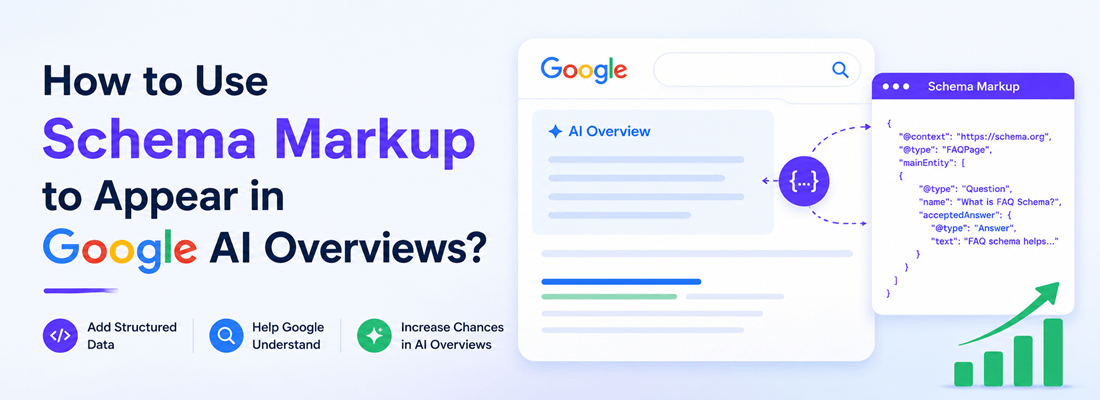
How to Use Schema Markup to Appear in Google AI Overviews?

Schema markup is the language search engines understand. So, if you want your content to stand out in Google AI Overviews, then you need to speak that language clearly.

Search has changed, so ranking on page one is still important, but visibility now depends on how well search engines understand your content. Google AI Overviews pull information from trusted sources and present answers directly in search results. To become one of those sources, your content needs a clear context.

This is where schema markup for AI overviews becomes important. Structured data helps search engines understand what your content is about, who created it, and how different pieces of information connect. It creates stronger signals that improve content interpretation and increase the likelihood of being referenced in AI-generated answers.

In this guide, you will learn how to use schema markup, which schema types matter most, how to implement them correctly, and how to avoid common mistakes. Whether you are part of an SEO team, development team, or content department, this guide will help you build a stronger AI SEO strategy.

What Is Schema Markup and Why Does It Matter in 2026?

The webpage receives its data organization through Schema markup which functions as structured information. The system receives additional details that enable search engines to understand content through more than just visible text.

The content of a page might include recipes together with product evaluations, question-answer sections and detailed instructions for procedures. The human ability to identify these elements exists but search engines require particular indicators to understand them correctly.

The year 2026 marks a new era for schema markup SEO because machine-readability now stands as the most essential factor. Search engines rely on structured information to:

  • Search engines need to understand the topics on each page, identify authors and their organisations, recognise products and services, and see connections between entities. This allows them to produce detailed search results automatically.
  • Google AI Overviews generate their brief answers through information that they extract from various reference materials. The presence of structured data on pages enables Google AI overviews to generate better signals than pages that lack any structured data.
  • The presence of Schema markup does not guarantee that AI Overviews will show your website content. The tool allows search engines to understand your content better which helps you build trust as a reliable information source.

Which Schema Types Are Most Useful for AI Overviews?

Different schema types serve different purposes. Some are particularly valuable because they align with the way Google AI Overviews generate answers.

Schema TypeUse CaseAI Overview Benefit
FAQPageFrequently asked questionsHelps identify direct answers
HowToStep-by-step guidesSupports procedural content
ArticleBlog posts and editorial contentProvides content context and authorship
OrganizationCompany informationStrengthens entity recognition
ProductProduct pagesImproves understanding of product details
BreadcrumbListSite hierarchyClarifies page relationships

For most websites, these schema types form the foundation of an effective AI SEO strategy.

How to Implement FAQPage Schema (With Code)?
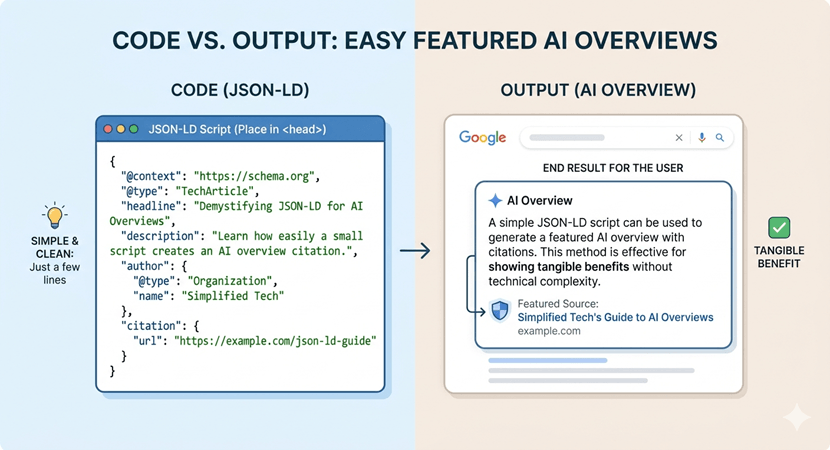
How to Implement FAQPage Schema (With Code)

FAQ content matches the structure of many AI-generated responses. Questions and answers provide clear information that search engines can process quickly.

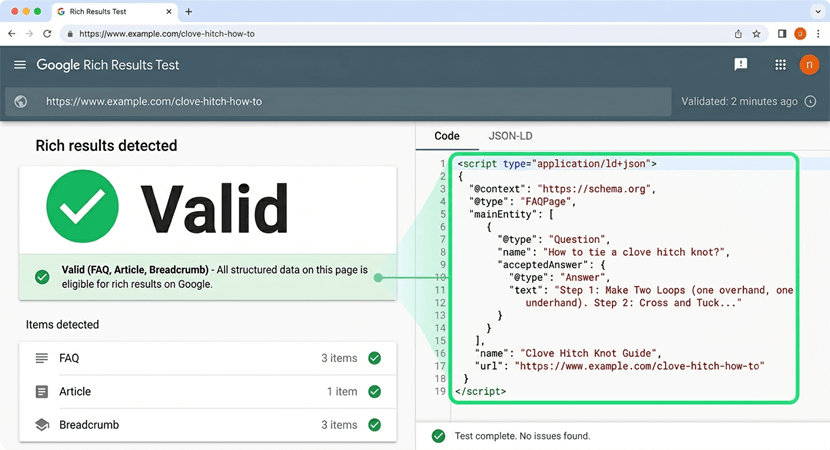
Below is a simple JSON-LD schema markup guide example for an FAQ section.

{

“@context”: “https://schema.org”,

“@type”: “FAQPage”,

“mainEntity”: [

{

“@type”: “Question”,

“name”: “What is schema markup?”,

“acceptedAnswer”: {

“@type”: “Answer”,

“text”: “Schema markup is structured data that helps search engines understand webpage content.”

}

},

{

“@type”: “Question”,

“name”: “Why is schema important for AI Overviews?”,

“acceptedAnswer”: {

“@type”: “Answer”,

“text”: “Schema provides context that helps search engines interpret content more accurately.”

}

}

]

}

Best Practices for FAQPage Schema

  • Use real questions visible on the page
  • Match answers exactly to page content
  • Keep questions concise
  • Avoid duplicate FAQs across multiple pages
  • Update FAQs when content changes

FAQ schema remains one of the strongest forms of schema markup for AI overviews because it aligns with question-based search behaviour.

How to Implement How To Schema (With Code)?

HowTo schema works well for instructional content.

If your article explains a process, a method, or a sequence of actions, the HowTo schema helps search engines identify those steps clearly.

Example:

{

“@context”: “https://schema.org”,

“@type”: “HowTo”,

“name”: “How to Create Schema Markup”,

“step”: [

{

“@type”: “HowToStep”,

“name”: “Choose a schema type”

},

{

“@type”: “HowToStep”,

“name”: “Create JSON-LD code”

},

{

“@type”: “HowToStep”,

“name”: “Add the code to your page”

},

{

“@type”: “HowToStep”,

“name”: “Validate the markup”

}

]

}

When to Use HowTo Schema

Use it for content such as:

  • Setup guides
  • Tutorials
  • Installation instructions
  • Troubleshooting processes
  • Marketing workflows

Why It Matters?

Many AI-generated responses explain how to complete a task. HowTo schema provides structured steps that can support these answers.

When planning schema markup SEO 2026, process-driven content should include HowTo markup whenever appropriate.

How to Implement Article Schema?

Article schema helps search engines understand editorial content. This schema provides important context about:

  • The author
  • The publication date
  • The headline
  • Featured images
  • The publisher

A basic Article schema example looks like this:

{

“@context”: “https://schema.org”,

“@type”: “Article”,

“headline”: “How to Use Schema Markup to Appear in Google AI Overviews”,

“author”: {

“@type”: “Person”,

“name”: “John Smith”

},

“datePublished”: “2026-01-15”,

“image”: “https://example.com/image.jpg”

}

Important Properties

  • Headline:

    The headline should match the page title.

  • Author

    Author information supports trust and expertise signals.

  • Date Published

    Publication dates help search engines evaluate freshness.

  • Image

    Include a high-quality featured image.

Why Article Schema Matters?

Google needs to understand who created the content and when it was published. Article schema supports stronger content attribution and contributes to an effective structured data Google AI overview implementation.

How to Add Schema Markup in WordPress?

Many websites use WordPress, making schema implementation easier. There are three common approaches.

MethodEase of UseFlexibilityBest For
SEO PluginEasyMediumBeginners
Advanced SEO PluginEasyHighGrowing websites
Manual JSON-LDAdvancedFull ControlDevelopers

Plugin-Based Implementation

Most SEO plugins generate common schema automatically. This approach works well for:

  • Blog content
  • Organisation schema
  • Basic article markup
  • Breadcrumbs

Manual Implementation

Developers often prefer manual JSON-LD implementation because it offers complete control. Benefits include:

  • Custom schema structures
  • Better accuracy
  • Reduced unnecessary markup
  • Easier schema auditing

When learning how to use schema markup, many businesses start with automated solutions and later move to manual optimisation.

For organisations working with an AI SEO firm, custom schema implementation often provides stronger results than default settings.

Testing and Monitoring Your Schema
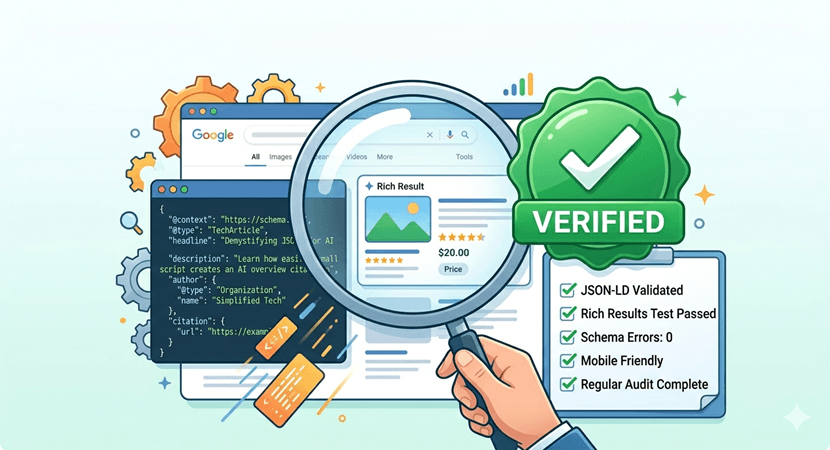
Testing and Monitoring Your Schema

The schema should never be published without validation. Even small errors can prevent search engines from reading structured data correctly.

Validate Before Publishing

Use a structured data validation tool to check:

  • Syntax errors
  • Missing fields
  • Invalid properties
  • Schema compatibility

Monitor Performance

Search engine reporting tools can help identify:

  • Structured data errors
  • Rich result eligibility
  • Coverage issues
  • Enhancement opportunities

Regular Audits

The schema should be reviewed whenever:

  • Content changes
  • Product details change
  • Team members change
  • Services change
  • Business information changes

Many companies offering generative AI SEO services include structured data audits as part of ongoing optimisation programmes. As, regular monitoring helps maintain accurate and effective schema implementation.

Schema Markup Mistakes That Prevent AI Overview Inclusion
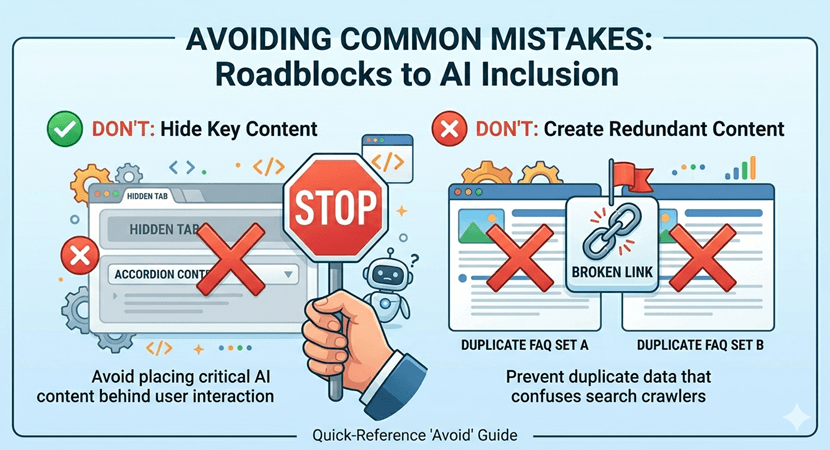
Schema Markup Mistakes That Prevent AI Overview Inclusion

Many websites implement schema incorrectly.

These mistakes can reduce effectiveness and create confusion for search engines.

  • Using the Wrong Schema Type

    Problem: Applying the Product schema to a blog post.

    Fix: Match schema type to page purpose.

  • Marking Up Content That Does Not Exist

    Problem: Adding FAQ schema without visible FAQs.

    Fix: Ensure schema reflects actual page content.

  • Missing Required Properties

    Problem: Omitting essential fields.

    Fix: Complete all required properties and recommended fields.

  • Outdated Information

    Problem: Old business details remain in the schema.

    Fix: Update structured data whenever information changes.

  • Duplicate or Conflicting Markup

    Problem: Multiple schema blocks describe the same content differently.

    Fix: Maintain one accurate version of each schema type.

Avoiding these issues helps strengthen your schema markup for AI overviews strategy and improves content interpretation.

Businesses seeking professional support often work with providers offering AI SEO services in India and other specialised optimisation teams to maintain structured data accuracy at scale.

Conclusion

The current search optimization process depends heavily on schema markup which stands as a vital component today. The development of Google AI Overviews has led search engines to depend on organized information for content comprehension, entity recognition and trust establishment.

For businesses implementing schema markup for AI overviews, structured data helps search engines understand content more effectively by generating stronger signals for interpretation and relevance.

The search engines understand your content better because schema markup generates improved signals that they use for content interpretation. The most effective approach combines:

  • Article schema
  • FAQPage schema
  • HowTo schema
  • Organization schema
  • Product schema
  • Breadcrumb schema

Focus on accuracy, consistency, and regular maintenance. For businesses investing in AI SEO, structured data is no longer optional. It is one of the clearest ways to help search engines understand what your content means, not just what it says.
What Is FAQ Schema and How Does It Help You Rank in AI Overviews?

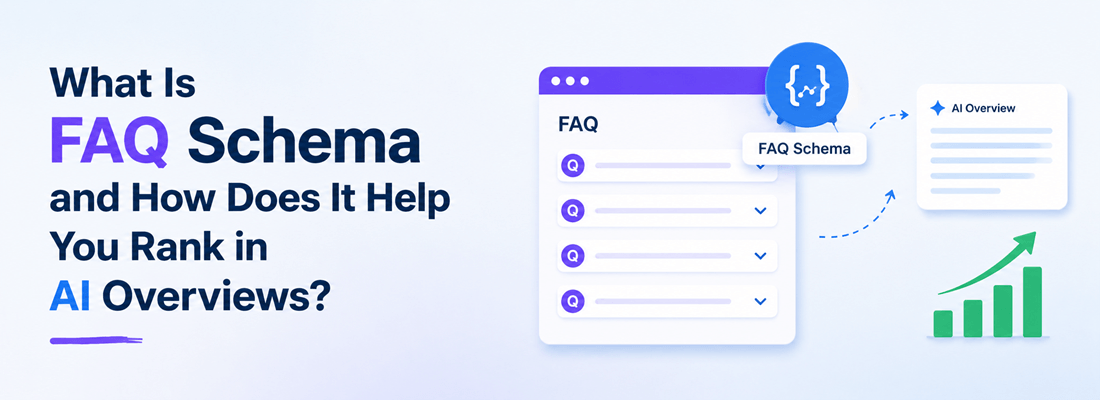
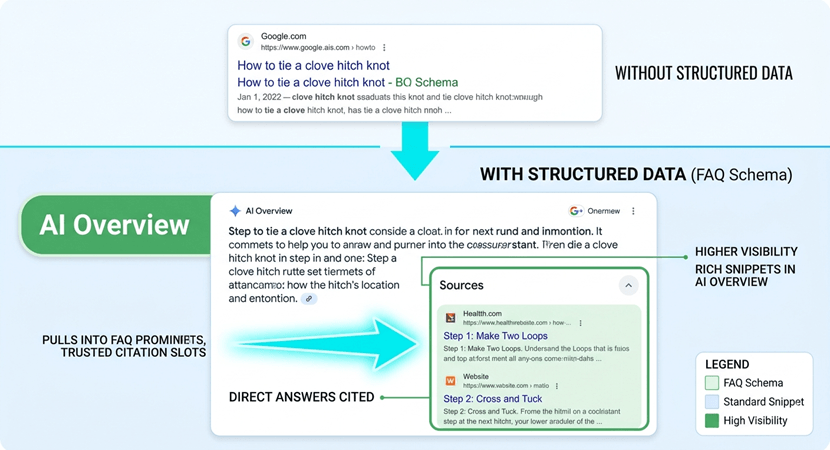
FAQ schema markup is a type of structured data that helps search engines understand the questions and answers on a webpage. By clearly identifying FAQ content, it makes it easier for search engines and AI-powered search experiences to interpret, extract, and reference your information.

Without an FAQ schema, a search engine must analyze your page and determine which content represents questions and answers. With the FAQ schema in place, that information is clearly labelled and organized, reducing ambiguity and improving content understanding.

In this guide, you will learn what FAQ schema markup is, why it plays an important role in AI Overviews, and how to implement it correctly to improve your content’s visibility in modern search experiences.

What Is FAQ Schema Markup?

FAQ schema markup acts like a name tag for your content. It points to Google and announces, “This sentence is a question, and this paragraph next to it holds the answer to that question.”

The code follows a language called JSON-LD. You add this code to the <head> section of your webpage. Or you nestle it near the bottom, just before the closing </body> tag. Here is a simple example of the code for one question.

{

  “@context”: “https://schema.org”,

  “@type”: “FAQPage”,

  “mainEntity”: [{

    “@type”: “Question”,

    “name”: “How long does it take to bake a cake?”,

    “acceptedAnswer”: {

      “@type”: “Answer”,

      “text”: “Most cakes take 25 to 35 minutes to bake at 180 degrees Celsius.”

    }

  }]

}

You do not need to be a developer to use this. Many content management systems offer simple ways to add FAQ markup without touching code. But understanding the basics helps you control exactly how your content appears to AI engines.

Why Does FAQ Schema Help with Google AI Overviews?

Why Does FAQ Schema Help with Google AI Overviews

AI Overviews scan webpages to find straightforward answers that users can trust for their questions. Structured data operates as a navigational system that helps AI systems find their destinations. The SEO method of structured data removes all need for guessing. The AI system operates without needing to identify question content from answer content during its operations. You tell it directly.

Research shows that pages with an FAQ page schema get cited more often in AI-generated answers compared to pages without it. AI models select definite answers because they need clear answers to perform their tasks. The system identifies the exact content it needs to extract through its detection of FAQPage types and acceptedAnswer properties.

Think of two restaurants. One gives you a menu with clear sections for starters, mains, and desserts. The other gives you a sheet of paper with ingredients listed randomly. You will order from the first restaurant every time. FAQ schema SEO is that clear menu for AI engines.

How to Write FAQs That AI Engines Actually Use?

Adding the code is only half the work. The quality of your answers determines whether AI systems choose your content. Follow these three rules for every FAQ you write.

  • Rule one: Write complete answers. Each answer must make sense on its own. AI systems often pull a single Q&A without showing the rest of the page. Do not write answers that say “as mentioned above” or “see the previous section.”
  • Rule two: Keep answers between 40 and 60 words. This length gives enough detail without overwhelming the reader or the AI. Shorter answers lack substance. Longer answers become hard to extract cleanly.
  • Rule three: Answer the question immediately. Start with the direct answer, then add supporting details. Do not bury the answer in a long story.

Here is a comparison of good versus bad FAQ answers.

Question TypeBad ExampleGood Example
What is a VPN?A VPN is something that helps with online privacy and security and many people use it for various reasons.A VPN (Virtual Private Network) creates an encrypted connection between your device and the internet. This encryption hides your online activity from your internet provider and public Wi-Fi networks.
How often should I change my toothbrush?You should change it every few months depending on how it looks.Dentists recommend changing your toothbrush every three months. Worn bristles clean less effectively and can harbour bacteria. Set a calendar reminder to replace your toothbrush at the start of each season.
Is coffee good for you?Yes, it has some benefits but also some downsides depending on how much you drink.Moderate coffee consumption of two to three cups per day is linked to lower risks of heart disease and type 2 diabetes, according to multiple studies. Drinking more than five cups may increase anxiety and sleep problems.

How to Add FAQ Schema to Your Website?

You have several options to add FAQ schema markup to your site. Pick the method that matches your technical comfort level.

Method one: Use your content management system. The majority of current platforms provide their users with built-in FAQ schema markup tools and additional extension options. Look for a setting or block labelled “FAQ” when you edit a page. The system generates code automatically through its question-and-answer input feature.

Method two: Write the code yourself. Copy this template and replace the example questions with your own.

<script type=”application/ld+json”>

{

  “@context”: “https://schema.org”,

  “@type”: “FAQPage”,

  “mainEntity”: [

    {

      “@type”: “Question”,

      “name”: “What is the return policy?”,

      “acceptedAnswer”: {

        “@type”: “Answer”,

        “text”: “We accept returns within 30 days of purchase. Items must be unused and in original packaging. Customers pay return shipping unless the item arrived damaged.”

      }

    },

    {

      “@type”: “Question”,

      “name”: “How long does delivery take?”,

      “acceptedAnswer”: {

        “@type”: “Answer”,

        “text”: “Standard delivery takes three to five business days. Express delivery takes one to two business days. Orders placed before 2 PM ship the same day.”

      }

    },

    {

      “@type”: “Question”,

      “name”: “Do you offer international shipping?”,

      “acceptedAnswer”: {

        “@type”: “Answer”,

        “text”: “Yes, we ship to Canada, Australia, and most European countries. International delivery takes seven to fourteen business days. Customers are responsible for customs fees and import taxes.”

      }

    }

  ]

}

</script>

Paste this code into the <head> section of your webpage or just before the closing </body> tag.

Method three: Use a tag manager. A tag manager lets you add code to your site without editing files directly. Create a new custom HTML tag, paste your JSON-LD code into it, and set the tag to fire on pages where you have visible FAQ content.

How to Test and Validate Your FAQ Schema?

How to Test and Validate Your FAQ Schema

Adding the code is not the final step. A single missing comma or quote mark breaks your FAQ schema markup. Search engines and AI systems ignore broken code completely.

  • Use a Free Testing Tool

    The Rich Results Test is the best tool available. Open it in your browser. Enter your webpage URL or paste your code directly into the tool. Click the test button.

  • Read the Results

    Green check marks mean your FAQ schema markup is valid. Red error messages tell you exactly what needs fixing. Fix every error before publishing.

  • Run a Second Validation

    Also, test your page through the Schema Markup Validator. This tool catches technical errors that Google’s tool might miss. It checks for proper syntax and property names.

  • Test Every Time

    Run both tests each time you add new FAQ markup to a page. Do not assume your code works just because it worked last week. A small typo breaks everything. Validation takes two minutes and saves you from invisible failures that hurt your AI Overview rankings.

Common FAQ Schema Mistakes That Hurt Your Rankings

Common FAQ Schema Mistakes That Hurt Your Rankings

Avoid these five errors to keep your FAQ schema markup working properly.

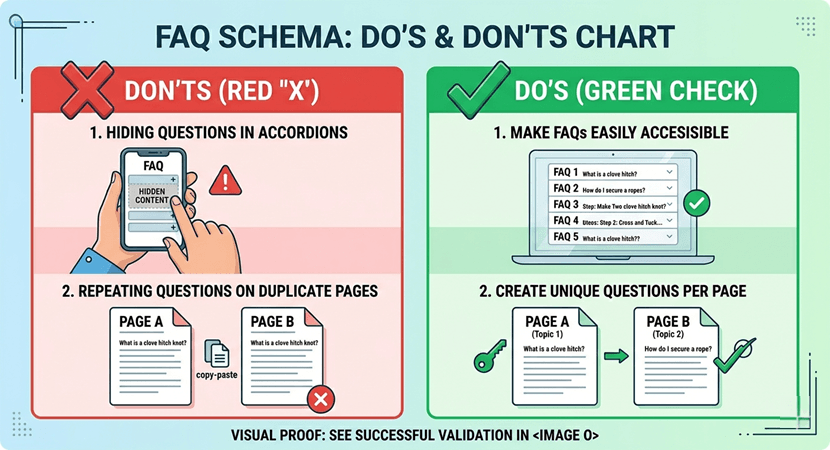
  • Hiding Questions Inside Tabs

    The full text of every question and answer must be visible when the page loads. Google identifies hidden content within accordion elements and expandable tabs as non-compliant with their guidelines. Users need to interact with content before web crawlers can access it.

  • Writing Answers That Do Not Answer

    Stay on topic. The FAQ section should not include product promotion activities. Provide the required answer straight away through your first sentence. The page needs to place promotional content in locations which differ from its existing position.

  • Using the Same Questions on Multiple Pages

    Each page needs unique FAQ content. The practice of showing identical Q&A content throughout your website triggers search engines to treat your site as deceptive. Create new questions for every product and service page that you need to display.

  • Adding Too Many FAQs

    The website should display between five and ten questions on each page. Readers will experience information overload when you provide more than ten answers because it reduces the impact of each response. The first order of business should involve handling actual customer inquiries, which support tickets and search data reveal.

Skipping Validation

The FAQ schema markup remains inactive because it receives no validation feedback. The page appears correct to human visitors but AI engines cannot detect any content. The entire code fails because of a missing comma or unescaped quote. Use the Rich Results Test tool before publishing. Validate every time

FAQ Schema vs. Q&A Schema: Which Should You Use?

These two markup types serve different purposes. Use the right one for your situation.

FeatureFAQ SchemaQ&A Schema
Who writes the answers?The page owner or website publisher provides the answer.Multiple users within a community can contribute answers.
Where does it belong?Product pages, service pages, help centres, FAQs, and blog posts.Forums, discussion boards, and community Q&A websites.
Can users add answers?No. Each question has one official answer provided by the website.Yes. Users can submit and vote on multiple answers.
Example use case“What sizes does this shirt come in?” asked the retailer.“How do I fix error code 403?” was answered by various users with different solutions.

If you run a standard business website with a help section or product FAQ page, use FAQ schema SEO. If you run a community forum where users ask and answer questions, use the Q&A schema.

Conclusion

FAQ schema markup is your direct line to appearing in AI Overviews. The code is simple to add, free to implement, and supported by every major search engine and AI platform. Pair the correct markup with clear, complete answers of 40 to 60 words each. Test your work with free validation tools. Avoid common mistakes like hiding content or duplicating questions across pages. The process of search evolution has led AI-generated answers to become more important than ever so structured data now holds greater value. The websites that adopt FAQ page schema today will establish their base for future online discoverability.

An AI SEO expert or an AI SEO company in India can help you start your project quickly while maintaining proper industry standards.

Multiple AI SEO platforms now provide schema markup as a basic element that they include in their service packages. Start with one page this week. Add your FAQs, apply the markup, validate the code, and watch for your content to appear in those AI Overview citation boxes.

AEO vs SEO vs GEO: What’s the Difference and Which One Matters in 2026?

People search for information every day. They look for products, services, answers and ideas. Years ago, most people clicked through a list of search results to find what they needed. Today, many people get answers right away from search pages and other digital experiences.

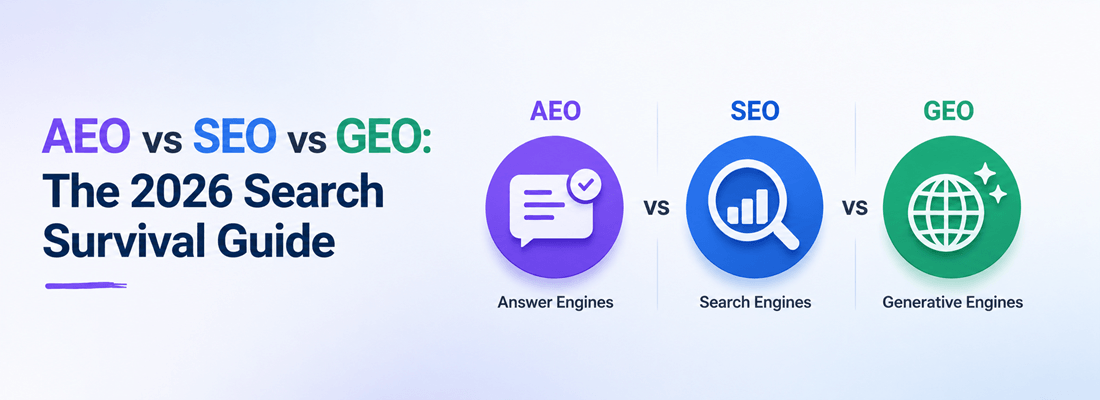
This change has brought three important terms into digital marketing: SEO, AEO and  GEO. At first glance, these terms may look similar but each one plays a different role.

When marketers discuss AEO vs SEO, they often ask which one matters more. The better question is how each one helps people find your content. Then there is Generative Engine Optimization, which adds another layer to online visibility.

In 2026, businesses need more than strong rankings. They need strong visibility wherever people look for information. This guide explains SEO, AEO and  GEO in simple terms. You will also understand how they work together and which areas deserve your attention.

What Is SEO (and Why Is It Still Important)?

SEO stands for Search Engine Optimisation.

SEO helps your website appear when people search for topics related to your business. It helps search engines understand your pages and match them with user searches.

A good SEO strategy strengthens your website through:

  • Helpful content
  • Relevant keywords
  • Fast page speed
  • Easy navigation
  • Strong links from trusted websites

When people search for something, SEO helps guide them to your website.

Even though search habits continue to change, SEO still anchors digital marketing strategies. Search engines still gather information from websites. They still use that information to decide which pages deserve attention.

Without SEO, many businesses struggle to attract organic visitors. SEO also fuels many other visibility efforts. Strong content, clear structure and trusted information help support newer optimisation methods as well. That is why SEO continues to matter in 2026.

What Is AEO (Answer Engine Optimisation)?

AEO stands for Answer Engine Optimisation which helps your content answer questions clearly and directly.

Many users do not want to read several pages before finding an answer as they want quick information. AEO helps your content step forward when users ask specific questions.

For example, someone might search:

  • What is SEO?
  • How does digital marketing work?
  • What is the difference between AEO and SEO?

AEO helps search systems pull information from your content and present it as a direct answer.

To achieve this, content needs to:

  • Answer questions clearly
  • Use simple language
  • Follow a logical structure
  • Include useful headings
  • Provide accurate information

When comparing AEO vs SEO, the biggest difference lies in the goal. SEO helps users find your page but AEO helps users find your answer.

Both approaches matter because users often move between traditional search results and answer-focused experiences.

What Is GEO (Generative Engine Optimisation)?

Generative Engine Optimization is one of the newest ideas in digital marketing. GEO focuses on helping brands appear within generated responses.

Instead of showing a list of links, some search experiences now gather information from different sources and create complete responses for users.

GEO helps your content contribute to those responses. To support GEO, businesses need to:

  • Publish useful content
  • Build authority
  • Share accurate information
  • Cover topics in depth
  • Maintain consistency across the web

When a brand consistently publishes trustworthy information, it gains more visibility across different digital experiences. A good foundation in SEO often creates the conditions that will allow a brand to achieve success in GEO. As the way customers discover brands online continues to evolve, GEO ensures that brands remain visible in more places.

AEO vs SEO vs GEO: A Detailed Comparison

The easiest way to understand these three approaches is to compare them side by side.

FactorSEOAEOGEO
Main GoalHelp webpages rank in search resultsHelp content answer questionsHelp brands appear in generated responses
Main FocusWebsite visibilityAnswer visibilityBrand visibility
User IntentExplore information through linksGet a quick answerReceive a complete response
Content StyleDetailed pages and articlesDirect answers and FAQsDeep, trusted resources
Key SignalsKeywords, links, website qualityClarity, structure, relevanceAuthority, trust, consistency
Main OutcomeOrganic trafficAnswer exposureBrand recognition
Success MetricsRankings, traffic, conversionsAnswer appearances, impressionsMentions, citations, visibility
TimeframeMedium to long termShort to medium termMedium to long term
Content DepthModerate to deepFocused and conciseComprehensive and detailed
Strategic PurposeAttract visitorsDeliver answersBuild presence

This comparison shows why businesses should not treat these strategies as competitors. SEO, AEO and  GEO each support a different stage of the discovery journey.

A person may first see a generated response, then they may read a direct answer. Finally, they may visit a website so each stage creates an opportunity for your brand to appear.

Do You Have to Choose Between Them?

No.

Most businesses achieve stronger results when they combine all three.

Think of SEO, AEO and  GEO as parts of the same visibility system where:

  • SEO brings visitors to your website.
  • AEO helps your content answer questions.
  • GEO helps your brand surface in generated responses.
  • Together, they create broader online reach.

For example, imagine a company publishes a detailed guide.

That guide can:

  • Rank in search results through SEO
  • Answer user questions through AEO
  • Support generated responses through GEO

One piece of content can serve several purposes at the same time. This approach helps businesses stretch the value of their content.

Instead of creating separate strategies, marketers can shape one strong content plan that supports all three areas.

Which One Should You Prioritise in 2026?

Every business operates differently. The best priority depends on your goals, audience and industry.

E-commerce Businesses

Recommended Focus

SEO → AEO → GEO

Online stores rely heavily on search traffic.

Customers search for products, reviews, comparisons and buying guides before making decisions. Where:

  • SEO helps product pages attract visitors.
  • AEO helps answer product questions.
  • GEO helps strengthen brand visibility during research.

For many online retailers, SEO remains the starting point.

Marketing Agencies

Recommended Focus

SEO → GEO → AEO

Agencies need visibility and credibility. They must demonstrate expertise and showcase knowledge.

  • SEO helps agencies attract visitors through educational content.
  • GEO helps brands appear across broader information experiences.

Many agencies now offer AI search optimization services to help businesses strengthen visibility across changing search environments.

AEO also adds value by helping agencies answer common client questions.

B2B SaaS Companies

Recommended Focus

GEO → SEO → AEO

Business buyers often spend time researching solutions before making decisions. They compare options, read guides and explore industry information.

  • GEO helps brands appear during these research journeys.
  • SEO continues to drive qualified traffic.
  • AEO helps answer specific questions during the buying process.

Many software companies now invest in AI-driven SEO services to strengthen their overall visibility strategy.

Local Businesses

Recommended Focus

SEO → AEO → GEO

Local businesses depend on local discovery.

People often search for nearby services, opening hours, prices and customer reviews. SEO helps businesses appear in relevant searches.

  • AEO helps answer common customer questions.
  • GEO supports broader brand awareness.

Many organisations also explore AI SEO services in India when building stronger regional and national visibility.

How to Build a Strategy That Covers All Three?

The good news is that you do not need three different content plans. You can build one strategy that supports SEO, AEO and  GEO together.

1. Start With Real Customer Questions

Listen to your audience. Find out what people ask most often.

Turn those questions into:

  • Blog posts
  • Service pages
  • Guides
  • FAQ sections

Questions create valuable content opportunities. They also support both SEO and AEO goals.

2. Cover Topics Thoroughly

Do not stop after one article. Try to explore a topic from several angles. Create supporting content that expands on important ideas.

This approach helps build authority and trust. It also strengthens Generative Engine Optimization efforts. The more useful information you provide, the easier it becomes for users to discover your brand.

3. Strengthen Trust

Trust plays a major role in online visibility. Nowadays, people want reliable information. Search systems value reliable information as well. Build trust by:

  • Sharing accurate facts
  • Updating content regularly
  • Demonstrating expertise
  • Keeping information consistent

Trust helps support SEO, AEO and  GEO at the same time.

4. Organise Content Clearly

Clear structure helps readers understand information quickly.

Use:

  • H1 headings
  • H2 headings
  • H3 headings
  • Bullet points
  • Numbered lists
  • Short paragraphs

Well-organised content improves readability. Businesses that provide AI search optimization services often focus heavily on content structure because it helps information stand out.

5. Measure More Than Rankings

Rankings still matter. However, they do not tell the whole story. So, track additional signals such as:

  • Organic traffic
  • User engagement
  • Conversions
  • Brand mentions
  • Content visibility
  • Customer actions

Companies that use AI-driven SEO services often monitor a broader set of performance indicators. Likewise, businesses investing in AI seo services increasingly evaluate overall visibility rather than rankings alone.

Conclusion

Overall, discussions regarding the differences between AEO vs SEO have continued to grow alongside the evolution of digital discovery. Many people believe that SEO, AEO and  Generative Engine Optimization (GEO) are different strategies competing for the same goal within digital marketing. However, each strategy has different goals within the digital world.

For instance, SEO is focused on driving people to a business’s website. AEO is focused on helping people find the answers they are seeking. GEO, on the other hand, is focused on a business’s brand showing up within the digital-generated responses. Each of these strategies plays a crucial role in ensuring that a brand is visible in the digital world. By incorporating each of these strategies into their digital marketing campaigns, brands can create a stronger presence within the digital world.

Beyond 2026, it will be more important than ever for brands to focus on answering the questions that their customers have, gaining the trust of those customers and remaining visible in the places where those customers search for information. When a brand focuses on SEO, AEO and  Generative Engine Optimization, they will be paving the path toward long-term growth within the digital world.

How to Optimize Content for Google AI Overviews (Step-by-Step)

Google AI Overviews now sit above every organic result, giving users concise answers extracted from the most authoritative sources. For SEOs and content marketers, getting cited in these overviews can dramatically boost visibility, traffic, and authority. But appearing in AI Overviews isn’t about gaming algorithms; it’s about structuring content in ways AI can easily parse, demonstrating expertise, and optimizing for search intent.

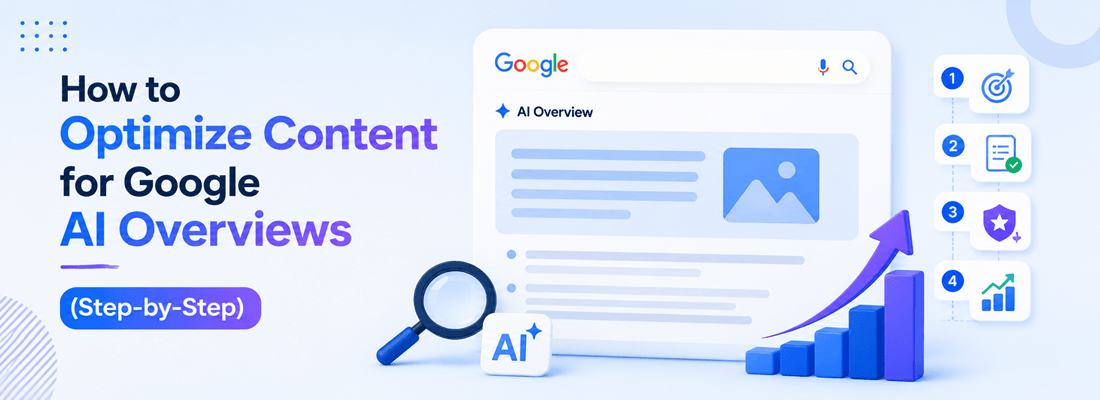
In this comprehensive guide, you will understand step-by-step strategies that will allow you to optimize the content that you create for Google AI Overviews SEO.

You will learn how to properly structure your headings, create summaries that are friendly to AI, how to use schema markup, how to improve your E-E-A-T signals, and how to monitor the performance of your content with the best practices for AI SEO. By following these strategies, you can increase the likelihood that your content will be used by Google’s AI to create its overviews of the content.

What Does It Take to Appear in Google AI Overviews?

Getting featured in a Google AI Overview requires content that is clear, trustworthy, and easy for AI to understand.

  • The core elements of E-E-A-T establish the foundation for successful content through their combination of Experience and Expertise and Authoritativeness and Trustworthiness. The content requires precise information together with verified research which needs to come from writers who possess a genuine understanding or actual hands-on experience with the subject matter.
  • The process requires organized content as a fundamental requirement. The information needs to have headings and subheadings for proper organization, while bullet points, numbered lists and tables help readers scan through the content. The system enables AI to find user question answers through its identified information.
  • The research demands a complete investigation of all relevant subjects that need to reach their required depth for proper analysis. You must investigate all aspects of your topic because users will search for different questions that relate to your main subject. The more complete and relevant your content, the more likely it is to be cited.
  • The schema markup system functions as a signal to Google that websites use to determine their content organization. The process of adding FAQPage, HowTo and other structured data formats helps AI systems extract information that they then use to create summary displays.

By combining strong E-E-A-T, clear structure, in-depth coverage, and proper schema, your pages are much more likely to appear in Content for AI Overviews 2026.

Also Read: What Is Answer Engine Optimization (AEO)? The Complete Guide

Google AI Overviews

Step 1 – Write Question-Based H2 and H3 Headings

AI systems often pull content that directly answers user queries. Structuring your H2 and H3 headings as questions increases your chances of being cited.

Why it works: Headings that mirror real search queries make it easy for AI to locate concise answers and provide context in the overview.

Before / After examples:

  • Before: “Social Media Marketing Tips” → After: “What Are the Most Effective Social Media Marketing Tips?”
  • Before: “Benefits of Email Automation” → After: “How Does Email Automation Improve Marketing ROI?”
  • Before: “SEO Checklist” → After: “What Should an SEO Checklist Include for 2026?”

Using this approach throughout your article signals relevance to AI models and improves AI SEO performance.

Step 2 – Add a 50–70 Word Summary Paragraph at the Top

A lede paragraph or summary gives AI a concise, digestible answer to the user’s question. This is the paragraph most likely to be pulled into a Google AI Overview.

Tips:

  • Keep it 50–70 words.
  • Answer the query immediately, no fluff.
  • Include your primary keyword naturally.

Template example:

“Google AI Overviews SEO allows content to be highlighted above search results, summarizing the most authoritative information. To rank in AI overviews, structure headings as questions, provide concise answers, and implement FAQ schema. This guide outlines proven AI SEO strategies to increase your chances of being cited in 2026.”

Step 3 – Use Structured Content Formats

Structured formats make content easy to scan for both humans and AI.

Recommended formats:

  • Numbered lists for step-by-step instructions.
  • Comparison tables to outline pros/cons or alternatives.
  • Bullet points for features, tips, or key takeaways.

Example layout (text description):

  • H2: How to Optimize Blog Content for AI Overviews
  • H3: Step 1 – Write Question-Based Headings
    • Bullet list of best practices
  • H3: Step 2 – Add a Summary Paragraph
    • Numbered steps
  • H3: Step 3 – Use Structured Formats
    • Table comparing old vs new approaches

This layout is machine-readable, enhancing your chances for AI Overview selection.

Step 4 – Implement FAQ Schema Markup

The FAQ Page schema increases AI Overview visibility by explicitly signalling questions and answers.

Focuses on adding FAQ schema markup to your content. By using the FAQ Page schema, you inform search engines and AI systems about the questions and answers you have on your page.

This data allows Google to understand your content and include it in AI Overviews and other rich results. Adding the FAQ schema improves the visibility of your content and the user experience for those searching for your content online.

Furthermore, it also tells Google that your content is expert and authoritative regarding those questions, allowing your content to be discovered and regarded as credible online.

Step 5 – Build Topical Authority with Cluster Content

To rank in Google AI Overviews, establishing topical authority is essential. The pillar + cluster model is a proven way to do this.

  • Pillar page: Covers the main topic broadly and provides a comprehensive overview.
  • Cluster pages: Focus on specific subtopics and link back to the pillar page using descriptive anchor text.

Internal linking best practices:

  • Link from cluster content to the pillar page clearly and naturally.
  • Include relevant interlinking keywords such as AI seo agency, seo company, or seo company India.
  • Ensure each cluster page addresses related questions users might ask, reinforcing your authority and improving how to rank in AI overviews.

This approach helps search engines understand your site structure, signals expertise, and increases the likelihood your content will be cited in AI Overviews.

Step 6 – Strengthen E-E-A-T Signals

E-E-A-T — Experience, Expertise, Authoritativeness, and Trustworthiness — is a key factor for appearing in Google AI Overviews. It tells Google’s AI that your content is reliable and credible, which improves AI SEO performance.

Implementation tips:

  • Author bios: Include clear bios that highlight the author’s expertise and relevant experience.
  • Credible sources: Link to authoritative studies, official reports, or industry references to support your claims.
  • About Us page: Maintain a detailed page that explains your brand’s experience, mission, and qualifications.
  • Case studies: Showcase real-world examples or practical results to demonstrate proven expertise.

By combining these elements, you signal trustworthiness and authority to AI, making your content more likely to be selected for content for AI Overviews 2026.

Step 7 – Monitor Your AI Overview Appearances

Tracking where your content appears in Google AI Overviews is essential for improving your content strategy.

Methods:

  • Google Search Console: Look for pages with high impressions but low click-through rates. These pages are often cited in AI Overviews.
  • Manual incognito checks: Manual incognito checks allow you to perform searches on relevant questions to see if your content appears in the AI summary box.

By regularly monitoring these aspects of your content’s performance, you will see which pages are performing well, which require adjustments, and which questions need to be covered in your content more comprehensively.

Such consistent tracking of your content’s performance in AI Overviews will allow you to refine your content and implement the optimization tips that will increase the likelihood of your content being cited.

Quick Checklist Before You Publish

StepAction
1Question-based H2/H3 headings
250–70 word summary paragraph
3Structured content (lists, tables)
4FAQPage schema implemented
5Internal linking to clusters and pillar pages
6Strong author bios and citations
7Content length 1200–2000 words
8Include relevant keywords naturally
9Monitor AI Overview appearances
10Update content regularly for freshness

Conclusion

Overall, optimizing content for Google AI Overviews SEO is not about tricking the AI — it is about structuring your content in a way that is readable, authoritative, and concise.

There are several AI overview optimization tips that you can implement to improve your chances of having your content cited by Google’s AI Overviews.

These strategies include crafting question-based headings and lede paragraphs, using schema markup, and building topical authority on the subjects that you cover on your website.

By following these strategies, you will be able to improve the visibility, credibility, and traffic to your website, making it the resource that users and Google rely on the most.

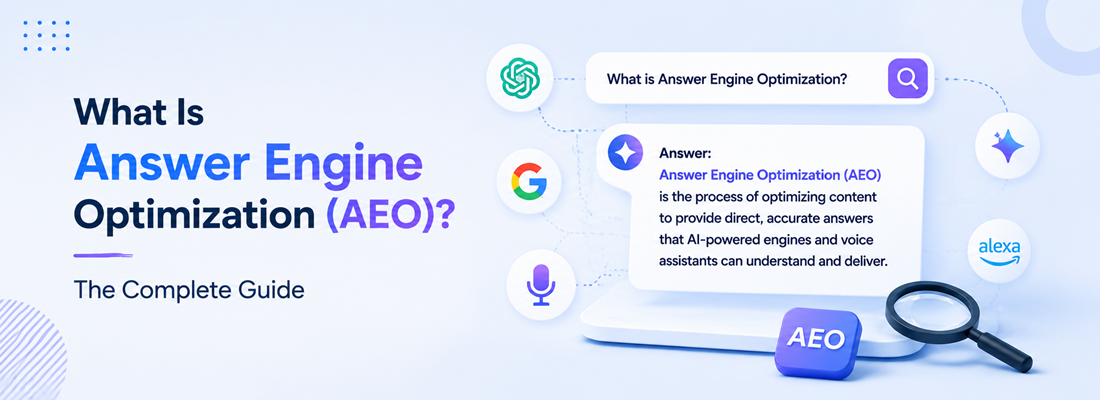
What Is Answer Engine Optimization (AEO)? The Complete Guide

Over 58% of Google searches now end without a click. That number continues to grow as search platforms provide direct answers within search results instead of sending users to websites.

This shift has changed how people discover information online. Users now ask detailed questions and expect immediate answers. Search platforms analyse content from multiple sources, create a response, and present it directly on the results page.

This is where answer engine optimization comes in.

Instead of focusing only on rankings, businesses now need content that can be understood, trusted, and cited by answer engines. This approach works alongside traditional AI SEO strategies to improve visibility across modern search experiences.

In this guide, you will learn what AEO is, how it differs from SEO, how answer engines choose sources, and the practical steps you can take to increase your visibility in answer-driven search results.

What Is Answer Engine Optimization (AEO)?

Answer engine optimization is the process of creating and structuring content so that answer engines can easily understand, extract, and display it when responding to user questions.

In simple terms, AEO helps your content become the answer instead of just another search result.

An answer engine is a platform that provides direct responses to questions. Examples include:

  • Google AI Overviews
  • ChatGPT Search
  • Perplexity
  • Microsoft Copilot
  • Gemini

If you have ever wondered what AEO is in SEO, think of it as the next stage of search optimization. Instead of competing only for rankings, businesses now compete for citations and visibility within generated answers.

Why Has AEO Become So Important in 2026?

Search behaviour has changed significantly over the past few years. People no longer rely solely on traditional search results to find information. Instead, they ask detailed questions and receive direct answers within search platforms.

As a result, businesses must adapt their content strategies to remain visible where users are consuming information.

The Growth of Answer-Based Search

Research shows that AI Overviews now appear in approximately 60% of all informational searches across the United States. Users can find the information directly from search result pages instead of visiting multiple web pages.

The digital content discovery process underwent a complete transformation which affected how people access digital content.

The Rise of Zero-Click Searches

A zero-click search occurs when a user receives an answer without visiting a website. The system provides greater user convenience, but businesses need to address emerging operational problems that arise from this development.

The visibility of answers on search result pages leads to lower click-through rates for the highest ranking web pages. Businesses must compete more fiercely for online attention because their old marketing methods which focused on website visitors, have become ineffective.

The Business Impact of AEO

The number of clicks might decrease but the visibility value stays important. When a brand appears in an answer, it receives credibility while potential customers identify the brand.

The continuous presence of brands in answer engines leads to increased branded searches which builds brand recognition and bring in better-qualified prospects and helps with sales conversions.

The search environment of today has forced multiple organizations to merge their AEO SEO operations with their established SEO practices because they need to keep their search engine rankings and authority.

Also Read: The E-E-A-T Checklist for AI-Assisted Blogs in 2026

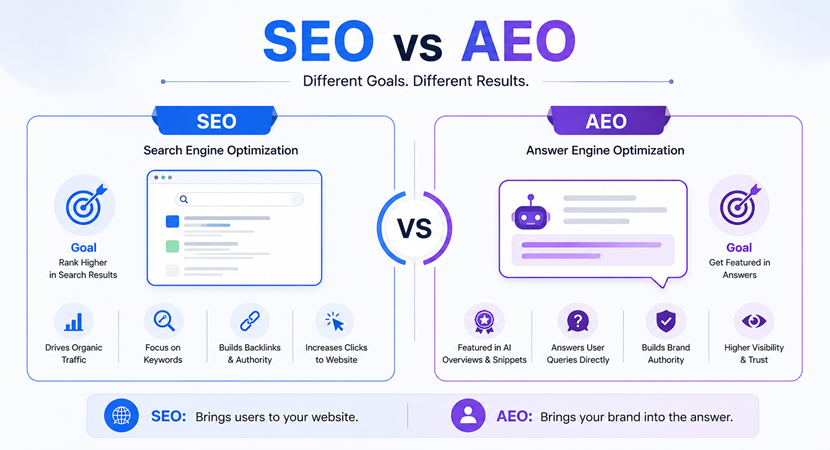
How Is AEO Different from Traditional SEO?

Although AEO and SEO work together, they have different goals.

FactorTraditional SEOAEO SEO
Primary GoalRank pagesGet cited in answers
FocusKeywords and rankingsQuestions and answers
User BehaviourClick website linksRead direct answers
Content FormatLong-form contentStructured answer-focused content
Success MetricTraffic and rankingsCitations and visibility
optimizationPage-levelSection-level
Search IntentSearch queriesConversational questions

When comparing AEO vs SEO, the biggest difference is the outcome. SEO aims to earn clicks, while AEO aims to earn trust and citations. The best digital strategies combine both.

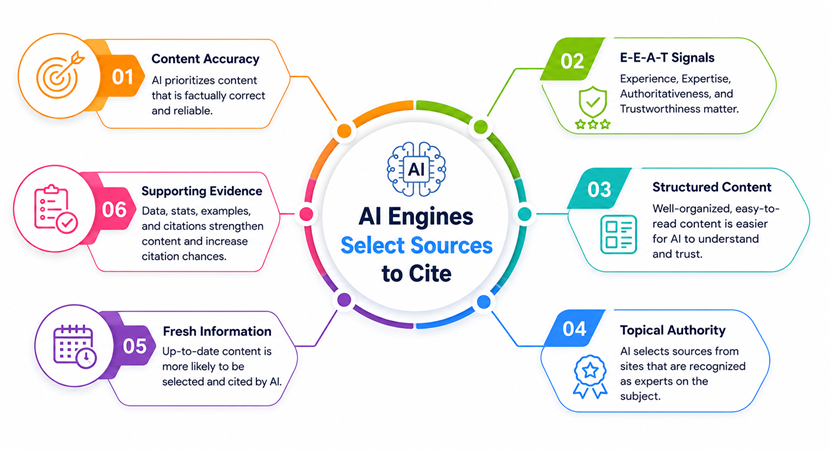
How Do AI Engines Select Sources to Cite?

How Do AI Engines Select Sources to Cite

Answer engines do not select sources based on rankings alone. They evaluate content using a combination of trust, relevance, and quality signals to determine which sources deserve to be referenced in their answers. Understanding these factors can help improve your chances of being cited.

  • Content Accuracy

    Answer engines favour content that provides clear, accurate, and factual information. Pages that answer questions directly and avoid misleading claims are more likely to be selected.

  • E-E-A-T Signals

    Experience, Expertise, Authoritativeness, and Trustworthiness remain key indicators of content quality. Strong E-E-A-T signals help establish credibility and increase confidence in your information.

  • Structured Content

    People find it simpler to understand content when it follows an organized structure. Search engines identify and extract vital information through their ability to recognize headings which they pair with bullet points, numbered lists and tables for quick extraction.

  • Topical Authority

    Websites that maintain a steady output of quality content about particular subjects become reliable information sources. The regular reporting of this topic shows that the media staff members have a complete understanding of this subject matter.

  • Fresh Information

    Content performs better when companies keep information updated, as their business information goes through continuous modifications. The combination of new data with present statistical evidence will boost the content’s value.

  • Supporting Evidence

    The combination of statistical data with research results, expert statements and trustworthy sources creates a foundation that builds trust. Users develop higher trust levels when they see evidence-based information that shows the content contains correct details.

    The stronger your content performs across these areas, the higher the likelihood of being selected as a cited source.

    Following the principles outlined in this answer engine optimization guide can help improve both visibility and authority across modern search experiences.

What Types of Content Win in AI Overviews?

Some content formats perform better than others in answer-driven search results. The following content types often receive higher visibility:

Question-Based Content

Example:

  • What is answer engine optimization?
  • How does AEO work?
  • Why is AEO important?

FAQ Sections

FAQs provide direct answers in a format that answer engines can process easily.

Definitions

Short definitions often appear in answer boxes and generated responses.

Step-by-Step Guides

How-to content works well because it provides clear instructions.

Comparison Content

Topics such as AEO vs SEO help users evaluate optio ns and make decisions.

Tables and Lists

Structured information improves readability and extraction.

Examples include:

  • Pricing comparisons
  • Feature lists
  • Process checklists
  • Benefits and drawbacks

Also Read: AI SEO for E-commerce: Scaling Product Descriptions Fast

Step-by-Step: How to Optimize for AEO?

Follow this process to improve visibility in answer engines.

Step 1: Identify User Questions

Research the questions your audience asks before creating content.

Look at:

  • Search suggestions
  • People Also Ask sections
  • Customer enquiries
  • Industry forums

Step 2: Lead With the Answer

Start each section with a direct response. Avoid lengthy introductions before addressing the topic.

Step 3: Use Question-Based Headings

Structure headings around user questions. For example:

What Is AEO in SEO?

How Does Answer Engine Optimization Work?

Why Is AEO Important?

Step 4: Create Clear Content Sections

Keep each section focused on a single topic which helps search engines identify specific information.

Step 5: Add FAQs

Include frequently asked questions at the end of important pages which increases opportunities for citations.

Step 6: Use Lists and Tables

Structured formats improve readability and make information easier to extract.

Step 7: Build Topic Clusters

Create supporting articles around a core topic.

This strengthens topical authority. You can also connect related content such as AI SEO services and industry-specific topics like AI SEO services in India, through relevant internal links.

Step 8: Improve Trust Signals

Use:

  • Expert insights
  • Original research
  • Real examples
  • Updated statistics

Step 9: Implement Structured Data

Schema markup helps search platforms understand page content.

The FAQ schema remains one of the most useful options.

Step 10: Refresh Content Regularly

Review important pages every few months.

Update:

  • Statistics
  • Examples
  • Industry trends
  • Best practices

Fresh content often receives greater visibility.

AEO Tools You Can Use Right Now

Several tools can support your answer engine optimization efforts.

Tool TypePurpose
Google Search ConsoleMonitor search performance, identify queries that drive traffic, and track website visibility in search results.
Schema.org ValidatorValidate structured data markup to ensure search engines can understand and process your content correctly.
AhrefsDiscover keyword opportunities, analyse backlinks, and identify content gaps that can improve visibility in answer engines.
SEMrushResearch keywords, monitor rankings, analyse competitors, and uncover question-based search opportunities.
AlsoAskedFind related questions people ask online and identify topics that can be used to create answer-focused content.
Rich Results TestCheck whether structured data is implemented correctly and determine if content is eligible for rich search results.

These tools support both traditional SEO and answer engine optimization initiatives.

AEO vs SEO: Should You Pick One?

AEO vs SEO Should You Pick One

The short answer is no, as the debate around AEO vs SEO often creates unnecessary confusion.

Traditional SEO remains important because strong rankings continue to influence visibility. But AEO builds on that foundation by helping content appear in answer-driven experiences.

The most successful businesses use both approaches together. A balanced strategy includes:

  • Keyword optimization
  • Technical SEO
  • Topic clusters
  • Structured content
  • FAQ sections
  • Direct answers

This creates stronger visibility across search platforms.

Common AEO Mistakes to Avoid

Many businesses understand the value of answer engine optimization but struggle to achieve results because of a few common mistakes.

Even the best answer engine optimization guide will only deliver results when these issues are addressed.  Avoiding these issues can improve both user experience and your chances of being cited as a trusted source.

  • Writing Long Introductions

    Many pages spend too much time setting the scene before answering the main question. Answer engines prefer content that delivers clear information quickly. Start each section with a direct answer and provide supporting details afterwards.

  • Ignoring User Intent

    Content creators who fail to grasp user needs will experience lower visibility for their work because they do not understand user intentions. People need to create their specific audience questions which they should answer using accurate responses that match their message purpose.

  • Skipping Structured Data

    Search engines require structured data to make sense of your website content. The addition of proper schema markup which includes FAQ and Article schemas will help search engines understand content better while enhancing its discoverability.

  • Publishing Without Updates

    Information that stays static will start to lose its usefulness after some period. Organizations should perform routine reviews of their essential web pages to update statistical data and examples and maintain all information at its most recent point.

  • Overusing Keywords

    Users find content difficult to understand because of keyword stuffing which also creates doubts about its trustworthiness. Create useful content that includes keywords in a natural way while you focus on delivering clear information that provides valuable insights.

    By avoiding these mistakes, businesses can create stronger content that performs well in both traditional search results and answer-driven search experiences.

Conclusion

Overall, Answer engine optimization is becoming a core part of digital visibility. As search platforms provide more direct answers, businesses need content that is clear, trustworthy, and easy to understand.

The primary goal of an effective AEO SEO strategy involves providing answers to queries while developing industry authority through organized content that others can trust for citation purposes.

The implementation of AEO fails to eliminate the need for SEO in any way. The best method emerges from combining conventional optimization methods with answer-oriented content creation strategies.

Organizations that adapt first will create ideal conditions to continue their online presence while they draw in target visitors and establish enduring market leadership. The future of search success depends on your ability to manage content either through internal teams or by working with Indian providers who offer AI SEO services.

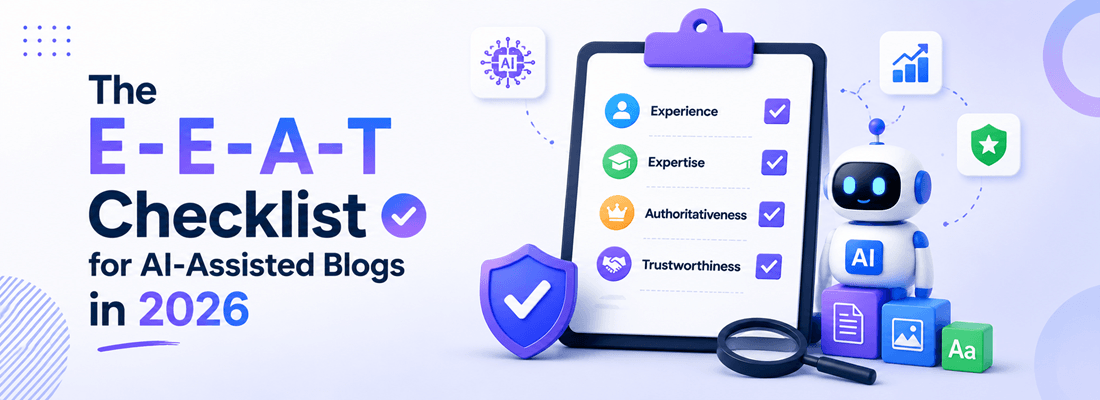
The E-E-A-T Checklist for AI-Assisted Blogs in 2026

Search engines have changed fast over the past few years. In 2026, ranking well is no longer about publishing endless pages stuffed with keywords. It is about trust, usefulness, and proof of quality.

That is where E-E-A-T matters most. E-E-A-T stands for Experience, Expertise, Authoritativeness, and Trustworthiness. Search engines use these signals to judge whether a page deserves visibility. If your blog lacks these signals, your content may struggle to rank, no matter how polished it looks.

This matters even more for businesses using AI SEO Services and workflows to scale content production. While assisted writing can improve speed, it also creates risks. Thin pages, repeated ideas, and low-value articles can trigger issues linked to the Google spam policy.

This guide explains how to build better blogs in 2026 while staying aligned with modern content guidelines and standards.

Why E-E-A-T Matters More in 2026?

Search engines now focus heavily on user satisfaction. They track how people interact with content. If readers leave quickly, ignore the page, or fail to trust the information, rankings drop.

Many websites publish huge volumes of assisted content. Much of it sounds generic, while some pages repeat ideas already found across thousands of sites.

That creates a major quality problem. To fix this, search systems now reward content that shows:

  • Real experience
  • Clear expertise
  • Reliable sourcing
  • Useful insight
  • Human understanding

This shift affects every industry, from finance and health to travel and retail. Brands using AI SEO must now focus on content depth rather than content volume.

What Makes an E-E-A-T Blog Strong?

A strong E-E-A-T blog helps readers solve a problem by giving practical insight. It feels trustworthy from the first paragraph to the last.

Here is the full checklist.

1. Experience Comes First

Add Real Examples

Readers trust content that feels lived-in. So instead of vague advice, include:

  • First-hand observations
  • Real scenarios
  • Lessons from actual projects
  • Common mistakes people make
  • Outcomes and results

For example, if discussing search rankings, explain what improved visibility and what failed, which gives depth to your writing.

Avoid Generic Statements

Weak content often repeats obvious points, such as:

  • “Quality matters”
  • “Content is important”
  • “SEO helps rankings”

These lines add no value. Instead, explain why something matters and how it affects users. Specificity improves trust.

Use Original Insights

Search engines now compare pages across the web. If your article sounds too similar to existing pages, it loses value.

Add:

  • Personal observations
  • Industry trends
  • Unique opinions
  • Practical methods
  • Real examples

This helps your blog stand out.

Also Read: Using AI for Hyper-Local SEO Across Multiple Locations

2. Show Clear Expertise

Cover Topics in Detail

Thin content rarely performs well in 2026. A high-quality blog should answer major user questions in one place. For example, an article about AI SEO Services should explain:

  • Content quality
  • Search intent
  • Technical optimisation
  • User trust
  • Spam risks
  • Content structure

Readers should not need five extra tabs to understand the topic.

Explain Concepts in Simple Language

Complex writing creates friction. Meanwhile, strong blogs use short sentences and clear wording which helps readers to understand the content quickly. Because simple language also improves readability scores.

Keep Information Accurate

Incorrect claims damage trust.

Before publishing, check:

  • Statistics
  • Dates
  • Industry updates
  • Search policy changes
  • Technical information

This matters when discussing the Google spam policy or the Google AI SEO policy 2026 updates. Search engines now place stronger emphasis on factual reliability.

3. Build Authoritativeness

Create Topic Depth Across Your Site

One strong article helps. A strong content ecosystem helps more. If your site covers SEO, create connected content around:

  • Technical SEO
  • Search intent
  • Content quality
  • Ranking systems
  • Spam prevention
  • User experience

This signals subject authority.

Search engines trust websites that show consistent expertise over time.

Keep Author Information Clear

Readers want to know who created the content.

Include:

  • Author names
  • Relevant experience
  • Short bios
  • Professional background

Anonymous blogs often struggle to build trust.

Transparency matters.

Also Read: AI SEO for E-commerce: Scaling Product Descriptions Fast

Update Older Content

Outdated pages weaken authority.

Review older blogs regularly and improve:

  • Statistics
  • Screenshots
  • Examples
  • Search guidance
  • Policy references

Freshness remains important in many industries.

4. Strengthen Trustworthiness

Avoid Clickbait Headlines

Misleading titles damage user trust.

Your headline should match the article content clearly.

Avoid exaggerated promises such as:

  • “Guaranteed rankings”
  • “Instant traffic growth”
  • “Secret ranking hacks”

These claims often trigger distrust signals.

Make Content Helpful First

Many sites still publish content for algorithms instead of people. This approach does not work in 2026. Search engines now reward content created to help users first.

That means your article should:

  • Solve a problem
  • Answer a question
  • Teach something useful
  • Improve understanding

If the article exists only to target keywords, performance may decline.

Avoid Spam Signals

Search systems have become stricter about manipulation.

To avoid spam SEO AI problems, stay away from:

  • Keyword stuffing
  • Mass-produced low-value pages
  • Hidden text
  • Misleading redirects
  • Duplicate articles
  • Auto-generated filler sections

These tactics may violate the Google spam policy. Quality always wins in the long term.

The Role of Search Intent in E-E-A-T

Search intent matters more than ever. Before writing, ask:

“What does the reader actually want?”

A user searching for “AI SEO” may want:

  • Strategy advice
  • Content quality guidance
  • Ranking tips
  • Policy updates
  • Spam prevention methods

If your article fails to match that intent, readers leave quickly which directly hurts rankings. Strong blogs align every section with user needs.

Content Structure Still Matters

Use Clear Headings

Good structure improves readability. Use:

  • H1 for the main title
  • H2 for key sections
  • H3 for detailed points

This helps readers scan the article. It also improves accessibility.

Keep Paragraphs Short

Large text blocks overwhelm readers while short paragraphs improve:

  • Clarity
  • Reading flow
  • Mobile usability
  • Engagement

Aim for two to four lines per paragraph where possible.

Use Lists Naturally

Lists improve comprehension. Use bullet points for:

  • Steps
  • Tips
  • Examples
  • Checklists

This makes content easier to absorb.

Why Thin Assisted Content Fails

Many businesses still focus on speed over quality. This creates content that:

  • Repeats existing ideas
  • Adds little value
  • Feels generic
  • Lacks insight
  • Sounds unnatural

Search systems detect these patterns.

That is why many low-quality AI SEO pages lose visibility over time. Publishing more content does not guarantee better results. Useful content wins.

The Best E-E-A-T Workflow for 2026

Start with Research

Before writing:

  • Study user questions
  • Analyse search intent
  • Review industry discussions
  • Check policy updates
  • Identify content gaps

Research improves depth.

Create a Clear Outline

Strong structure prevents weak sections. Plan:

  • Main headings
  • Supporting points
  • Examples
  • Key takeaways

This keeps the article focused.

Edit for Clarity

Editing matters more than drafting. Check for:

  • Repetition
  • Weak phrasing
  • Long sentences
  • Unclear points
  • Generic statements

The final article should sound natural and helpful.

Add Human Review

Never publish unchecked content at scale. Human review helps identify:

  • Factual errors
  • Tone issues
  • Weak examples
  • Trust problems
  • Spam risks

This step is essential for strong AI SEO Services workflows.

How E-E-A-T Supports Long-Term Rankings?

Short-term tricks rarely last. Strong E-E-A-T creates:

  • Better engagement
  • More trust
  • Higher retention
  • Stronger backlinks
  • Consistent rankings

It also protects websites from major ranking drops after search updates. This matters for brands investing in AI SEO Services at scale. Quality systems create stronger results over time.

Conclusion

The future of search belongs to trustworthy content.

In 2026, success depends on more than keywords or publishing speed. Search systems now reward experience, expertise, authority, and trust. That means every blog should:

  • Solve real problems
  • Share useful insight
  • Match user intent
  • Avoid spam tactics
  • Deliver accurate information

Businesses using AI SEO and assisted workflows must focus on quality control more than ever. Following strong AI content guidelines and staying aligned with the Google spam policy can help protect rankings and improve visibility.

The safest approach is simple. Create content for people first. When readers trust your content, search engines are far more likely to trust it too.