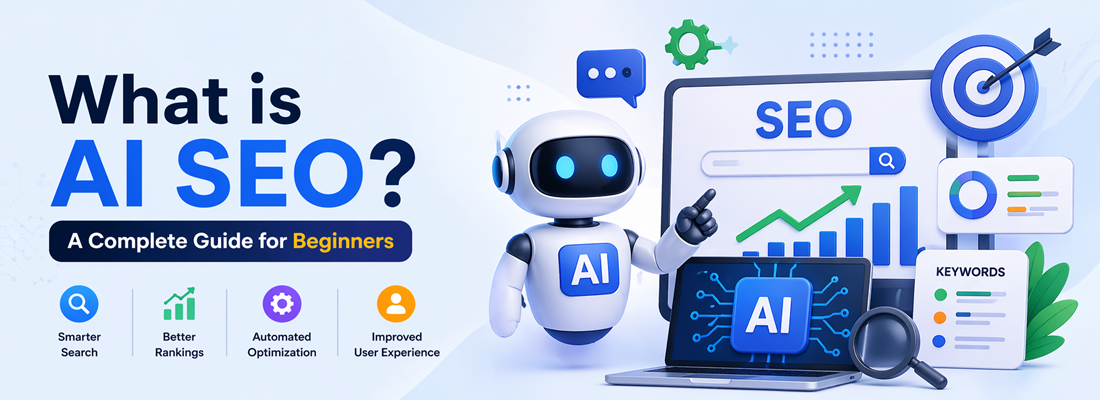
The landscape of search optimization is constantly evolving, with new tools and techniques emerging every year, which can be overwhelming for beginners. A significant topic gaining attention is the role of artificial intelligence in improving website rankings. By understanding how these advancements work, marketers can unlock more effective strategies, reducing the uncertainty often associated with digital marketing.
This guide explains AI SEO in the simplest words possible. Anyone can grasp these ideas, even without a tech background. The goal is to show how smart technology makes websites more visible. Let us begin this journey into the future of digital marketing together.
Want More Traffic and Better Rankings?
Reach more customers, improve search visibility, & build a strong online presence with a clear SEO strategy.

What is AI SEO?
AI-powered SEO means using artificial intelligence to boost a website’s search rankings. Smart software handles tasks that humans used to do by hand. These tasks include finding keywords, studying rivals, and fixing tech errors. The technology learns from data and gets better over time.
1. How Machines Learn to Improve Websites
Artificial intelligence studies thousands of successful websites to find patterns. It notices which headings, words, and structures please search engines. The system then uses these lessons on other sites by itself. This learning process never stops, adapting to new rules quickly.
2. Why Beginners Should Care About This Tech
Learning old optimization takes months or years of practice. AI tools turn hard tasks into a few clicks. Beginners get results that once needed expert knowledge. This edge helps small business owners compete fairly.
How AI is Changing SEO?
Search optimization has shifted fully over the last few years. Old methods relied on guessing what search engines wanted. Modern AI-powered SEO uses data to make exact choices. This change saves time while giving better results for website owners.
1. From Hand Work to Smart Automation
People used to spend hours checking each webpage for issues. AI scans whole websites in seconds, finding every problem right away. It also suggests fixes and sometimes applies them by itself. This speed lets teams focus on creative tasks instead of repetitive checks.
2. Live Adaptation to Rule Changes
Search engines update their rules thousands of times each year. Old optimization could not react quickly to these shifts. AI watches changes as they happen and tweaks strategies right away. Websites using smart tech rarely suffer from sudden ranking drops.
Key Uses of AI in SEO
Artificial intelligence touches nearly every part of search optimization. Different tools serve different purposes within a full strategy. Knowing these uses helps beginners pick the right solutions for their needs.
1. Keyword Finding and Grouping
Finding useful keywords used to take weeks of handwork. AI studies millions of searches to uncover hidden chances. It groups related phrases into topic clusters for content planning. This method ensures websites cover subjects fully instead of missing key angles.
2. Content Boosting and Creation
AI suggests headings, word counts, and topics that rank well. Some tools even draft whole articles based on search data. Writers then edit and improve this machine-assisted content. The result mixes human creativity with data-driven exactness.
3. Tech Site Checks
Broken links, slow pages, and missing tags hurt search performance. AI crawls websites daily, flagging each tech problem clearly. It ranks issues based on their possible effect on rankings. Teams fix the most critical problems first, making their effort count.
4. Link Building and Reaching Out
Getting links from other websites remains vital for authority. AI finds sites most likely to link to specific content. It studies their past behaviour and suggests personal outreach angles. This focused method yields more links with less wasted work.
Gains of AI-Powered SEO
Switching to smart optimization brings many gains for beginners. AI SEO services help businesses get results faster than old methods. The gains go beyond speed to include accuracy and steadiness.
1. Quicker Path to Visible Results
Manual optimization often takes six months or longer to show movement. AI-powered approaches give clear changes within two to three months. Faster data work and live fixes drive this shorter timeline. Beginners stay driven when they see progress quickly.
2. Fewer Human Errors
People make mistakes when studying large amounts of data. AI systems follow steady rules without getting tired or distracted. They catch issues that human eyes might miss during hand checks. This exactness stops small problems from growing into big hurdles.
3. Better Grasp of User Wants
Search engines want to show results that truly answer people’s questions. AI studies what users actually click on and read. It finds the deeper need behind each search query. Content made with this insight pleases visitors and search engines alike.
AI SEO vs Traditional SEO
The table below compares both approaches across key areas. This side-by-side view helps beginners see the differences clearly.
| Aspect | Traditional SEO | AI-Powered SEO |
| Keyword research | Hand brainstorming | Auto data study |
| Content creation | Human writing only | Human plus AI ideas |
| Tech checks | Monthly or every three months | Daily or non-stop |
| Rival tracking | Weekly hand checks | Live watching |
| Rule adaptation | After the fact | Forward-looking |
| Time to see results | 6-12 months | 2-3 months |
| Data handling | Small sample sizes | Huge data sets |
This table shows why many businesses now pick smart solutions for their optimization needs.
Best AI SEO Tools You Can Use
Many great tools bring artificial intelligence to search optimization. Beginners should start with one or two before growing their toolkit. The right AI SEO tools match a website’s specific needs and budget.
1. Surfer SEO
Surfer SEO studies top-ranking pages and gives data-driven content guides. It checks word count, heading setup, keyword density, and related terms. You receive a custom brief before writing a single word. The tool looks at over 500 ranking clues from more than 2 million pages in its storage. Surfer’s smart language tech checks how top pages use related words and similar terms.
- Makes detailed content plans that match what top pages already use and rank well
- Links straight with Google Docs for an easy writing flow without any hassle
- Refreshes its database often to show current ranking rules and algorithm shifts
2. Jasper (formerly Jarvis)
Jasper uses language models to write blog posts, product descriptions, and ad copy. You give it a topic and tone, and it produces human-like text. The tool includes templates for SEO-friendly content structures. Jasper runs on smart language systems trained on billions of web pages and write-ups. The system learns from over 10% of the public internet to grasp writing styles.
- Makes first drafts in seconds, saving hours of staring at blank screens every week
- Gives over fifty templates for different content types and shapes you might need
- Works with more than twenty-five languages for worldwide content plans and audiences
3. Semrush
Semrush puts AI throughout its SEO toolkit for smarter study. Its Keyword Magic Tool uses machine learning to group search terms. The SEO Writing Assistant gives live feedback as you type. Semrush handles over 20 billion keywords and 140 million websites in its storage. The platform’s AI studies 800 million user intent signals to guess what searchers truly want.
- Gives an all-in-one platform covering research, creation, and tracking in one place
- Delivers live writing tips that boost readability and keyword use for better results
- Guesses the traffic reach for new content before you post it to your website
4. Ahrefs
Ahrefs recently added AI-powered features within its famous backlink database. Its content explorer uses machine learning to find top-performing articles. The tool predicts how much traffic a page might earn before going live. Ahrefs scans over 8 billion web pages every single day to keep its data fresh. The platform holds backlink data from more than 300 billion known pages across the internet.
- Uses unmatched backlink data to feed its AI tips and recommendations daily
- Automates rival gap checks for faster keyword finding without manual effort required
- Shows clear, picture-based dashboards that make tricky data easy to grasp quickly
How to Use AI for SEO (Step-by-Step)
Following a clear process makes using AI for SEO easier for beginners. Each step builds on the previous one toward better rankings. This sequence works for any website, large or small.
Step One: Run a Tech Check
Start by scanning the whole website for tech problems. AI tools find broken links, slow pages, and missing tags. Fix the most critical issues first, especially those affecting phone users. A clean tech base lets other optimization efforts work well.
Step Two: Find Your Best Keywords
Use AI keyword tools to discover phrases people truly search for. Look for longer terms with clear buying intent behind them. Group related keywords into topic clusters for content planning. Avoid broad terms where big rivals rule the search results.
Step Three: Make Boosted Content
Write articles that answer the questions your keywords represent. Let AI suggest headings, word counts, and related topics to cover. Publish helpful content that meets user needs fully. Update older pages with fresh info and better structure over time.
Step Four: Build Quality Links
Find websites that might link to your best content pieces. Use AI to tailor outreach messages for each possible partner. Focus on getting links from trusted sources within your field. Avoid buying links or using auto schemes that break search rules.
Step Five: Watch and Tweak
Check AI screens weekly to track ranking shifts and traffic patterns. Notice which pages do well and which ones need work. Tweak your strategy based on real data instead of guessing. Repeat this cycle non-stop for steady, long-term growth.
Common Myths About AI SEO Debunked
Many false ideas float around about how artificial intelligence works for search. Clearing up these myths helps you make better choices. Let us separate fact from fiction once and for all.
Myth 1 – AI Takes Over Human Jobs Completely
Some people fear that machines will grab all SEO work away. The truth looks quite different from this scary picture. AI handles boring, repeatable data tasks while humans focus on creative plans. The best results come from teamwork between people and software.
Myth 2 – AI SEO Works Like a Magic Wand
Beginners sometimes think AI fixes everything with zero effort. No tool can turn a bad website into a top performer overnight. You still need good content, quality products, and real value. AI simply speeds up the work you would do anyway.
Myth 3 – Only Rich Companies Can Use AI
Many folks assume AI tools cost thousands of dollars each month. Low-cost options exist for small shops and solo bloggers. Free trials let you test features before spending any money. Starting small and growing works perfectly well.
How to Measure AI SEO Success
Tracking your progress shows whether your efforts actually pay off. Without numbers, you cannot know what works or needs to change. These measurement tips keep your campaign on the right path.
Watch Your Free Visitor Growth
Check how many people come from search engines each week. A steady climb means your AI tools are doing their job. Flat or falling numbers signal a need to shift your approach. Compare month-to-month rather than day-to-day for true trends.
Track Keyword Ranking Moves
Check where your pages rank for important search terms. Moving from page two to page one means real progress. AI tools can automate this tracking and send you alerts. Cheer small wins while working toward bigger goals.
Measure Action Rates
Getting traffic means nothing if visitors do not take action. Track how many people sign up, buy, or reach out. AI can help spot which keywords bring the best buyers. Focus your energy on terms that give real business results.
Hurdles & Limits of AI SEO
Smart tech cannot solve every optimization problem by itself. Beginners should know where AI SEO falls short. Knowing these limits helps set real hopes from the start.
1. AI Cannot Replace Human Creativity
Machines struggle with humour, feeling, and cultural references. People still write better stories and make more catchy headlines. AI gives data, but humans must turn that data into gripping content. The best results come from mixing both strengths together.
2. Data Quality Affects Output Quality
AI learns from the info you feed into the system. Bad data leads to bad tips, no matter how smart the tool. Beginners must check that their AI tools use reliable, up-to-date sources. Rubbish in equals rubbish out, even with advanced tech.
3. Too Much Trust Creates Blind Spots
Following AI tips without question can lead websites off track. Algorithms sometimes miss subtle factors that humans notice easily. Beginners should treat AI as a helper, not a replacement for judgment. Question tips that seem odd or cut off from business goals.
- Reliance on Data Quality: AI tools learn from the information you feed into them. Bad input data gives misleading tips and poor results. Bad data truly gives bad results with artificial intelligence systems. You must start with clean, correct data to get value from AI.
- Risk of Over-Tuning: Following every AI tip without thought can make content feel robotic. Search engines may punish pages that look clearly machine-written. Use AI as a guide, not as the final word. Your own judgment remains the most important part of the equation.
Future of AI in SEO
The role of artificial intelligence in search optimization will keep growing. AI in seo trends point toward even more automation and exactness. Beginners who learn these tools now gain an edge for years ahead.
Voice Search Boosting
More people speak their searches instead of typing them. AI helps tailor content for natural language questions. Websites ready for voice search will catch this growing crowd. Beginners should start thinking about chatty phrases and question-based content.
Guesswork Analytics
Future AI tools will forecast ranking shifts before they happen. They will suggest content topics that will trend in the coming months. This guessing power lets websites get ready ahead of rivals. Being early beats being better in the world of search optimization.
Deep Personalization
Search engines will show different results based on each user’s past. AI will help websites shape content for specific visitor groups. Beginners must focus on knowing their audience’s unique needs. One-size-fits-all content will lose power over time.
Conclusion
AI SEO stands as the new standard for search optimization in today’s fast-moving digital world. Beginners can get results that once needed years of practice. AI SEO services in India handle the heavy work while humans focus on creativity and planning. Knowing what AI SEO is opens doors to smarter, faster, and more effective marketing.
The AI SEO vs traditional SEO match clearly favours smart approaches for most websites. How to use AI for SEO gets easier with practice and the right tools. Welcoming this tech puts beginners in a good spot, as search keeps changing.
FREQUENTLY ASKED QUESTIONS
AI SEO gives clear ranking gains within two to three months, while old methods often take six to twelve months. Faster data work and live fixes drive this big speed edge for smart approaches.
Most platforms offer simple screens made for total beginners. You only need basic computer know-how to run checks and view tips. The software handles all the hard work behind the scenes.
AI tools help but cannot fully replace human strategic thinking. An expert still adds worth through creative choices and a deep grasp of business goals. The best path mixes smart tools with skilled people.
Yes, smart tools help websites of any size just the same. Small sites gain the most because they lack big marketing teams. AI handles tasks that would otherwise eat hours of handwork each week.