Over 58% of Google searches now end without a click. That number continues to grow as search platforms provide direct answers within search results instead of sending users to websites.
This shift has changed how people discover information online. Users now ask detailed questions and expect immediate answers. Search platforms analyse content from multiple sources, create a response, and present it directly on the results page.
This is where answer engine optimization comes in.
Instead of focusing only on rankings, businesses now need content that can be understood, trusted, and cited by answer engines. This approach works alongside traditional AI SEO strategies to improve visibility across modern search experiences.
In this guide, you will learn what AEO is, how it differs from SEO, how answer engines choose sources, and the practical steps you can take to increase your visibility in answer-driven search results.
Want More Traffic and Better Rankings?
Reach more customers, improve search visibility, & build a strong online presence with a clear SEO strategy.

What Is Answer Engine Optimization (AEO)?
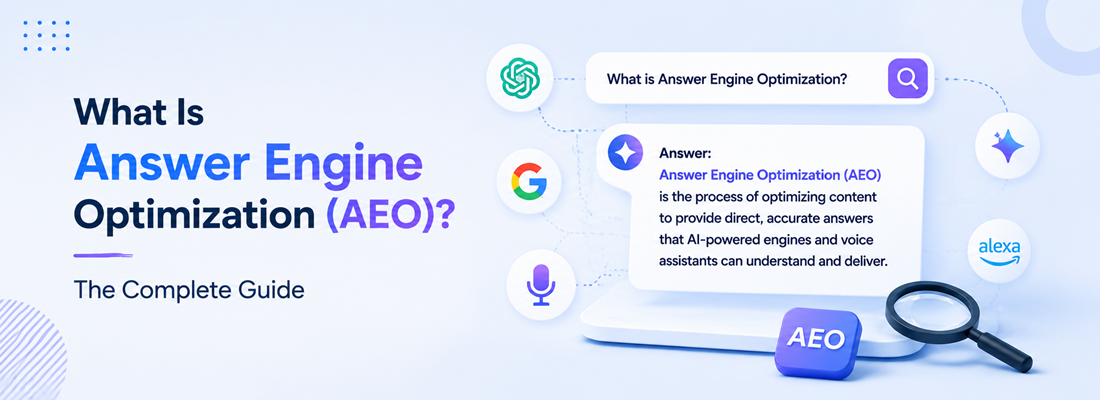
Answer engine optimization is the process of creating and structuring content so that answer engines can easily understand, extract, and display it when responding to user questions.
In simple terms, AEO helps your content become the answer instead of just another search result.
An answer engine is a platform that provides direct responses to questions. Examples include:
- Google AI Overviews
- ChatGPT Search
- Perplexity
- Microsoft Copilot
- Gemini
If you have ever wondered what AEO is in SEO, think of it as the next stage of search optimization. Instead of competing only for rankings, businesses now compete for citations and visibility within generated answers.
Why Has AEO Become So Important in 2026?
Search behaviour has changed significantly over the past few years. People no longer rely solely on traditional search results to find information. Instead, they ask detailed questions and receive direct answers within search platforms.
As a result, businesses must adapt their content strategies to remain visible where users are consuming information.
The Growth of Answer-Based Search
Research shows that AI Overviews now appear in approximately 60% of all informational searches across the United States. Users can find the information directly from search result pages instead of visiting multiple web pages.
The digital content discovery process underwent a complete transformation which affected how people access digital content.
The Rise of Zero-Click Searches
A zero-click search occurs when a user receives an answer without visiting a website. The system provides greater user convenience, but businesses need to address emerging operational problems that arise from this development.
The visibility of answers on search result pages leads to lower click-through rates for the highest ranking web pages. Businesses must compete more fiercely for online attention because their old marketing methods which focused on website visitors, have become ineffective.
The Business Impact of AEO
The number of clicks might decrease but the visibility value stays important. When a brand appears in an answer, it receives credibility while potential customers identify the brand.
The continuous presence of brands in answer engines leads to increased branded searches which builds brand recognition and bring in better-qualified prospects and helps with sales conversions.
The search environment of today has forced multiple organizations to merge their AEO SEO operations with their established SEO practices because they need to keep their search engine rankings and authority.
Also Read: The E-E-A-T Checklist for AI-Assisted Blogs in 2026
How Is AEO Different from Traditional SEO?
Although AEO and SEO work together, they have different goals.
| Factor | Traditional SEO | AEO SEO |
|---|---|---|
| Primary Goal | Rank pages | Get cited in answers |
| Focus | Keywords and rankings | Questions and answers |
| User Behaviour | Click website links | Read direct answers |
| Content Format | Long-form content | Structured answer-focused content |
| Success Metric | Traffic and rankings | Citations and visibility |
| optimization | Page-level | Section-level |
| Search Intent | Search queries | Conversational questions |
When comparing AEO vs SEO, the biggest difference is the outcome. SEO aims to earn clicks, while AEO aims to earn trust and citations. The best digital strategies combine both.
How Do AI Engines Select Sources to Cite?
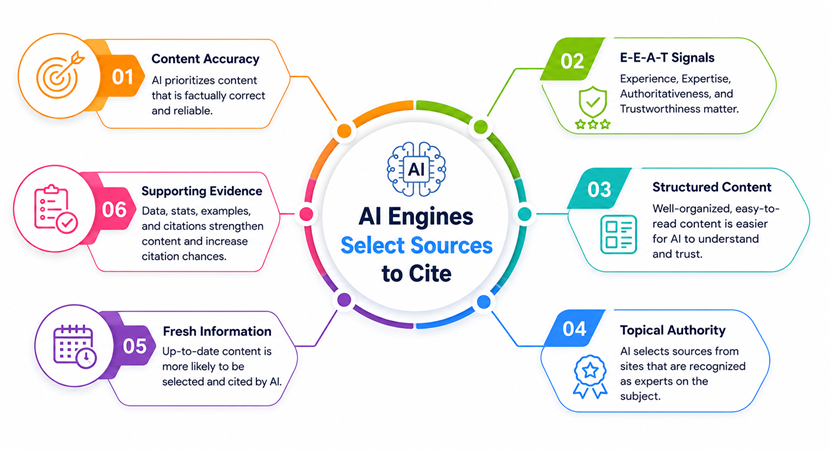
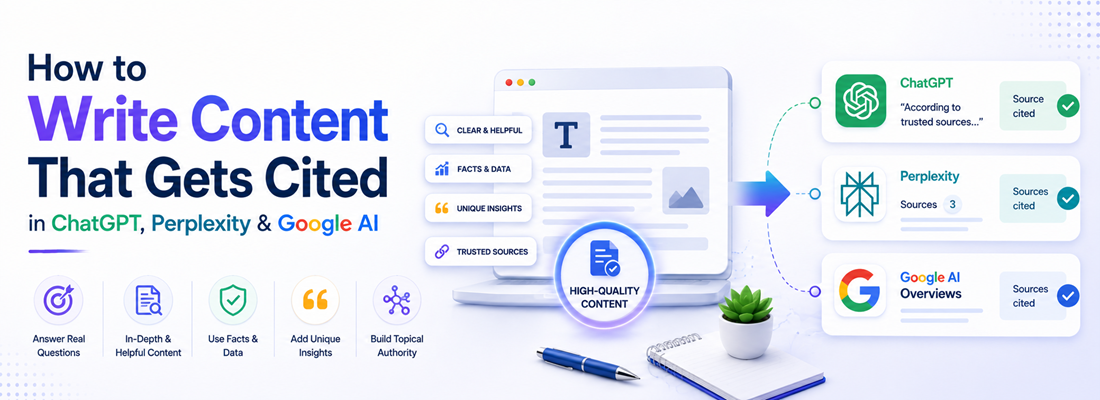
Answer engines do not select sources based on rankings alone. They evaluate content using a combination of trust, relevance, and quality signals to determine which sources deserve to be referenced in their answers. Understanding these factors can help improve your chances of being cited.
Content Accuracy
Answer engines favour content that provides clear, accurate, and factual information. Pages that answer questions directly and avoid misleading claims are more likely to be selected.
E-E-A-T Signals
Experience, Expertise, Authoritativeness, and Trustworthiness remain key indicators of content quality. Strong E-E-A-T signals help establish credibility and increase confidence in your information.
Structured Content
People find it simpler to understand content when it follows an organized structure. Search engines identify and extract vital information through their ability to recognize headings which they pair with bullet points, numbered lists and tables for quick extraction.
Topical Authority
Websites that maintain a steady output of quality content about particular subjects become reliable information sources. The regular reporting of this topic shows that the media staff members have a complete understanding of this subject matter.
Fresh Information
Content performs better when companies keep information updated, as their business information goes through continuous modifications. The combination of new data with present statistical evidence will boost the content’s value.
Supporting Evidence
The combination of statistical data with research results, expert statements and trustworthy sources creates a foundation that builds trust. Users develop higher trust levels when they see evidence-based information that shows the content contains correct details.
The stronger your content performs across these areas, the higher the likelihood of being selected as a cited source.
Following the principles outlined in this answer engine optimization guide can help improve both visibility and authority across modern search experiences.
What Types of Content Win in AI Overviews?
Some content formats perform better than others in answer-driven search results. The following content types often receive higher visibility:
Question-Based Content
Example:
- What is answer engine optimization?
- How does AEO work?
- Why is AEO important?
FAQ Sections
FAQs provide direct answers in a format that answer engines can process easily.
Definitions
Short definitions often appear in answer boxes and generated responses.
Step-by-Step Guides
How-to content works well because it provides clear instructions.
Comparison Content
Topics such as AEO vs SEO help users evaluate optio ns and make decisions.
Tables and Lists
Structured information improves readability and extraction.
Examples include:
- Pricing comparisons
- Feature lists
- Process checklists
- Benefits and drawbacks
Also Read: AI SEO for E-commerce: Scaling Product Descriptions Fast
Step-by-Step: How to Optimize for AEO?
Follow this process to improve visibility in answer engines.
Step 1: Identify User Questions
Research the questions your audience asks before creating content.
Look at:
- Search suggestions
- People Also Ask sections
- Customer enquiries
- Industry forums
Step 2: Lead With the Answer
Start each section with a direct response. Avoid lengthy introductions before addressing the topic.
Step 3: Use Question-Based Headings
Structure headings around user questions. For example:
What Is AEO in SEO?
How Does Answer Engine Optimization Work?
Why Is AEO Important?
Step 4: Create Clear Content Sections
Keep each section focused on a single topic which helps search engines identify specific information.
Step 5: Add FAQs
Include frequently asked questions at the end of important pages which increases opportunities for citations.
Step 6: Use Lists and Tables
Structured formats improve readability and make information easier to extract.
Step 7: Build Topic Clusters
Create supporting articles around a core topic.
This strengthens topical authority. You can also connect related content such as AI SEO services and industry-specific topics like AI SEO services in India, through relevant internal links.
Step 8: Improve Trust Signals
Use:
- Expert insights
- Original research
- Real examples
- Updated statistics
Step 9: Implement Structured Data
Schema markup helps search platforms understand page content.
The FAQ schema remains one of the most useful options.
Step 10: Refresh Content Regularly
Review important pages every few months.
Update:
- Statistics
- Examples
- Industry trends
- Best practices
Fresh content often receives greater visibility.
AEO Tools You Can Use Right Now
Several tools can support your answer engine optimization efforts.
| Tool Type | Purpose |
|---|---|
| Google Search Console | Monitor search performance, identify queries that drive traffic, and track website visibility in search results. |
| Schema.org Validator | Validate structured data markup to ensure search engines can understand and process your content correctly. |
| Ahrefs | Discover keyword opportunities, analyse backlinks, and identify content gaps that can improve visibility in answer engines. |
| SEMrush | Research keywords, monitor rankings, analyse competitors, and uncover question-based search opportunities. |
| AlsoAsked | Find related questions people ask online and identify topics that can be used to create answer-focused content. |
| Rich Results Test | Check whether structured data is implemented correctly and determine if content is eligible for rich search results. |
These tools support both traditional SEO and answer engine optimization initiatives.
AEO vs SEO: Should You Pick One?
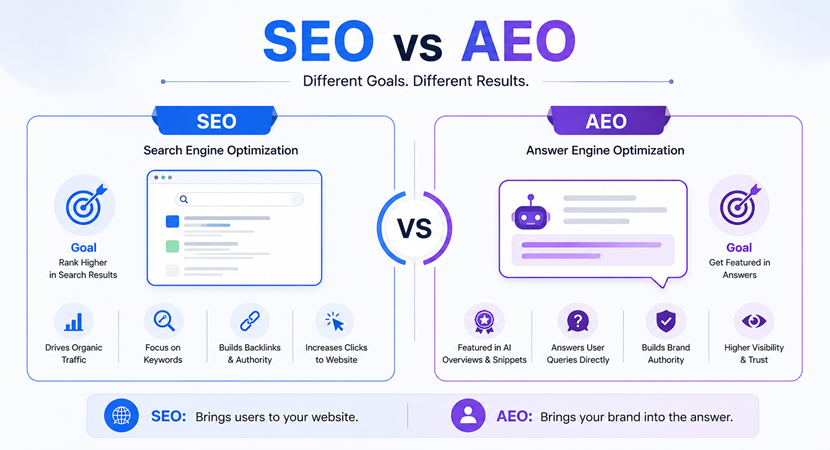
The short answer is no, as the debate around AEO vs SEO often creates unnecessary confusion.
Traditional SEO remains important because strong rankings continue to influence visibility. But AEO builds on that foundation by helping content appear in answer-driven experiences.
The most successful businesses use both approaches together. A balanced strategy includes:
- Keyword optimization
- Technical SEO
- Topic clusters
- Structured content
- FAQ sections
- Direct answers
This creates stronger visibility across search platforms.
Common AEO Mistakes to Avoid
Many businesses understand the value of answer engine optimization but struggle to achieve results because of a few common mistakes.
Even the best answer engine optimization guide will only deliver results when these issues are addressed. Avoiding these issues can improve both user experience and your chances of being cited as a trusted source.
Writing Long Introductions
Many pages spend too much time setting the scene before answering the main question. Answer engines prefer content that delivers clear information quickly. Start each section with a direct answer and provide supporting details afterwards.
Ignoring User Intent
Content creators who fail to grasp user needs will experience lower visibility for their work because they do not understand user intentions. People need to create their specific audience questions which they should answer using accurate responses that match their message purpose.
Skipping Structured Data
Search engines require structured data to make sense of your website content. The addition of proper schema markup which includes FAQ and Article schemas will help search engines understand content better while enhancing its discoverability.
Publishing Without Updates
Information that stays static will start to lose its usefulness after some period. Organizations should perform routine reviews of their essential web pages to update statistical data and examples and maintain all information at its most recent point.
Overusing Keywords
Users find content difficult to understand because of keyword stuffing which also creates doubts about its trustworthiness. Create useful content that includes keywords in a natural way while you focus on delivering clear information that provides valuable insights.
By avoiding these mistakes, businesses can create stronger content that performs well in both traditional search results and answer-driven search experiences.
Conclusion
Overall, Answer engine optimization is becoming a core part of digital visibility. As search platforms provide more direct answers, businesses need content that is clear, trustworthy, and easy to understand.
The primary goal of an effective AEO SEO strategy involves providing answers to queries while developing industry authority through organized content that others can trust for citation purposes.
The implementation of AEO fails to eliminate the need for SEO in any way. The best method emerges from combining conventional optimization methods with answer-oriented content creation strategies.
Organizations that adapt first will create ideal conditions to continue their online presence while they draw in target visitors and establish enduring market leadership. The future of search success depends on your ability to manage content either through internal teams or by working with Indian providers who offer AI SEO services.
FREQUENTLY ASKED QUESTIONS
No. Featured snippets are search result features that display selected content. Answer engine optimization focuses on helping content appear in direct answers across multiple answer platforms.
Results vary by industry and competition. Many websites begin seeing improvements within a few months after implementing consistent optimization practices.
Yes. Small businesses can benefit by creating helpful content that answers customer questions clearly and accurately.
AEO focuses on becoming a cited source in answer engines. GEO covers broader optimization strategies for visibility across generated search experiences.
Yes. Many AEO best practices, such as structured content, FAQs.