Search engines have changed fast over the past few years. In 2026, ranking well is no longer about publishing endless pages stuffed with keywords. It is about trust, usefulness, and proof of quality.
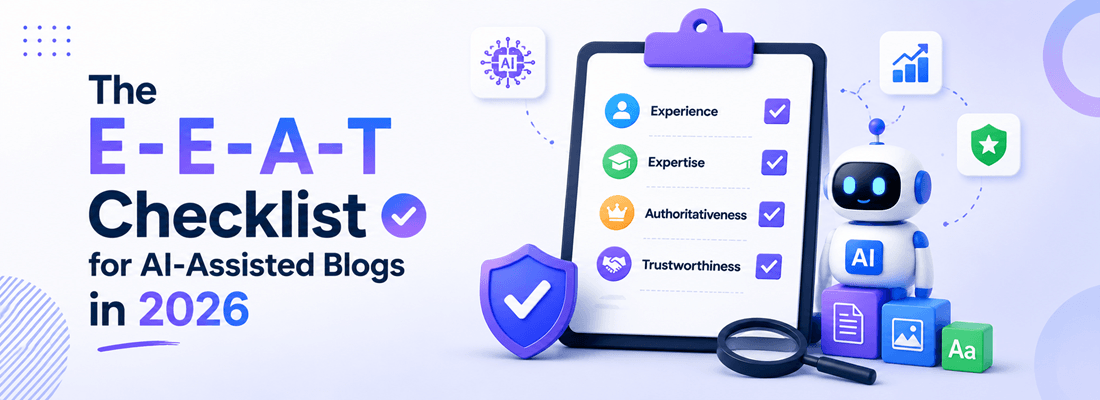
That is where E-E-A-T matters most. E-E-A-T stands for Experience, Expertise, Authoritativeness, and Trustworthiness. Search engines use these signals to judge whether a page deserves visibility. If your blog lacks these signals, your content may struggle to rank, no matter how polished it looks.
This matters even more for businesses using AI SEO Services and workflows to scale content production. While assisted writing can improve speed, it also creates risks. Thin pages, repeated ideas, and low-value articles can trigger issues linked to the Google spam policy.
This guide explains how to build better blogs in 2026 while staying aligned with modern content guidelines and standards.
Want More Traffic and Better Rankings?
Reach more customers, improve search visibility, & build a strong online presence with a clear SEO strategy.

Why E-E-A-T Matters More in 2026?
Search engines now focus heavily on user satisfaction. They track how people interact with content. If readers leave quickly, ignore the page, or fail to trust the information, rankings drop.
Many websites publish huge volumes of assisted content. Much of it sounds generic, while some pages repeat ideas already found across thousands of sites.
That creates a major quality problem. To fix this, search systems now reward content that shows:
- Real experience
- Clear expertise
- Reliable sourcing
- Useful insight
- Human understanding
This shift affects every industry, from finance and health to travel and retail. Brands using AI SEO must now focus on content depth rather than content volume.
What Makes an E-E-A-T Blog Strong?
A strong E-E-A-T blog helps readers solve a problem by giving practical insight. It feels trustworthy from the first paragraph to the last.
Here is the full checklist.
1. Experience Comes First
Add Real Examples
Readers trust content that feels lived-in. So instead of vague advice, include:
- First-hand observations
- Real scenarios
- Lessons from actual projects
- Common mistakes people make
- Outcomes and results
For example, if discussing search rankings, explain what improved visibility and what failed, which gives depth to your writing.
Avoid Generic Statements
Weak content often repeats obvious points, such as:
- “Quality matters”
- “Content is important”
- “SEO helps rankings”
These lines add no value. Instead, explain why something matters and how it affects users. Specificity improves trust.
Use Original Insights
Search engines now compare pages across the web. If your article sounds too similar to existing pages, it loses value.
Add:
- Personal observations
- Industry trends
- Unique opinions
- Practical methods
- Real examples
This helps your blog stand out.
Also Read: Using AI for Hyper-Local SEO Across Multiple Locations
2. Show Clear Expertise
Cover Topics in Detail
Thin content rarely performs well in 2026. A high-quality blog should answer major user questions in one place. For example, an article about AI SEO Services should explain:
- Content quality
- Search intent
- Technical optimisation
- User trust
- Spam risks
- Content structure
Readers should not need five extra tabs to understand the topic.
Explain Concepts in Simple Language
Complex writing creates friction. Meanwhile, strong blogs use short sentences and clear wording which helps readers to understand the content quickly. Because simple language also improves readability scores.
Keep Information Accurate
Incorrect claims damage trust.
Before publishing, check:
- Statistics
- Dates
- Industry updates
- Search policy changes
- Technical information
This matters when discussing the Google spam policy or the Google AI SEO policy 2026 updates. Search engines now place stronger emphasis on factual reliability.
3. Build Authoritativeness
Create Topic Depth Across Your Site
One strong article helps. A strong content ecosystem helps more. If your site covers SEO, create connected content around:
- Technical SEO
- Search intent
- Content quality
- Ranking systems
- Spam prevention
- User experience
This signals subject authority.
Search engines trust websites that show consistent expertise over time.
Keep Author Information Clear
Readers want to know who created the content.
Include:
- Author names
- Relevant experience
- Short bios
- Professional background
Anonymous blogs often struggle to build trust.
Transparency matters.
Also Read: AI SEO for E-commerce: Scaling Product Descriptions Fast
Update Older Content
Outdated pages weaken authority.
Review older blogs regularly and improve:
- Statistics
- Screenshots
- Examples
- Search guidance
- Policy references
Freshness remains important in many industries.
4. Strengthen Trustworthiness
Avoid Clickbait Headlines
Misleading titles damage user trust.
Your headline should match the article content clearly.
Avoid exaggerated promises such as:
- “Guaranteed rankings”
- “Instant traffic growth”
- “Secret ranking hacks”
These claims often trigger distrust signals.
Make Content Helpful First
Many sites still publish content for algorithms instead of people. This approach does not work in 2026. Search engines now reward content created to help users first.
That means your article should:
- Solve a problem
- Answer a question
- Teach something useful
- Improve understanding
If the article exists only to target keywords, performance may decline.
Avoid Spam Signals
Search systems have become stricter about manipulation.
To avoid spam SEO AI problems, stay away from:
- Keyword stuffing
- Mass-produced low-value pages
- Hidden text
- Misleading redirects
- Duplicate articles
- Auto-generated filler sections
These tactics may violate the Google spam policy. Quality always wins in the long term.
The Role of Search Intent in E-E-A-T
Search intent matters more than ever. Before writing, ask:
“What does the reader actually want?”
A user searching for “AI SEO” may want:
- Strategy advice
- Content quality guidance
- Ranking tips
- Policy updates
- Spam prevention methods
If your article fails to match that intent, readers leave quickly which directly hurts rankings. Strong blogs align every section with user needs.
Content Structure Still Matters
Use Clear Headings
Good structure improves readability. Use:
- H1 for the main title
- H2 for key sections
- H3 for detailed points
This helps readers scan the article. It also improves accessibility.
Keep Paragraphs Short
Large text blocks overwhelm readers while short paragraphs improve:
- Clarity
- Reading flow
- Mobile usability
- Engagement
Aim for two to four lines per paragraph where possible.
Use Lists Naturally
Lists improve comprehension. Use bullet points for:
- Steps
- Tips
- Examples
- Checklists
This makes content easier to absorb.
Why Thin Assisted Content Fails
Many businesses still focus on speed over quality. This creates content that:
- Repeats existing ideas
- Adds little value
- Feels generic
- Lacks insight
- Sounds unnatural
Search systems detect these patterns.
That is why many low-quality AI SEO pages lose visibility over time. Publishing more content does not guarantee better results. Useful content wins.
The Best E-E-A-T Workflow for 2026
Start with Research
Before writing:
- Study user questions
- Analyse search intent
- Review industry discussions
- Check policy updates
- Identify content gaps
Research improves depth.
Create a Clear Outline
Strong structure prevents weak sections. Plan:
- Main headings
- Supporting points
- Examples
- Key takeaways
This keeps the article focused.
Edit for Clarity
Editing matters more than drafting. Check for:
- Repetition
- Weak phrasing
- Long sentences
- Unclear points
- Generic statements
The final article should sound natural and helpful.
Add Human Review
Never publish unchecked content at scale. Human review helps identify:
- Factual errors
- Tone issues
- Weak examples
- Trust problems
- Spam risks
This step is essential for strong AI SEO Services workflows.
How E-E-A-T Supports Long-Term Rankings?
Short-term tricks rarely last. Strong E-E-A-T creates:
- Better engagement
- More trust
- Higher retention
- Stronger backlinks
- Consistent rankings
It also protects websites from major ranking drops after search updates. This matters for brands investing in AI SEO Services at scale. Quality systems create stronger results over time.
Conclusion
The future of search belongs to trustworthy content.
In 2026, success depends on more than keywords or publishing speed. Search systems now reward experience, expertise, authority, and trust. That means every blog should:
- Solve real problems
- Share useful insight
- Match user intent
- Avoid spam tactics
- Deliver accurate information
Businesses using AI SEO and assisted workflows must focus on quality control more than ever. Following strong AI content guidelines and staying aligned with the Google spam policy can help protect rankings and improve visibility.
The safest approach is simple. Create content for people first. When readers trust your content, search engines are far more likely to trust it too.
FREQUENTLY ASKED QUESTIONS
E-E-A-T stands for Experience, Expertise, Authoritativeness, and Trustworthiness. It is a quality framework used to assess whether content provides reliable and useful information for readers. Strong E-E-A-T helps improve visibility in search results and supports long-term SEO performance.
Yes, AI SEO Services can support content planning, optimisation, and workflow efficiency. However, rankings depend on content quality, user value, and trust signals. Search engines now prioritise useful and reliable content rather than mass-produced pages.
The Google spam policy focuses on preventing manipulative and low-value content practices. Pages created only to rank without helping users may lose visibility. Websites should avoid keyword stuffing, duplicate pages, and thin content to stay compliant.
Strong AI content guidelines focus on accuracy, originality, readability, and user value. Content should include clear explanations, real insights, and trustworthy information. Human review also remains important before publishing.
To avoid spam SEO AI issues, focus on creating helpful and original content. Avoid publishing large volumes of repetitive articles or stuffing keywords unnaturally. Following the Google AI SEO policy 2026 approach means prioritising quality, relevance, and reader trust.