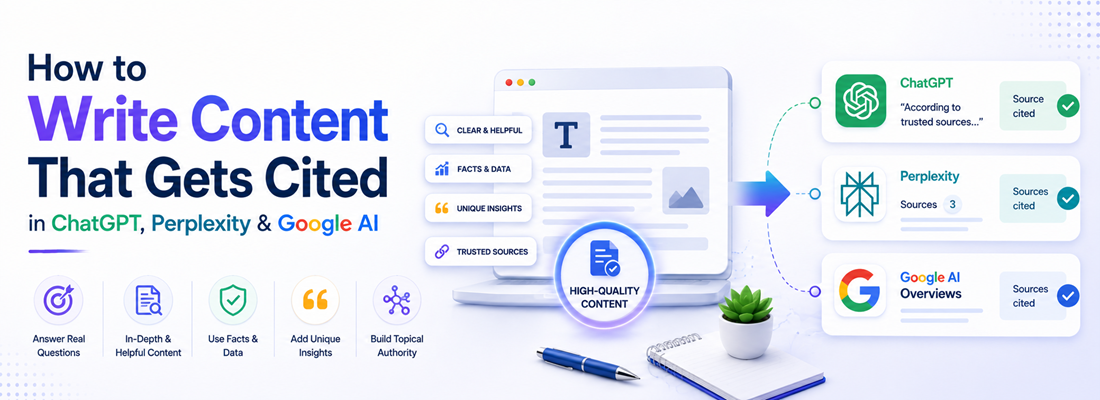
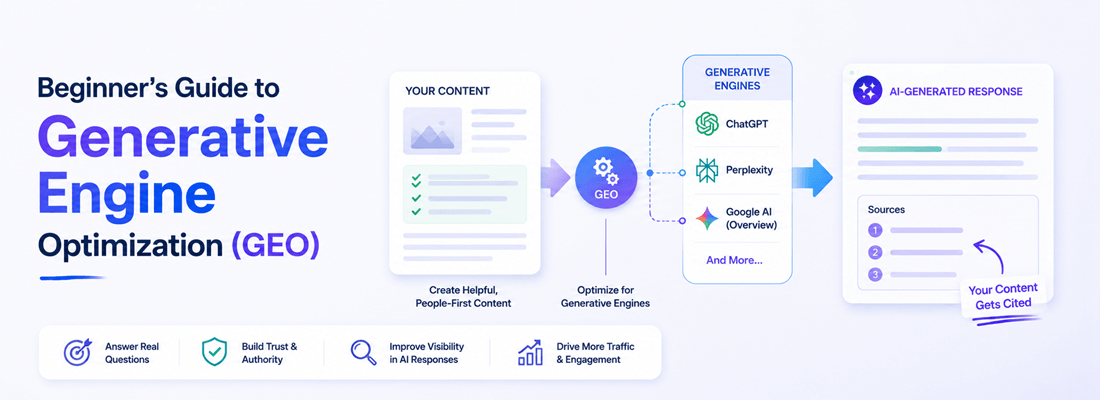
Generative Engine Optimization (GEO) involves optimizing content for direct use by AI tools such as ChatGPT, Google AI Overview, Gemini, and Perplexity. GEO doesn’t fight for ten blue links but strives to become the trusted source for an AI model.
Search behaviour has undergone a subtle shift. Most Google searches today are zero-click, and when an AI Overview does show up on the results page, the zero-click rate goes even higher. ChatGPT, Gemini, Perplexity, or Google’s own AI-powered summarization are answering users’ queries within the search results page, even before users arrive at a website.
This is not a minor trend that can be ignored and left to others to cover. It’s a change in the way visibility is achieved. Being ranked #1 on Google used to mean your web page was read, but not anymore. It now means your content is available to be pulled into an automated answer, at best. A citation from an AI model is a different skill that has different rules.
It’s a skill known as Generative Engine Optimization. This guide is created for a novice audience and marketers or SEOs who know their way around traditional search but are new to optimizing for AI-generated answers. By the end, you will understand what GEO is, how it is different from SEO, why it is important now, and what specific steps to take to increase citations within AI-generated answers.
Want More Traffic and Better Rankings?
Reach more customers, improve search visibility, & build a strong online presence with a clear SEO strategy.

What Is Generative Engine Optimization (GEO)?
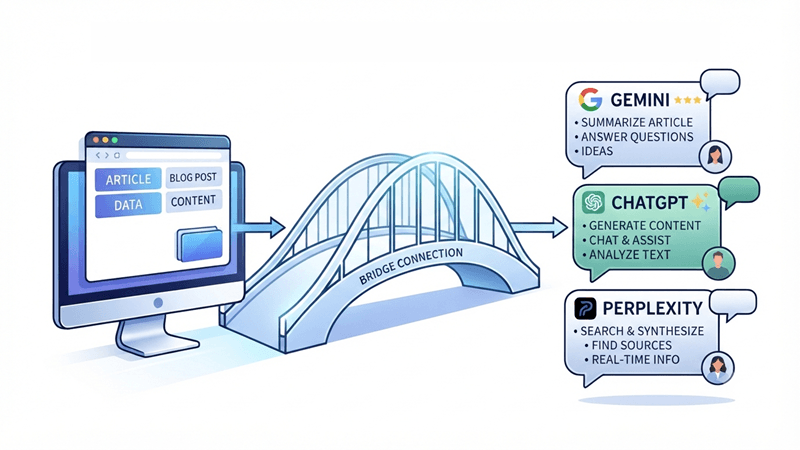
Generative Engine Optimization (GEO) is the process of formatting, structuring, and positioning content to ensure Generative AI systems can accurately extract, understand, and cite it when answering a user’s question.
Traditional SEO focuses on optimizing websites for search engine crawlers and ranking algorithms, whereas GEO optimizes them for large language models (LLMs).
Traditional SEO concentrates on optimizing websites to improve their visibility on search engine crawlers and ranking algorithms, while GEO focuses on optimizing for large language models (LLMs), which combine information from various sources into a single conversational response. Not only should you be discoverable, but you should be quotable.
This implies your material must address inquiries clearly, provide legitimate signals to give it to the AI design, and be organized in a manner that is simple enough for the AI design to grab and utilize without misrepresenting it.
This is closely connected with so-called AI search optimization services or generative ai seo services, and it is closely coupled with LLM optimization, ensuring that models such as GPT, Gemini, and Claude have a proper and precise perception of your brand and content in creating answers.
GEO vs Traditional SEO – Key Differences
GEO and SEO share a common foundation; both depend on relevant, authoritative, well-structured content, but they optimize for different systems with different success metrics.
| Traditional SEO | GEO | |
|---|---|---|
| Goal | Rank in the top positions of search results | Get cited or quoted inside AI-generated answers |
| Ranking Signal | Backlinks, keyword relevance, page experience, domain authority | E-E-A-T signals, structured data, clarity of direct answers, citation-worthiness |
| Output Format | List of ranked links (SERP) | Synthesized, conversational answer with optional source citations |
| Measurement | Rankings, organic traffic, CTR | Share of AI citations, brand mentions in AI answers, and referral traffic from AI platforms |
| Tools | Google Search Console, Ahrefs, Semrush | AI visibility trackers, prompt-testing tools, citation monitors |
In one line: SEO earns you a spot on the results page; GEO earns you a spot inside the answer itself.
Why Does GEO Matter in 2026?
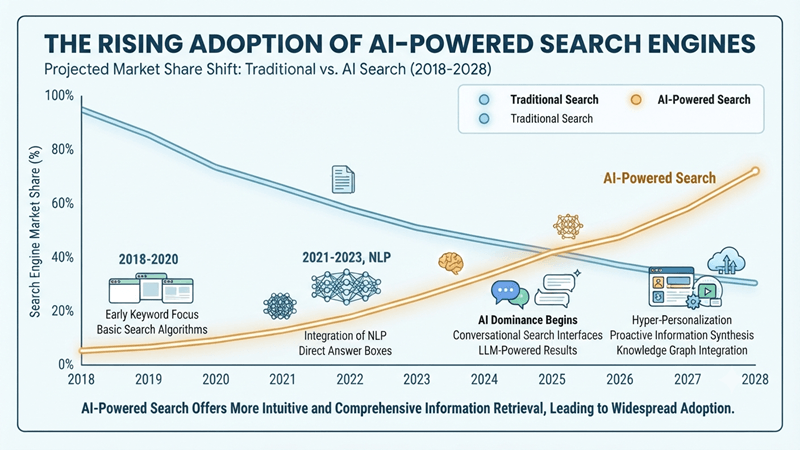
Zero-click search is not just a tangential priority anymore; it’s the primary search behavior. The US zero-click rate for Google searches is estimated at approximately 58-65% of all searches, as revealed by recent clickstream research from SparkToro, which rises to the 80s as soon as an AI Overview appears on the page.
The introduction of Google’s AI Mode, which is already being utilized by over a billion users every month, takes zero-click rates to the next level. The AI Mode by Google, already employed by over a billion users monthly, replaces the whole results page with a conversational AI response, further boosting zero-click rates.
The business loss of failing to adapt? It’s very simple: loss of visibility and loss of referral traffic. Content with good ranking yet not being included in the AI-generated answer may not ever be seen by users. On the other hand, Seer Interactive’s industry research revealed that brands appearing in AI Overviews receive significantly more organic and paid clicks than those ranking, but not appearing in the AI Overview context because of citation.
This is the space GEO was designed to fill. Ignorance does not mean stopping it; it means gradually falling behind in visibility as competitors try to optimize what they’re seeing in their answers for AI models.
Design Reference:
How AI Models/LLMs Decide What to Cite?
AI engines don’t cite content randomly. They favor sources that demonstrate a consistent set of signals:
E-E-A-T signals
Experience, Expertise, Authoritativeness, and Trustworthiness remain central. LLMs are trained and fine-tuned to prefer content from sources that show real-world credibility: author bylines, credentials, original data, and a track record of accurate information.
Structured data/schema markup
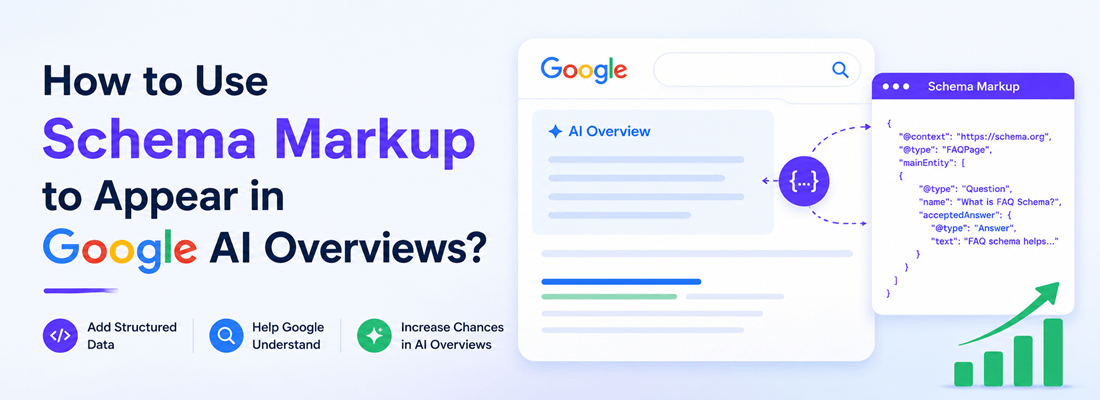
Schema (FAQ, HowTo, Article, Organization) gives AI crawlers explicit, machine-readable context about what your content is and what it’s answering. It reduces ambiguity, which increases the odds of accurate extraction.
Clear direct-answer formatting
Content that states the answer plainly in the first sentence or two before elaborating is far easier for a model to lift cleanly. Buried answers, vague introductions, and heavy fluff get skipped in favor of competitors who answer immediately.
Authoritative citations and backlinks
Just as backlinks signal trust to Google, being referenced by credible third-party sources signals trust to LLMs, which are trained partly on the web’s citation graph.
Content freshness
AI engines favor recently updated, current information, especially for fast-moving topics. Stale statistics and outdated advice get deprioritized in favor of sources that show recent updates.
Content chunking
Well-segmented content (clear headers, FAQ blocks, numbered lists) is easier for retrieval systems to parse into discrete, citable “chunks” than one long unbroken wall of text.
7 Core GEO Strategies for Beginners
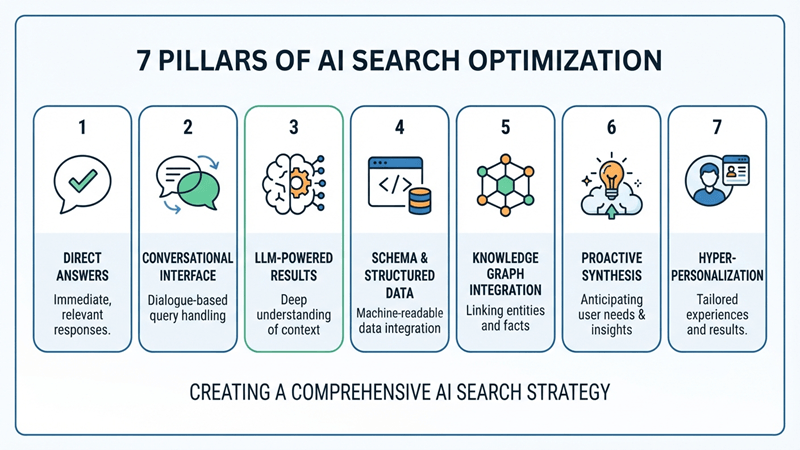
1. Write Direct-Answer-First Content
Lead every section with a concise, standalone answer before adding context or nuance. If a model can lift your first two sentences and have them make complete sense out of context, you’ve done it right. Save the elaboration for after the answer, not before.
2. Add Schema/Structured Data
Implement FAQ schema, Article schema, and Organization schema across your key pages. This gives AI crawlers explicit signals about your content’s structure and intent, reducing the chance of misinterpretation and increasing citation eligibility.
3. Create an llms.txt File
An llms.txt file is a plain-text file at your site root that gives AI crawlers a curated map of your most important, citation-ready content. It’s an emerging standard, similar in spirit to robots.txt, aimed specifically at helping LLMs understand what to prioritize.
4. Chunk Content Into Clearly Labeled Sections
Break long-form content into FAQ blocks, numbered steps, and clearly labeled subheadings. Each chunk should be able to stand alone and answer a specific question, since retrieval systems often pull individual sections rather than entire pages.
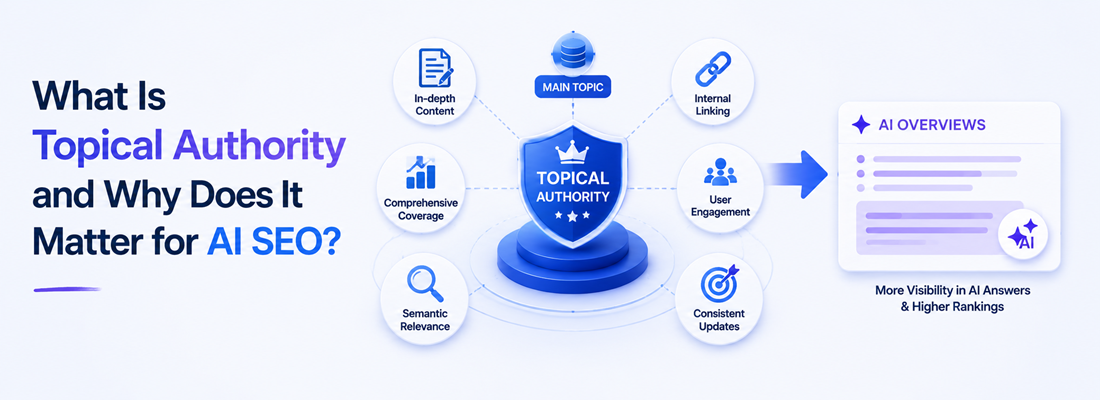
5. Build Topical Authority via Content Clusters
Publish a pillar page supported by multiple in-depth cluster articles on related subtopics, all interlinked. This signals comprehensive expertise on a topic, which both search engines and LLMs weigh heavily when deciding which sources to trust.
6. Earn Authoritative Citations/Mentions
Pursue mentions and backlinks from respected publications, industry reports, and community platforms (forums, review sites, Q&A platforms). LLMs are trained on this broader web signal, so third-party validation compounds your GEO efforts.
7. Monitor AI Search Visibility Regularly
Treat AI citation tracking as an ongoing discipline, not a one-time audit. Prompts and model behavior shift often, so what gets cited today may not get cited in three months without regular checks and updates.
Step-by-Step GEO Checklist for Beginners
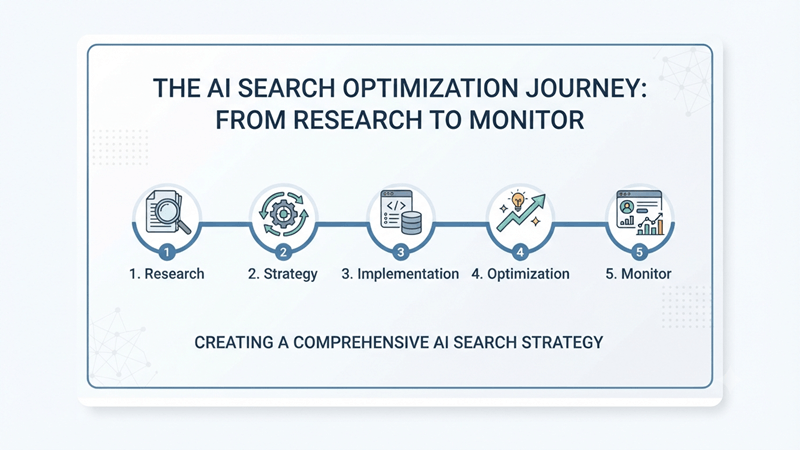
- Audit your top pages for direct-answer clarity in the first 2–3 sentences.
- Add FAQ, Article, and Organization schema markup site-wide.
- Create and publish an llms.txt file at your domain root.
- Restructure long-form pages into clearly labeled, chunked sections.
- Identify 3–5 pillar topics and map out supporting cluster content.
- Interlink pillar and cluster pages to strengthen topical authority.
- Reach out for mentions, guest features, and backlinks from credible sources.
- Update statistics, dates, and examples across key pages for freshness.
- Test your target queries directly in ChatGPT, Gemini, and Perplexity.
- Set a recurring monthly check on AI citation visibility and adjust content accordingly.
Tools to Track GEO / AI Search Visibility
AI visibility trackers (e.g., Peec AI, Profound, Otterly)
Monitor how often and where your brand appears across ChatGPT, Gemini, and Perplexity responses built specifically for GEO reporting.
Google Search Console
Tracks impression data by SERP feature, useful for spotting AI Overview visibility trends on your existing pages.
Ahrefs / Semrush
Increasingly include AI Overview and citation tracking alongside traditional keyword rank tracking.
Manual prompt testing
Running your target queries directly inside ChatGPT, Gemini, Perplexity, and Google AI Mode to see firsthand whether and how your brand is cited.
Schema validation tools (Google’s Rich Results Test)
Confirm your structured data is implemented correctly and readable by crawlers.
Backlink and mention monitors (e.g., Ahrefs, Brand24)
Track new citations and mentions that feed AI training and retrieval signals over time.
Common GEO Mistakes to Avoid
- Burying the answer under too much intro fluff — Fix: Lead with a direct, standalone answer in the first sentence or two.
- Skipping structured data entirely — Fix: Add FAQ and Article schema to every content page, not just cornerstone pages.
- Treating GEO as a one-time project — Fix: Build a recurring monthly cadence for freshness updates and citation checks.
- Ignoring content chunking — Fix: Break long pages into clearly labeled sections that can stand alone.
- Chasing AI citations while neglecting backlinks — Fix: Keep earning traditional authoritative links; they still feed AI trust signals.
- Publishing without verifying facts or sources — Fix: Back claims with credible data and cite sources clearly to reinforce trustworthiness.
Conclusion
GEO is not an alternative to SEO but rather the next step on top of it. The four fundamentals that have always been important expertise, clarity, structure, and authority are precisely what AI engines are now employing in determining what to cite. The key difference is that GEO requires you to be more conscious of your own communication being clear and immediate, in the direction of the question your audience has.
Those teams that begin to restructure content for direct answers, include schema, develop topical depth, and monitor AI visibility will be the ones that, once again, AI engines trust for citations, as the search landscape evolves towards the zero-click, AI-generated answer. For more of an in-depth look at the impact of AI on search strategy in general, or for assistance in creating a GEO program from the ground up, our team at DigitaldotAgency can help.
FREQUENTLY ASKED QUESTIONS
GEO is the practice of structuring and formatting content so AI engines like ChatGPT, Gemini, Perplexity, and Google AI Overviews can accurately find, understand, and cite it. It focuses on becoming a trusted, quotable source rather than just a ranked link on a results page.
No. GEO builds on SEO fundamentals rather than replacing them. Search engines still crawl and rank content using core SEO signals, and AI engines pull from that same indexed content — GEO simply adds the structure and clarity needed for citation.
Yes. SEO keeps you visible and rankable in traditional search results, while GEO increases your odds of being cited inside AI-generated answers. Together, they cover both the traditional and AI-driven paths users now take to find information.
Most teams start seeing early citation improvements within 4–8 weeks of implementing schema, direct-answer formatting, and content chunking, though full topical authority gains typically build over 3–6 months, similar to SEO timelines.
GEO primarily targets ChatGPT, Google Gemini, Perplexity, and Google AI Overviews/AI Mode. Each pull from web content differently, but they share common preferences for clear, well-structured, authoritative sources.
Yes. Many GEO fundamentals — direct-answer writing, basic schema markup, and content chunking — can be implemented in-house. An agency becomes more valuable for ongoing AI visibility tracking, technical schema work, and building topical authority at scale.
Start by rewriting the opening of your top-performing pages to answer the core question directly in the first two sentences. It’s the single highest-impact, lowest-effort change you can make to improve AI citation eligibility.