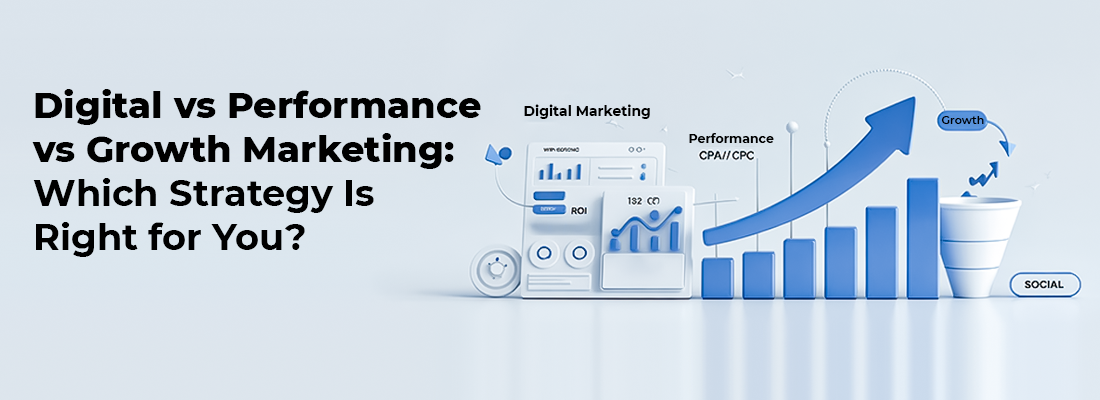
In a competitive and fast-changing market, selecting the right marketing strategy is critical to achieving business success. Marketing has many faces. Some focus on building a brand, while others aim to drive results fast. A few take the long road, working on customer loyalty and ongoing growth. In today’s crowded market, choosing the right approach can feel overwhelming.
This guide explores the types of marketing strategies in detail, helping you determine which path or combination best aligns with your objectives, resources and growth stage. The goal is to provide a clear, practical comparison to guide your strategic planning.
What Is Digital Marketing?
Digital marketing is a way to reach, talk to and connect with people through the internet. You use websites, emails, social media, blogs and search engines. It’s one of the most popular Types of marketing strategies to share your business because people spend a lot of time online.
The main goal of digital marketing is to grow your business online. You might build your brand name, bring more visitors to your website, or start fun chats with people on social media. You also make helpful posts or run ads to grab their attention.
Unlike old-style marketing, digital marketing lets you see what people think and answer them quickly. Whether you own a small shop or a big company, digital marketing helps you stay in front of people and shine in a busy world.
Pros of Digital Marketing
- Wide reach: The internet lets you reach people across the world.
- Low cost: Many online tools are free or low cost, especially for small businesses.
- Measurable: You can track views, clicks, and engagement to see what’s working.
Cons of Digital Marketing
- Takes time: Building an audience online doesn’t happen overnight.
- Constant changes: Online trends shift fast. What works today may not work next month.
- Competition: Every business is online now, making it harder to stand out.
Digital marketing gives you a strong base. It’s useful no matter your size or industry. But if you want faster results or deeper growth, you may need to look further.
What Is Performance Marketing?
Performance marketing follows a simple rule as you pay only when people do something like click a button, fill out a form or buy a product. You don’t pay just to be seen. You pay when something real happens. That’s why it helps save money and shows clear results fast.
This kind of marketing is best for businesses that want to boost sales or collect leads quickly. People often send emails, place online ads, or team up with others to make it work. Even though it belongs to the digital marketing family.
It works well for anyone who wants to stretch every dollar and track what’s working. If you like knowing what you get for your money, then performance marketing is a smart choice.
Pros of Performance Marketing
- Cost control: You only pay when something happens.
- Fast feedback: You can test a message and know within days if it’s working.
- Goal-focused: Everything ties to a clear result like sales or leads.
Cons of Performance Marketing
- Short-term thinking: It focuses on fast wins, not long-term relationships.
- Requires tracking: You need good systems to measure actions and conversions.
- Not ideal for brand building: It may not help people remember your name.
What is performance marketing? It’s a smart way to advertise where you focus on results. Instead of spending more, you spend smarter to quickly boost revenue or get more leads.
What Is Growth Marketing?
Growth marketing is a long-term strategy focused on the entire customer journey from first interaction to ongoing loyalty. Instead of just chasing clicks or quick sales, it looks at how people discover your brand, make a purchase and return again.
This approach relies on data, testing and constant learning. Growth marketers run small experiments to see what works, then improve based on results. It’s a flexible, evolving process that adapts to customer needs and behaviours.
Think of growth marketing as a mindset rather than a one-time campaign. The goal isn’t just to grow fast as it to grow smart and build lasting relationships. For businesses aiming to scale and retain customers over time, this strategy delivers steady, meaningful progress.
Core Traits of Growth Marketing
- Customer-first: Focus on what helps users at every stage.
- Test and learn: Try new things, see what works, adjust.
- Data-driven: Use numbers to guide decisions.
Pros of Growth Marketing
- Long-term results: Helps build loyal customers and repeat buyers.
- Adapts fast: You’re always testing and adjusting.
- Full-funnel focus: Works on awareness, sales, and loyalty together.
Cons of Growth Marketing
- Slow start: It can take time to see results.
- More complex: It involves many moving parts like content, testing, and analysis.
- Needs buy-in: Your whole team must be on board for it to work.
If you’ve wondered what is growth marketing, think of it as the strategy that puts the customer journey first. It’s not about quick wins. It’s about building a system that keeps growing.
Types of Marketing Strategies: When to Use Each One
Each marketing strategy has its strengths so knowing when to use which one makes all the difference.
When Digital Marketing Works Best
- You’re building a new brand.
- You want to grow awareness over time.
- You have time to invest in content and social media.
Digital marketing lays the foundation. It’s ideal when you’re starting or looking to stay top-of-mind.
When Performance Marketing Is a Smart Choice
- You have a clear goal, like leads or sales.
- You want fast results.
- You need to make sure your spending leads to action.
Use performance marketing when you need to see outcomes quickly, especially if your budget is tight.
When to Choose Growth Marketing
- You want sustainable growth.
- You care about loyalty, not just first-time sales.
- You’re ready to test and improve over time.
Growth marketing works best if you’re willing to learn and adapt. It’s about playing the long game.
Can Different Marketing Strategies Work Together?
Yes, and mixing strategies often works best. Many good marketing plans use digital, performance, and growth strategies together to get better results. Each one helps differently.
For example, you might begin with digital marketing to spread your brand and reach more people. Then, you can launch performance campaigns to bring in sales or new leads. At the same time, your growth team can try out new ideas and improve the customer experience so people stay and buy again.
Using all three together builds a strong plan. Digital marketing draws attention, performance marketing drives fast actions, and growth marketing deepens customer trust. Together, they help you attract, convert and keep customers while also boosting your results over time.
Conclusion
There’s no one right way to do marketing. The best path depends on your goals. If you want people to know your name then choose digital marketing. If you need fast results, go with performance marketing. If you want people to stick around and trust your brand, grow with growth marketing.
Each plan plays a role. You don’t have to stick to just one. Start with what you need today. As your business grows, you can add more. Great marketing always learns, changes, and focuses on your customer’s needs.
At DigitalDotAgency, your brand gets the spotlight it deserves with expert SEO, PPC, content, and web solutions. Visit us online and see how we can grow your business.